

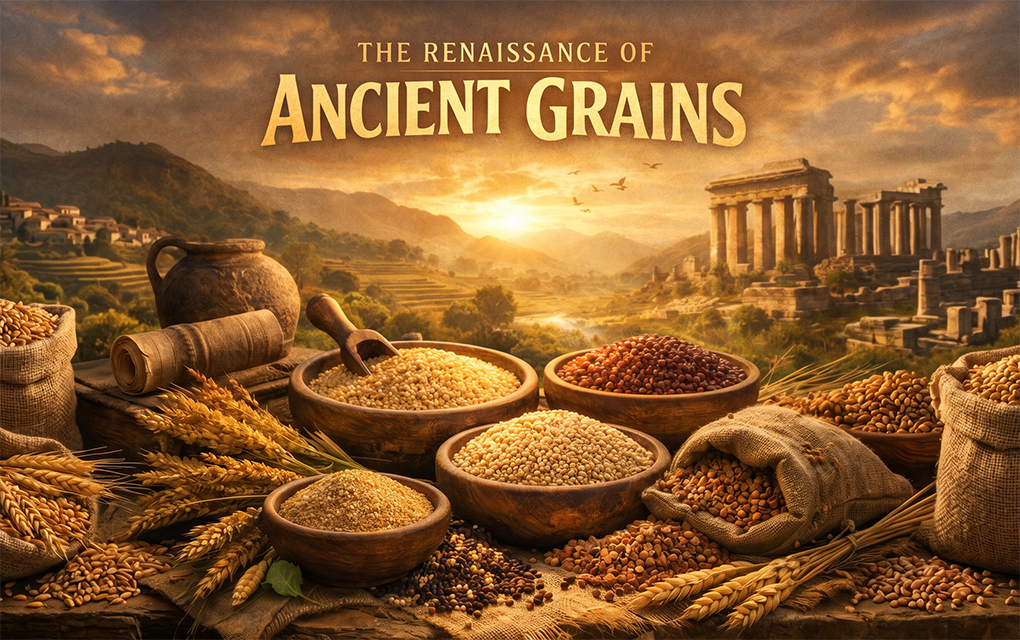

Ancient grains are having a renaissance — and not because they’re trendy, rustic, or photogenic in a ceramic bowl. Their revival is a response to something deeper: a global desire for foods that nourish steadily, support metabolic stability, and reconnect us with the agricultural wisdom of earlier civilisations.
Millet, sorghum, buckwheat, quinoa, and amaranth are no longer fringe staples tucked away in health‑food aisles. They’re returning as everyday ingredients, celebrated for their nutrient density, gluten‑free heritage, and sustainable growing profiles.
Our modern diet is dominated by refined wheat and ultra‑processed carbohydrates — foods that digest rapidly, spike blood sugar, and leave us hungry again soon after. Ancient grains offer a counterpoint: slow‑release carbohydrates, intact fibre, and micronutrients that support metabolic resilience.
Across cultures, these grains fed empires, sustained nomadic communities, and shaped culinary traditions. Their return isn’t nostalgia; it’s nutritional logic.

This is the eleventh article in our fortnightly Healthy Food Series. The series consists of 12 features exploring the science, culture and shared joy of natural eating. Our previous article in this series covered ‘Seasonal Eating‘ and explored the natural benefits of foods that typically grow with the season. View all articles in this series.
Key advantages of ancient grains:
- Naturally gluten‑free (millet, sorghum, buckwheat, quinoa, amaranth)
- Rich in fibre, minerals, and plant protein
- Slow‑digesting carbohydrates that support blood sugar stability
- Sustainable crops that thrive in diverse climates
- Versatile in porridges, salads, baking, and savoury dishes
Let’s explore each grain through science, history, and practical cooking.
1. Millet: The Quiet Powerhouse
Millet is one of humanity’s oldest cultivated grains, domesticated in East Asia and Africa thousands of years ago. It sustained early farming communities because it grows in harsh climates, requires little water, and matures quickly. Today, it’s still a staple in India, Ethiopia, and parts of China — and increasingly, in Western whole‑food kitchens.
Nutrient Profile
Millet is rich in magnesium, phosphorus, B‑vitamins, and antioxidants. Its carbohydrate structure digests slowly, making it ideal for people seeking stable energy and improved glycaemic control.
Millet’s fibre content supports gut health, while its mild flavour makes it adaptable to both sweet and savoury dishes.
Cultural Layer
In India, millet (ragi, bajra, jowar) is woven into traditional flatbreads and porridges. In China, foxtail millet was once a ceremonial grain. African communities rely on pearl millet for porridges, fermented drinks, and breads.
How to Cook Millet
Millet cooks like couscous or rice but with a fluffier texture.
- Toast dry millet before boiling for a nutty flavour.
- Use 1:2.5 grain‑to‑water ratio for fluffy millet.
- Add to salads, breakfast bowls, or use as a base for vegetable pilaf.
2. Sorghum: The Resilient Grain of the Future
Sorghum is a climate‑smart crop — drought‑resistant, heat‑tolerant, and capable of thriving where other grains fail. Historically cultivated across Africa, India, and the Middle East, sorghum is now gaining traction in gluten‑free baking and whole‑grain cooking.
Nutrient Profile
Sorghum is high in polyphenols, fibre, and plant protein. Its slow‑release carbohydrates make it an excellent option for blood sugar stability. Unlike many grains, sorghum contains significant antioxidants, giving it anti‑inflammatory potential.
Cultural Layer
Sorghum fed ancient African kingdoms and remains central to Ethiopian injera (when blended with teff), Sudanese porridges, and Indian rotis. In the U.S., sorghum syrup was once a common sweetener before refined sugar took over.
How to Cook Sorghum
Whole sorghum has a chewy, barley‑like texture.
- Simmer whole sorghum for 45–55 minutes until tender.
- Use in grain bowls, soups, or as a rice alternative.
- Sorghum flour is excellent for gluten‑free baking.
3. Buckwheat: The pseudograin with cult following
Despite its name, buckwheat isn’t related to wheat and contains no gluten. It’s a seed from a flowering plant, cherished in Eastern Europe and Asia for centuries.
Nutrient Profile
Buckwheat is rich in rutin, a flavonoid that supports vascular health. It contains complete protein (rare for plant foods), magnesium, manganese, and soluble fibre that supports cholesterol regulation.
Its low glycaemic index makes it ideal for people managing blood sugar.
Cultural Layer
Japan’s soba noodles, Russia’s kasha, and France’s Breton galettes all rely on buckwheat. These dishes reflect buckwheat’s adaptability — earthy, robust, and deeply satisfying.
How to Cook Buckwheat
Buckwheat groats cook quickly and can become mushy if overdone.
- Use 1:2 ratio of groats to water.
- Simmer for 10–12 minutes.
- Toasted buckwheat (kasha) has a stronger flavour and firmer texture.
- Buckwheat flour is excellent for pancakes, crepes, and rustic baking.
4. Quinoa: The Andean Supergrain
Quinoa’s rise from Andean staple to global superstar is well‑deserved. Cultivated for over 5,000 years in Peru and Bolivia, quinoa was sacred to the Inca, who called it “the mother grain.”
Nutrient Profile
Quinoa is one of the few plant foods with complete protein, containing all nine essential amino acids. It’s also rich in iron, magnesium, folate, and fibre.
Its saponin coating (naturally bitter) protects the plant from pests — rinse thoroughly before cooking.
Cultural Layer
Quinoa sustained Andean communities living at high altitudes, where other crops struggled. Its cultural significance is intertwined with rituals, seasonal cycles, and communal farming.
How to Cook Quinoa
Quinoa cooks quickly and absorbs flavours beautifully.
- Rinse well to remove bitterness.
- Use 1:2 ratio of quinoa to water.
- Simmer for 15 minutes, then rest covered for 5 minutes.
- Use in salads, soups, stuffed vegetables, or breakfast bowls.
5. Amaranth: The Tiny Grain with Big History
Amaranth is a tiny seed with enormous cultural weight. Cultivated by the Aztecs and Maya, it was used in rituals, celebrations, and everyday cooking. Spanish colonisers attempted to suppress its cultivation, but amaranth survived — and is now celebrated globally.
Nutrient Profile
Amaranth is high in calcium, iron, magnesium, and lysine (an amino acid often lacking in grains). It’s also rich in fibre and contains plant sterols that may support cholesterol regulation.
Its gelatinous texture when cooked makes it ideal for porridges and binding.
Cultural Layer
In Mexico, amaranth is used in alegría, a traditional sweet made with popped amaranth and honey. In India, it appears during fasting festivals as rajgira flour.
How to Cook Amaranth
Amaranth has a porridge‑like consistency.
- Use 1:3 ratio of amaranth to water.
- Simmer for 20–25 minutes.
- Add to breakfast bowls, veggie patties, or soups for thickening.
The Global Revival of Heritage Grains
Ancient grains are returning not just for health reasons but for sustainability. They grow in marginal soils, require less water, and support biodiversity. As climate change reshapes agriculture, these grains offer resilience.
Why they’re resurging:
- Consumers want less‑processed, nutrient‑dense foods.
- Farmers seek crops that withstand drought and heat.
- Chefs value their flavour, texture, and cultural stories.
- Nutrition science supports their role in metabolic health.
This revival is a reconnection with ancestral wisdom — a reminder that food traditions evolve for good reason.
Practical Ways to Use Ancient Grains Daily
You don’t need to overhaul your pantry. Start by rotating one ancient grain into your weekly meals.
Simple swaps:
- Replace rice with millet or quinoa.
- Add cooked sorghum to salads instead of pasta.
- Use buckwheat flour in pancakes or waffles.
- Stir amaranth into soups for natural thickening.
Easy Whole‑Food Living Ideas:
- Millet breakfast bowl with berries and nuts
- Sorghum and roasted vegetable salad
- Buckwheat soba with sesame‑ginger dressing
- Quinoa‑stuffed capsicums
- Amaranth porridge with cinnamon and pear
The Science of Slow‑Release Carbohydrates
Ancient grains digest slowly because they retain their bran, germ, and fibre. This slows glucose absorption, reduces insulin spikes, and supports satiety.
Benefits of slow‑release carbs:
- More stable energy
- Reduced cravings
- Better blood sugar control
- Improved gut microbiome
- Lower inflammation
For people managing diabetes, insulin resistance, or metabolic syndrome, these grains can be powerful allies.
A Whole Food Living Perspective
Ancient grains embody what Whole Food Living stands for: nourishment that is culturally rich, scientifically grounded, and deeply practical. They invite us to cook with intention, honour global food traditions, and choose ingredients that support long‑term health.
They’re not “superfoods” in the marketing sense — they’re simply foods that have stood the test of time.
Key Takeaways
- Ancient grains offer nutrient density, slow‑release carbohydrates, and gluten‑free versatility.
- Millet, sorghum, buckwheat, quinoa, and amaranth each carry unique cultural histories.
- Their revival is driven by sustainability, flavour, and metabolic health benefits.
- They’re easy to incorporate into modern cooking with simple swaps and everyday recipes.