


There’s a quiet intelligence woven through the natural world—an ancient rhythm humans once followed without effort. Before global supply chains, before strawberries in winter and tomatoes in June, we ate what the land offered in its own time. Seasonal eating wasn’t a lifestyle choice; it was a biological partnership, a conversation between human physiology and the earth’s cycles.
Today, as climate pressures intensify and chronic illness rises, that partnership feels newly relevant. Seasonal eating isn’t nostalgic or quaint. It’s practical, biologically aligned, environmentally restorative, and culturally grounding. It offers a way back to resilience—personal, ecological, and communal.
Nature’s nutrient timing system
Whole foods grown in season aren’t simply fresher; they’re biochemically different. Plants respond to sunlight, temperature, soil microbes, and rainfall. These cues shape their nutrient density, phytochemical richness, and even their flavour. When we eat seasonally, we’re not just choosing what tastes best—we’re choosing what our bodies are primed to use.
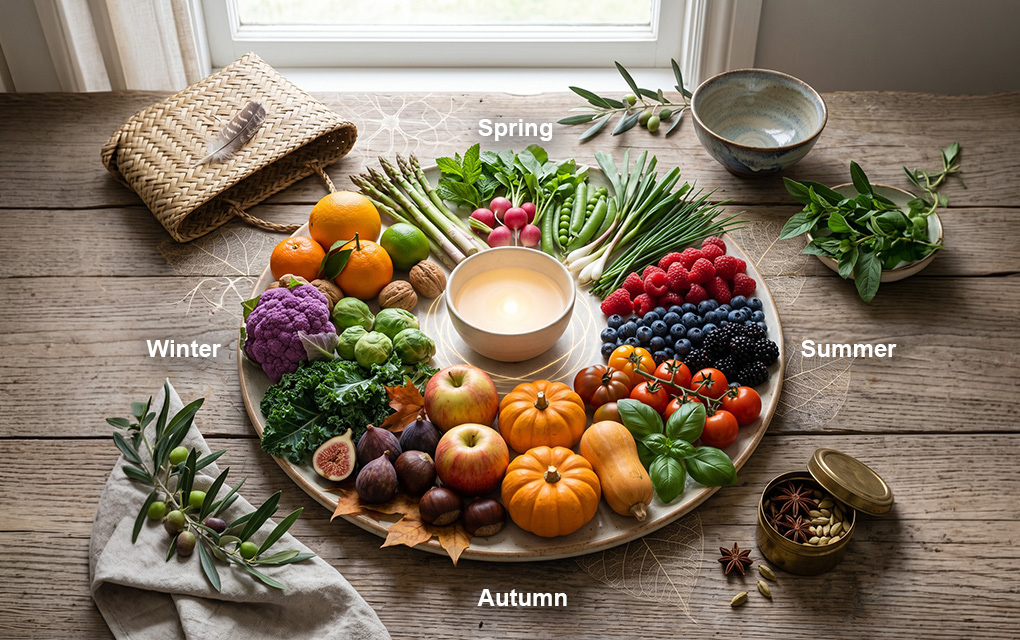
Summer foods arrive with the sun. Longer days and stronger UV exposure increase oxidative stress, and summer produce responds in kind. Berries, stone fruit, tomatoes, cucumbers, leafy greens—these foods swell with polyphenols, vitamin C, carotenoids, and water. They hydrate, cool, protect the skin, and help regulate blood sugar during more active months. Watermelon tastes best when the sun is highest because it is designed for that moment.
Autumn brings a different kind of nourishment. As temperatures drop, the body shifts toward grounding, warming foods. Pumpkins, kūmara, apples, pears, brassicas—these crops offer slow-burning carbohydrates, gut-stabilising fibre, and minerals that support immune readiness. They help us transition from summer’s outward energy to winter’s inward pace.

This is the tenth in our fortnightly Healthy Food Series. The series consists of 12 features exploring the science, culture and shared joy of natural eating … Our previous article in this series covered ‘Herbs and Spices‘ – which explained how functional foods became molecular powerhouses.
Winter crops grow slowly, concentrating nutrients. Brassicas, root vegetables, citrus, and fermented foods deliver vitamin C, sulforaphane, prebiotic fibre, and minerals that support immune resilience and mitochondrial efficiency. These foods are built for cold months, when the body needs deeper nourishment.
Spring, by contrast, is a season of renewal. Watercress, spinach, asparagus, herbs, and other greens are rich in chlorophyll, folate, and bitter compounds that stimulate digestion. They support liver function and metabolic reset—the body’s natural “spring cleaning” as days lengthen.
Seasonal eating isn’t restrictive. It’s rhythmic. It’s a biological conversation between the environment and the human body.
The clock within us
Humans are circadian creatures. Every cell contains a clock, and those clocks respond to light, temperature, and food timing. Seasonal eating reinforces these internal rhythms.
Melatonin rises earlier in winter, shifting digestion and metabolism. Serotonin increases with summer light, influencing appetite and mood. Insulin sensitivity changes with temperature and daylight. Seasonal foods match these hormonal shifts: summer fruits align with higher insulin sensitivity and increased activity; winter starches align with slower metabolism and the need for sustained energy.
Even the microbiome has seasons. Emerging research shows that gut microbes shift throughout the year, and diet diversity—especially plant diversity—supports this natural cycling. Seasonal eating ensures a rotating supply of fibres and polyphenols, building microbial resilience. A resilient microbiome is one of the strongest predictors of long-term health.
Temperature plays its part too. Historically, cold exposure in winter increased brown fat activation and metabolic efficiency. Winter foods—dense, grounding, slow-burning—supported this shift. Today, climate-controlled homes and year-round produce mute many of these cues. Seasonal eating helps restore them.
Eating with, not against, the land
Seasonal eating is one of the simplest ways to reduce environmental impact without sacrificing nourishment or pleasure. Out-of-season produce often requires heated greenhouses, long-distance transport, intensive water use, and chemical inputs. Seasonal, local produce dramatically reduces these burdens.
It also supports biodiversity and soil health. Seasonal farming encourages crop rotation, soil regeneration, pollinator health, and reduced pesticide reliance. When we eat seasonally, we support farming systems that work with ecological rhythms rather than against them.
Communities that rely on seasonal, local food systems are more resilient to supply chain disruptions, extreme weather, and global price fluctuations. Seasonal eating strengthens not just personal wellbeing, but community stability.
Culture, identity, and the seasons
Every culture on earth has seasonal food traditions—rituals that express ecological wisdom, community identity, and emotional connection.
In Aotearoa New Zealand, Matariki marks renewal and remembrance. Seasonal foods—preserved kūmara, root vegetables, greens—are shared in celebration of the land and collective harvest.
In Japan, the concept of shun honours foods at their peak: bamboo shoots in spring, chilled noodles and watermelon in summer, chestnuts and mushrooms in autumn, daikon and hotpots in winter. Eating seasonally is a way of honouring nature and cultivating mindfulness.
Mediterranean cultures celebrate olive harvests, forage for wild greens, and gather around seasonal feasts that reinforce intergenerational knowledge and community cooperation.
Ayurvedic traditions in India align seasonal foods with digestive and metabolic balance—cooling foods in summer, warming spices in winter, bitter greens in spring.
Indigenous cultures worldwide have always eaten seasonally, guided by local ecology, communal harvesting, storytelling, and ceremony. These traditions build resilience not just through food, but through identity and belonging.
A strategy for resilience
In a world of constant acceleration, seasonal eating offers a counterbalance. It slows us down. Grounds us. Reconnects us to something older and wiser than modern convenience.
It supports stronger immunity, better metabolic health, improved mood, circadian alignment, a more diverse microbiome, and greater nutrient density. It reduces emissions, waste, soil depletion, and water stress. It strengthens local growers, regenerative agriculture, biodiversity, farmers’ markets, communal cooking, cultural traditions, and shared meals.
Seasonal eating is a way of strengthening the social fabric that protects wellbeing.
A call to reconnect
Seasonal eating isn’t about perfection. It’s about presence. It’s about remembering that we are part of nature, not separate from it.
Start small. Choose produce grown locally this month. Visit a farmers’ market. Cook a seasonal dish from your childhood or culture. Learn the seasonal food traditions of your country. Grow one herb or vegetable in your backyard or on your windowsill.
Resilience isn’t built in a single moment. It’s built in rhythm—in cycles—in the quiet, steady return to what nourishes us: body, land, and community. Seasonal eating is more than a dietary choice. It’s a way of remembering who we are.