


by Peter Barclay
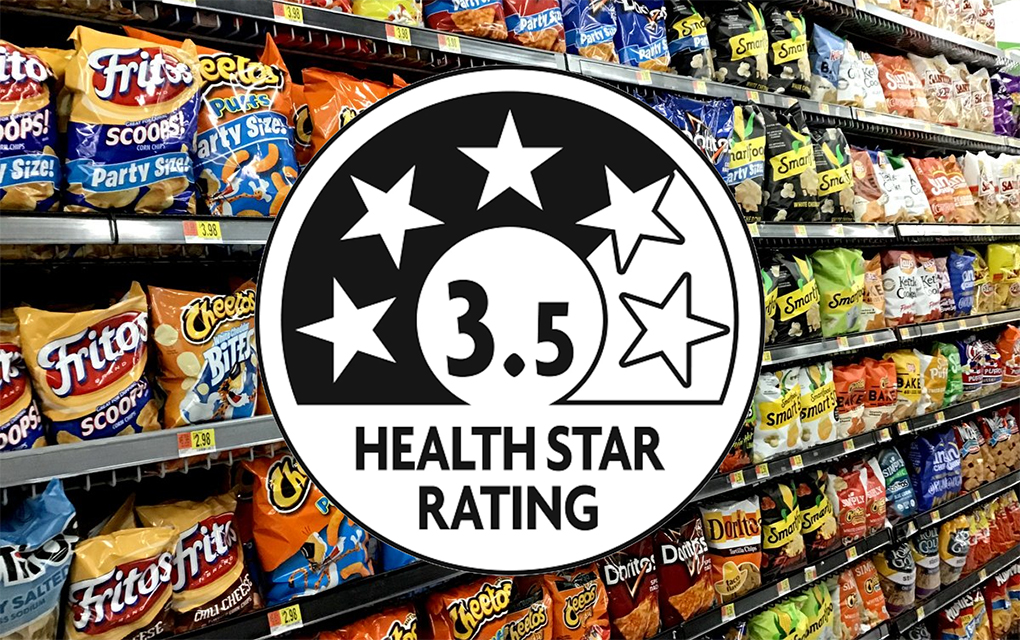
Food policy rarely makes headlines, yet every so often a decision lands that has the power to shape the health of an entire generation. Right now, Food Standards Australia New Zealand (FSANZ) is considering whether to mandate the Health Star Rating (HSR) system—a move that Australian Associate Professor Nicholas Chartres warns could entrench a deeply flawed, industry‑designed framework rather than protect public health.
Chartres works in the School of Pharmacy, Faculty of Medicine & Health at the University of Sydney. His work exposes how health‑harming corporations influence science, policy, and regulation. He specialises in the commercial determinants of health, with a research focus on microplastics, toxic chemicals, PFAS, and ultra‑processed foods.
In a LinkedIn post last week, Chartres says the FSANZ system was co-created by the processed food industry specifically to avoid meaningful regulation of their products. And if they manage to embed it further, he argues, the consequences will be felt most acutely by children and communities already struggling with diet-related disease.
No longer debatable
The data Chartres cites is stark: diets high in ultra‑processed foods increase the likelihood of cardiovascular mortality, obesity, diabetes, anxiety, and common mental health disorders by 40–60%. These are not fringe findings—they reflect a global consensus emerging from epidemiology, nutrition science, and implementation research.
Yet the HSR system routinely awards stars to products that are ultra‑processed, nutritionally compromised, and aggressively marketed to children. Breakfast cereals loaded with sugar, snacks engineered for overconsumption, and packaged meals bearing health halos are all beneficiaries of the current system.
Here’s the core problem: HSR does not measure processing, and processing is one of the strongest predictors of harm. Prof Chartres outlines the background to the system and his primary concerns with it in this three-minute video.
What protection looks like
Chartres points to Colombia’s Ministry of Health as a model. Their approach includes warning labels for ultra‑processed foods, alongside existing warnings for sugar, sodium, saturated fat, trans fat, and sweeteners.
These labels are simple, visible, and evidence‑based. They don’t pretend that a packet of UPF can be redeemed by added vitamins or clever formulation.
But he also stresses that labels alone are not enough. We need complementary policies that increase access to unprocessed and minimally processed foods, and—critically—teach children how to prepare nutritious, delicious meals.
The responses under Chartres’ post were particularly relevant.
Schools that nourish
Environmental services professional Jane Bremmer imagines a school system connected to community gardens, where children learn to grow food, compost waste, care for worm farms, prepare meals, set tables, and wash up—embedding food literacy into daily life. She contrasts this with the “pathetic free breakfast of Coco Pops and Vegemite toast,” a symbol of how low our expectations have fallen.
Her vision is not fanciful. France already operates school lunch programs grounded in fresh food, culinary education, and environmental stewardship. A similar approach is also being developed in New Zealand under the guidance of Dr Luke Wilson. Bremmer reminds us that maths, science, art, ecology, and culture are all present in the act of growing and preparing food.
It’s the kind of thinking the WFPB community has championed for years: food systems as education systems, and education systems as health systems.
Why this moment matters
FSANZ’s decision will ripple across both countries. If the Health Star Rating system becomes further entrenched, it will:
- Strengthen the position of ultra‑processed food manufacturers
- Mislead consumers with star ratings that obscure real risk
- Undermine public health messaging around whole foods
- Delay the adoption of stronger, evidence‑based warning labels
But if FSANZ chooses a different path—one aligned with global best practice—it could:
- Reduce chronic disease burden
- Improve child health outcomes
- Support local growers and minimally processed food producers
- Reinforce food literacy across communities
Essentially, this is not a technical debate. It is a question of values.
The WFL stand
For us, the evidence is clear: health does not come from a packet, and any front‑of‑pack system that suggests otherwise is fundamentally misleading. The Health Star Rating system has failed to keep pace with modern nutrition science, particularly the overwhelming evidence on ultra‑processed foods.
Australia, New Zealand, and any other country deserve systems that:
- Prioritises whole and minimally processed foods
- Warns clearly when products pose health risks
- Supports families in making informed choices
- Aligns with global public health leadership
The voices under Chartres’ post—scientists, environmental chemists, community advocates—reflect a growing movement. People want food systems that nourish, not confuse. They want schools that teach real food skills. They want policies that protect children, not corporate interests.
FSANZ’s consultation and submission period on the Health Star Rating system has now closed and, with bated breath, we await the outcome. The stakes are high, but the path forward is simple:
Australia and New Zealand could lead the world in this area—if we decide that our children’s wellbeing matters more than a star rating system designed to keep ultra‑processed foods on the shelves.