

Abundance has always been at the heart of human celebration. Across cultures and centuries, feasts mark the moments that matter: harvests, weddings, births, reunions, rites of passage, and the turning of seasons. Yet somewhere along the way, abundance became tangled with excess, and excess became synonymous with ultra‑processed foods—those convenient, hyper‑palatable creations that promise joy but rarely deliver nourishment.
As we close this twelve‑part Healthy Food Series, it’s time to look forward. What does the future of feasting look like when we build celebrations around good food—real food—again?
The answer is surprisingly familiar. It looks like tradition. It looks like community. It looks like colour, generosity, and dishes that tell stories. It looks like feasts that leave us satisfied, energised, and connected rather than sluggish and overstuffed. It looks like reclaiming the rituals that once made celebrations meaningful.
This is the future of feasting through a whole‑food lens: abundant, joyful, indulgent, and deeply nourishing.

This is the twelfth and final article in our fortnightly Healthy Food Series. The series is a collection of in-depth features exploring the science, culture and shared joy of natural eating. Our previous article in this series covered ‘The real food renaissance‘ and explored the natural benefits of foods that typically grow with the season. View all articles in this series.
Feasting without the fog
Celebrations are sensory experiences. They’re meant to be remembered. Yet ultra‑processed foods and the consumption of inflammatory products often leave us with the opposite—blurry energy, digestive discomfort, and the sense that we’ve “overdone it.”
Whole‑food feasting flips that script. When celebrations centre on fresh, vibrant ingredients, people feel present. They enjoy the flavours, the textures, the company. They wake up the next day feeling restored rather than regretful.
Whole‑food feasts also create a different emotional tone. They feel intentional. They feel generous. They feel like someone cared enough to cook, to chop, to season, to stir, to share. That care is part of the celebration itself.
And importantly, whole‑food feasting is not about restriction. It’s about indulgence—just a different kind. Indulgence in abundance, in flavour, in tradition, in creativity, in time spent together.
Some cultures do this beautifully
Many cultures have long celebrated with foods that are both festive and nourishing. These traditions offer a blueprint for modern whole‑food feasting.
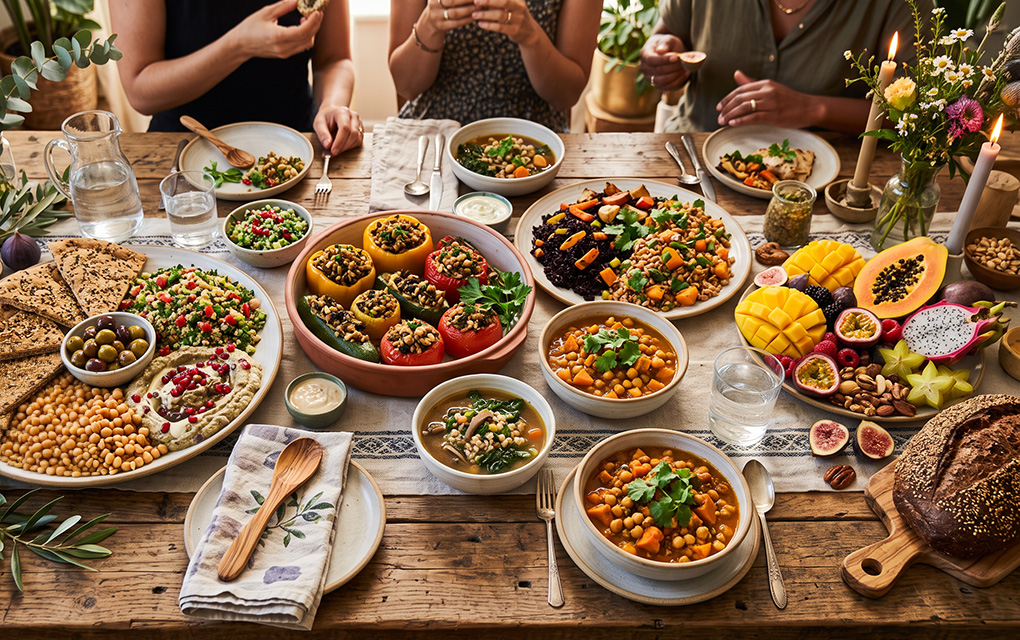
- Mediterranean celebrations revolve around shared platters of vegetables, legumes, olives, grains, and herbs. Think mezze tables overflowing with colour, slow‑cooked beans, stuffed vegetables, and fruit‑laden desserts.
- Pacific Island feasts honour whole ingredients—taro, coconut, fresh greens, tropical fruit, and slow‑cooked dishes prepared communally. Food is tied to land, season, and ceremony.
- East Asian celebrations often feature broths, steamed vegetables, tofu, mushrooms, rice, and dumplings made by hand. The feast is as much about the preparation as the eating.
- Latin American gatherings highlight beans, corn, tomatoes, citrus, fresh salsas, and celebratory dishes built from simple, vibrant ingredients.
These traditions remind us that feasting and health are not opposites. They coexist naturally when food is grown, gathered, and prepared with intention.
Reimagining modern celebrations
The future of feasting isn’t about recreating the past—it’s about drawing inspiration from it. Here’s how celebrations can evolve into meaningful, nourishing experiences without losing any of the joy.
1. Abundance through variety, not processed volume
A whole‑food feast feels abundant because it offers so many flavours, textures, and colours. Think:
- A table of salads—crunchy, creamy, herby, citrusy.
- Roasted vegetables in every hue.
- Legume dishes that feel hearty and celebratory.
- Fresh breads, whole‑grain pilafs, and stuffed vegetables.
- Platters of fruit arranged like art.
Abundance becomes visual and sensory rather than caloric.
2. Make preparation part of the celebration
Ultra‑processed foods remove us from the act of cooking. Whole‑food feasts invite us back in.
Chopping together, kneading dough, rolling dumplings, assembling platters—these are communal acts that build connection. They slow us down. They create anticipation. They turn the feast into a shared creation rather than a purchased product.
3. Honour seasonality
Seasonal food tastes better, looks better, and feels more celebratory. A summer feast might centre on tomatoes, stone fruit, basil, and grilled vegetables. A winter feast might highlight slow‑roasted roots, citrus, warm spices, and hearty legumes.
Seasonality also ties celebrations to place and time, grounding them in meaning.
4. Create signature whole‑food celebration dishes
Every family or community can craft its own whole‑food traditions:
- A signature salad that appears at every gathering.
- A celebratory stew or curry that simmers all afternoon.
- A fruit‑forward dessert that feels indulgent without relying on refined sugars.
- A platter that becomes iconic—your version of a mezze, antipasto, or grazing board.
Tradition is built through repetition. Choose dishes that feel festive and make them yours.
5. Reimagine indulgence
Indulgence doesn’t have to mean heaviness. It can mean:
- Rich dips made from beans, nuts, or roasted vegetables.
- Creamy sauces built from cashews, tahini, or coconut.
- Desserts that celebrate fruit, spices, and texture.
- Drinks infused with herbs, citrus, and sparkling water.
Indulgence becomes about pleasure, not aftermath.
A whole-food feast blueprint
To make this practical, here’s a structure for a celebration built around good food:
- A centrepiece dish: Something slow‑cooked, aromatic, and generous—like a lentil‑vegetable braise, stuffed capsicums, or a fragrant coconut‑based curry.
- Three abundant vegetable dishes: one roasted, one fresh, one creamy or warm.
- A legume‑based celebration dish: think spiced chickpeas, smoky beans, or a festive lentil salad.
- A whole‑grain or root‑vegetable base: pilaf, roasted potatoes, quinoa, or a seasonal grain salad.
- A vibrant platter: fresh fruit, nuts, herbs, and colourful vegetables arranged beautifully.
- A signature drink: Sparkling water with citrus, mint, berries, or ginger.
- A dessert that feels joyful: baked fruit, citrus‑polenta cake, spiced pears, or a creamy whole‑food pudding.
This blueprint creates a feast that feels indulgent, generous, and celebratory—without relying on ultra‑processed foods.
The deeper outcome
When we build celebrations around good food, something shifts. People slow down. They talk more. They savour. They feel connected to the ingredients, the season, the cook, the moment. The feast becomes a ritual rather than a transaction.
Whole‑food feasting also teaches children what celebration looks like. It builds traditions that feel grounding rather than draining. It creates memories tied to flavour, colour, and community.
Most importantly, it reminds us that joy and health are not opposites. They are partners. They always have been.
An abundant future
As we close this Healthy Food Series, our invitation is simple: let your celebrations be built around good food. Let abundance come from nature. Let indulgence come from flavour. Let tradition come from care and let feasting be something that nourishes every part of you—body, mind, and soul.
A NOTE OF THANKS
Finally, I want to thank the hundreds of readers who have followed this series over the last 24 weeks. Pulling these articles together has been a challenge at times, but it’s been well worth it, and I’ve learned so much.