


by Peter Barclay
Every so often, you read an article that feels less like new information and more like meeting someone who arrived at the same destination by a different road. That was my reaction to a recent article featuring the views of Associate Professor Wolfgang Marx, Deputy Director of Australia’s Deakin University Food and Mood Centre.
The article, published on InSight, explored why GPs should consider diet in mental health care, and for me, it sits alongside a broader argument that diet should be recognised as a clinical vital sign. For want of a better term, I felt I had finally found a soulmate in a quest that has occupied much of my thinking in recent years.
For some time, I have argued that what we eat is far too important to dismiss as a lifestyle choice, an occasional discussion point, or an optional wellness topic. After a study on how creatinine values are interpreted in blood test results, I made this point earlier this year.
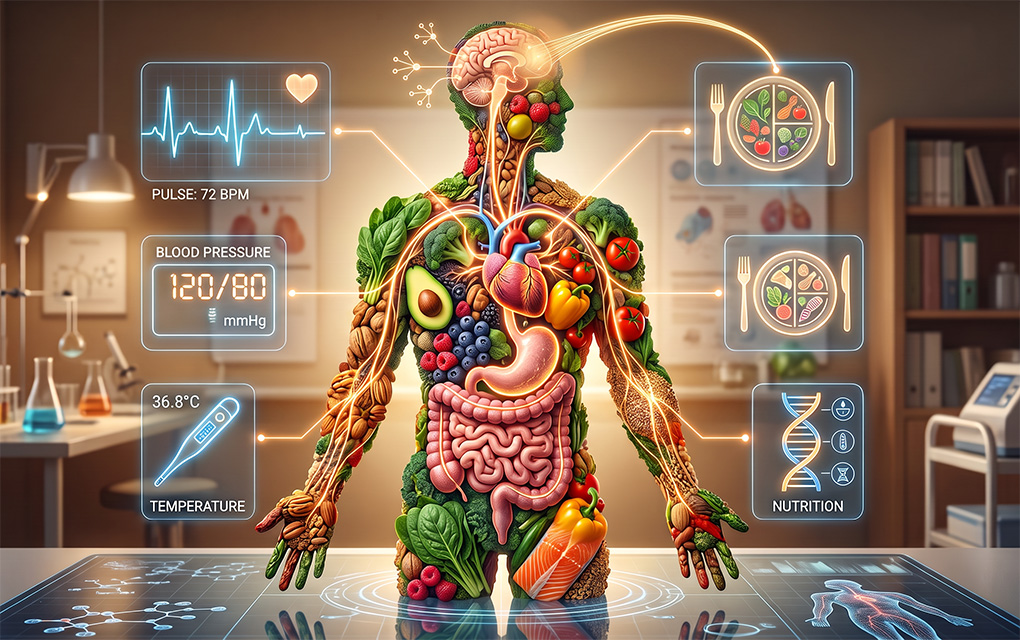
Diet is a biological input. It influences inflammation, metabolic health, immune function, cardiovascular risk and countless other markers that clinicians routinely monitor. If blood pressure, pulse, respiratory rate, and temperature are considered vital signs because they tell us something fundamental about the body’s state, then surely diet deserves similar recognition. It is one of the most important variables affecting human health, yet it is often absent from routine clinical assessment.
Cognitive blind spot
What particularly struck me about the discussion around mental health was the extent to which it exposed a blind spot in my own thinking.
Looking back at my earlier article, I’m now somewhat embarrassed to admit that I gave insufficient attention to mental health, although I didn’t omit it because I doubted the connection.
I think I had become so focused on the physical manifestations of poor nutrition that I overlooked the growing evidence and clinical experience linking diet with depression, anxiety and broader psychological wellbeing.
The reality is that the brain is not somehow isolated from the rest of the body. It depends on the same nutrients, metabolic processes and inflammatory pathways as every other organ.
If we accept that diet can influence cardiovascular disease, obesity, diabetes and autoimmune disorders, it becomes increasingly difficult to argue that it has no meaningful role in mental health. Any distinction between “physical” and “mental” health begins to look more artificial than real.
I’m not advocating that diet should be portrayed as a cure-all. Mental illness is complex. Social circumstances, trauma, genetics, relationships, economic pressures and many other factors contribute to a person’s mental wellbeing. However, acknowledging complexity should not become an excuse for ignoring a modifiable factor that sits in front of us every day, three times a day, on our plates.
A basic question
What I found refreshing in the argument for incorporating diet into mental health care is that it does not seek to replace existing treatments. Rather, it asks a simple question: why would we fail to consider nutrition when assessing and supporting someone experiencing depression or other mental health challenges?
General practitioners are often the first clinical point of contact for people seeking help. They routinely ask about sleep, exercise, alcohol consumption, smoking, medications and family history. It seems increasingly logical that dietary patterns should be part of that conversation. Not as an afterthought, but as a standard component of assessment and care planning.
This is where the concept of diet as a clinical vital sign becomes especially powerful. Once something is recognised as a vital sign, it moves from the margins to the mainstream. It becomes something that is routinely observed, recorded and discussed. It becomes part of normal clinical practice rather than an optional extra.
My own journey has been one of gradually realising just how deeply diet influences human health. Reading Professor Marx’s case for integrating nutrition into mental health care has broadened that understanding further. Rather than weakening the argument for diet as a clinical vital sign, mental health strengthens it.
A quality assessment
If diet affects both physical and psychological wellbeing, surely the case for routinely assessing nutritional quality becomes even more compelling.
Perhaps the most important lesson for me is the need to remain open to expanding our perspectives. Advocacy can sometimes narrow our focus as much as it sharpens it. I was so intent on making the case for diet’s role in physical health that I failed to fully appreciate its place in mental health care. For that, I am happy to acknowledge an oversight.
But I find it encouraging to discover others making complementary arguments from different directions. Whether the discussion begins with chronic disease, preventive medicine or mental health, it seems to lead to the same conclusion: diet is far too important to remain a peripheral consideration in healthcare.
If we genuinely aspire to treat the whole person rather than a collection of symptoms, then recognising diet as a clinical vital sign may be one of the most important shifts modern healthcare can make. And perhaps nowhere is that more apparent than in the growing recognition that what best nurtures the body also nourishes the brain.