


by Catherine Barclay
Eating a Whole Food Plant-Based (WFPB) diet is one of the most cost-effective ways to nourish your body, since the foundational ingredients—dry legumes, whole grains, root vegetables, and frozen produce—are among the cheapest items in most grocery stores worldwide.
Admittedly, variations exist everywhere, and it pays to be wary when preparing dishes with out-of-season ingredients, but generally speaking, you can’t beat WFPB foods for price or the stunning array of health benefits they provide.
I hesitated before pulling together yet another article on this subject, but with politicians in both hemispheres talking so much about the cost of living (food costs being one of them), I thought it was high time to restate the basics.
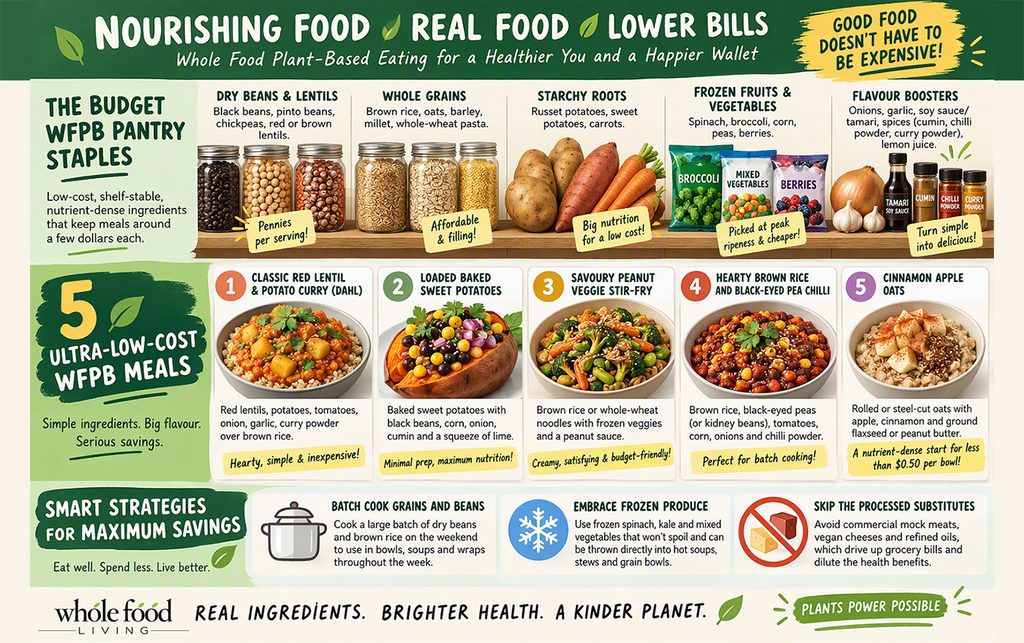
The WFPB pantry staples
To keep costs under a few dollars per meal, build your kitchen around low-cost, shelf-stable, and nutrient-dense ingredients:
- Dry Beans and Lentils: Black beans, pinto beans, chickpeas, and red or brown lentils cost pennies per serving when purchased dry and cooked in bulk.
- Whole Grains: Brown rice, oats, barley, millet, and whole-wheat pasta provide affordable, satiating complex carbohydrates.
- Starchy Roots: Russet potatoes, sweet potatoes, and carrots store well and provide heavy calorie density for very little money.
- Frozen Fruits and Vegetables: Frozen spinach, broccoli, corn, peas, and berries are picked at peak ripeness and are significantly cheaper than off-season fresh produce.
- Flavour Boosters: Onions, garlic, soy sauce/tamari, spices (cumin, chilli powder, curry powder), and lemon juice turn simple grains and beans into flavourful meals. Here are five Ultra-Low-Cost WFPB Meals
1. Classic Red Lentil & Potato Curry (Dahl)
Red lentils break down quickly into a rich, creamy stew without needing added oils or expensive coconut milk.
- Ingredients: Dry red lentils, diced russet potatoes, canned crushed tomatoes, onion, garlic, and curry powder, served over brown rice.
- Why it’s cheap: Red lentils cook in under 20 minutes without prior soaking, and potatoes provide immense satiety at a low cost per pound.
2. Loaded Baked Sweet Potatoes with Black Beans
A virtually prep-free dinner that balances sweet and savoury flavours while delivering high fibre and micronutrients.
- Ingredients: Baked sweet potatoes topped with warm black beans, frozen corn, diced onion, cumin, and a squeeze of lime juice or salsa.
- Why it’s cheap: Sweet potatoes and canned or home-cooked black beans form a complete nutritional profile for pennies per portion.
3. Savoury Peanut Veggie Stir-Fry
Using peanut butter as a base for sauces gives a rich, creamy texture without buying expensive speciality nuts or oils.
- Ingredients: Brown rice or whole-wheat noodles tossed with steamed frozen stir-fry vegetables (broccoli, edamame, carrots) and a sauce made from peanut butter, warm water, soy sauce, garlic powder, and a touch of maple syrup or date paste.
- Why it’s cheap: Frozen mixed vegetables reduce waste, and peanut butter is one of the most budget-friendly sources of healthy plant fats.
4. Hearty Brown Rice and Black-Eyed Pea Chilli
Chili is the ultimate batch-cooking meal, stretching bulk ingredients into days of nutritious lunches and dinners.
- Ingredients: Brown rice, black-eyed peas or kidney beans, canned diced tomatoes, frozen corn, onions, and chilli powder.
- Why it’s cheap: Making a large pot relies almost entirely on dry grains, legumes, and basic pantry spices.
5. Cinnamon Apple Steel-Cut or Rolled Oats
Oatmeal is the single most economical WFPB breakfast available.
- Ingredients: Rolled or steel-cut oats cooked in water or plant milk, topped with a chopped fresh apple, cinnamon, and a spoonful of ground flaxseed or peanut butter.
- Why it’s cheap: Oats bought in bulk tubs offer a nutrient-dense start to the day for less than $0.50 per bowl.
Smart Strategies for Maximum Savings
- Batch Cook Grains and Beans: Cook a large batch of dry beans and brown rice on the weekend to use as bases for bowls, soups, and wraps throughout the week.
- Embrace Frozen Produce: Swap out perishable greens that spoil quickly for frozen spinach or kale, which can be thrown directly into hot soups, stews, and grain bowls.
- Skip the Processed Substitutes: Avoid commercial mock meats, vegan cheeses, and refined oils, which drive up grocery bills and dilute the health benefits of a whole-food diet.