

by Peter Barclay
In the nine years I’ve been writing for Whole Food Living, I have explored nutrition, movement, mindfulness, sleep, environmental toxins, social connection, and many other contributors to health. Yet only recently did I realise that one subject has received surprisingly little attention in these pages: the contribution companion animals make to our wellbeing.
That oversight became apparent while reading a recent news release from Kyoto University summarising research published in iScience. The study offers an intriguing insight into something many pet owners have long suspected: our relationships with companion animals may have measurable effects on our mood and emotional health.
The research focused on cats, creatures often portrayed as independent and emotionally distant. Yet the findings tell a rather different story.
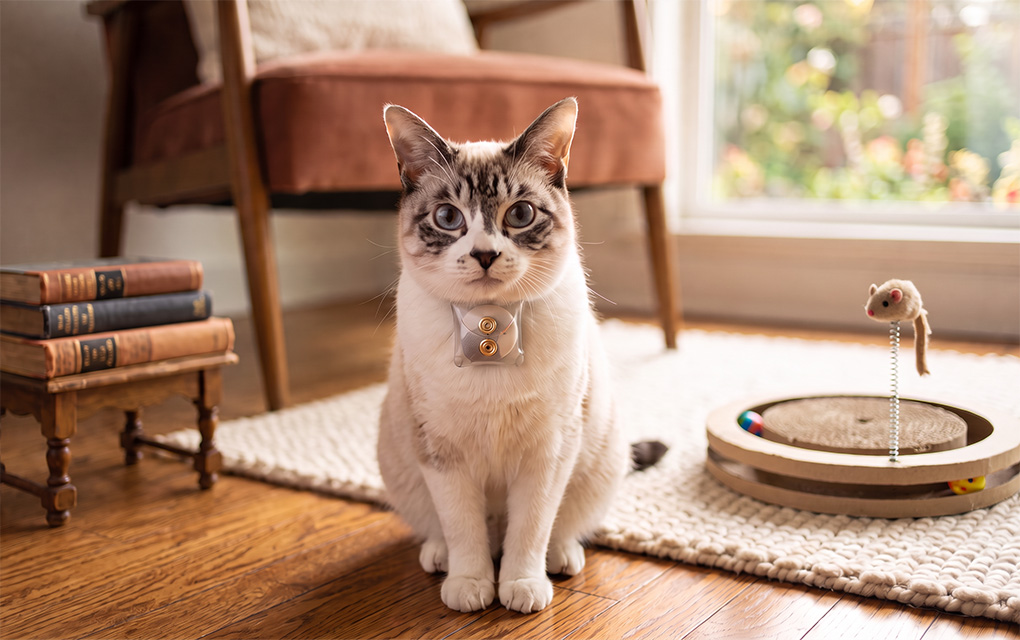
Researchers followed 29 cats and 19 owners for a month, measuring physical proximity between humans and cats with Bluetooth tracking, analysing hormone levels in urine samples, and assessing owner mood through questionnaires.
They discovered a positive correlation between oxytocin levels in cats and their owners. Oxytocin is often called the “bonding hormone” because it plays a central role in social connection, trust, and attachment. Higher oxytocin levels in cats were associated with lower stress-related cortisol levels and fewer negative emotions in their owners.
Most significantly, the owners’ positive moods were linked not to how long they had owned their cats, but to how much time they spent physically close to them.
The lead author, Saho Takagi, noted that many cat owners are familiar with the sense of comfort they experience when a cat settles on their lap and begins purring. The study suggests that this everyday experience may reflect genuine physiological processes occurring between humans and animals.
More than ownership
One of the most valuable aspects of this research is that it helps explain why previous studies on pet ownership have sometimes produced conflicting results. Simply owning an animal does not automatically deliver health benefits. The quality of the relationship matters.
It’s a point worth reflecting on. In health and wellbeing circles, we often search for universal prescriptions. Eat this food. Follow that exercise routine. Practise this breathing technique. But human wellbeing rarely works that way. Relationships matter, whether those relationships are with people or animals.
The Kyoto University study suggests that the emotional rewards come from interaction, affection, and proximity rather than ownership alone.
The wider science
The findings also align with a growing body of research examining what scientists call the human-animal bond.
According to the Human Animal Bond Research Institute (HABRI), positive interactions with animals are associated with reduced anxiety and depression, enhanced emotional wellbeing, and improved social support. Researchers have also observed physiological changes related to human-animal interaction, including reductions in heart rate, blood pressure, and stress responses.
Animals appear to provide a unique form of companionship. Unlike many human relationships, they are non-judgmental. They do not care about our professional status, appearance, political opinions, or bank balance. Their acceptance can be especially valuable during periods of stress, loneliness, grief, or illness.
Studies reviewed by HABRI have found that pets often help people establish routines, reduce feelings of isolation, and provide emotional support during difficult periods. Owners frequently report that their pets seem sensitive to their emotional state and provide comfort when it is most needed.
Wellness and connection
For readers of Whole Food Living, perhaps the most interesting perspective is that companion animals remind us that health is not solely an individual pursuit. Wellness emerges through connection.
We are social creatures by nature. While conversations about wellbeing often focus on what we put into our bodies, our emotional environment matters just as much. Relationships nourish us in ways we can’t measure in calories, vitamins, or protein intake.
A dog waiting eagerly at the door after a difficult day, a cat resting quietly beside us while we read, or even the daily responsibility of caring for another living being can create moments of meaning that contribute to overall health.
These interactions may seem ordinary, but the Kyoto research suggests they are anything but trivial. Shared proximity, affection, and companionship may influence hormonal pathways associated with stress and emotional wellbeing.
A matter of balance
Of course, companion animals are not a cure-all. The Kyoto researchers caution that their findings show associations, not proof of cause and effect. More research is needed to fully understand how these relationships influence health over time.
Nor is pet ownership appropriate for everyone. Animals require time, commitment, financial resources, and responsible care. In some circumstances, the responsibilities can create stress rather than reduce it.
Yet it is equally important not to dismiss the benefits simply because they are difficult to quantify. Many aspects of wellbeing are rooted in connection, purpose, and affection, all areas where companion animals can play a meaningful role.
An overlooked ingredient
Perhaps the lesson here is that a truly holistic view of health should extend beyond food, exercise, and lifestyle choices. It should also acknowledge the relationships that enrich our lives.
For nine years I have written about the ingredients of healthy living, and I find it remarkable that companion animals have largely escaped my attention. Given the growing evidence, that omission seems increasingly difficult to justify.
The latest findings from Kyoto University suggest that the gentle presence of a cat curled beside us may be doing more than simply keeping us company. The same could be said of dogs, birds, rabbits, horses, and many of the other animals that share our homes and lives.
Companion animals may never appear in dietary guidelines or wellness protocols, but perhaps they deserve recognition as one of the quieter contributors to human flourishing. Sometimes wellbeing arrives not in a supplement bottle or a superfood smoothie, but as a soft purr, a wagging tail, or the reassuring presence of another living being choosing to spend time close to us.
Sources
Primary source: Kyoto University, “Cats and humans show correlated affiliative physiological states,” published in iScience on October 13, 2026
Additional background: Human Animal Bond Research Institute (HABRI) resources on mental health and the human-animal bond.