

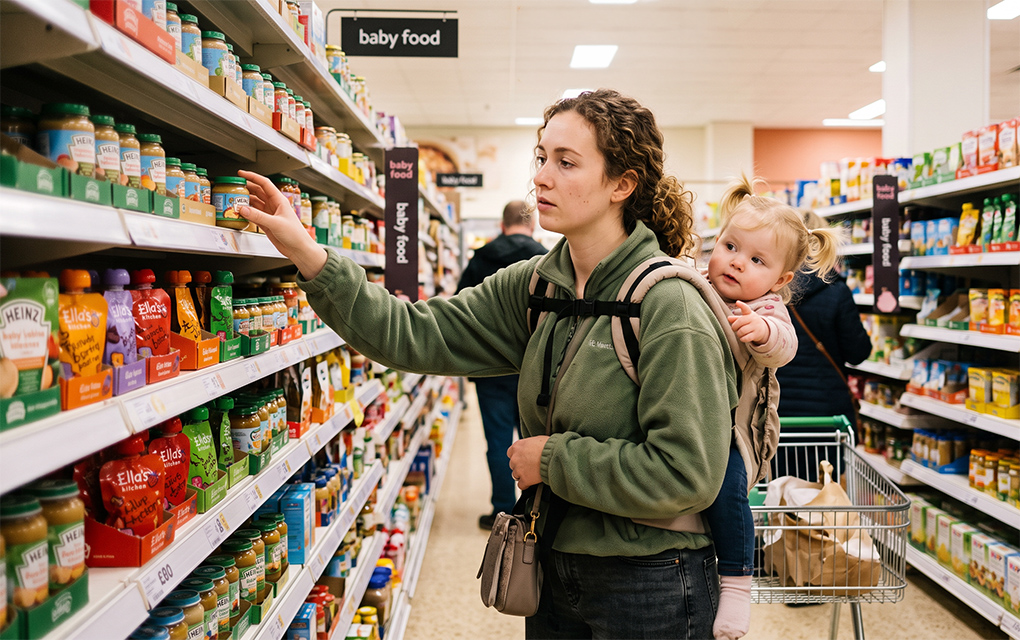

A new US audit has dropped a bombshell that should make every parent pause in the baby aisle: 80% of toddler foods on grocery shelves are ultra‑processed. And nearly half fail at least one World Health Organisation nutrient benchmark for children aged 6–36 months.
The review, although relatively small in sample size, is clear confirmation that the toddler food environment is in no way designed with health as its first priority.
The foods children eat between 6 months and 3 years shape lifelong taste preferences and dietary habits. High sugar intake in particular is well‑established as harmful to young children’s health.
The Texas audit analysed 2,783 products across 21 grocery stores. The results were stark:
- 81% were ultra‑processed (Nova classification)
- 17% exceeded WHO sugar limits
- 25% exceeded sodium limits
- 11% exceeded fat limits
- 12% exceeded energy density limits
Everyday items
The items reviewed aren’t fringe products—they’re everyday items parents reach for in moments of convenience or trust. The audit highlighted several common toddler foods that exceeded nutrient thresholds:
- Fruit pouches – high in sugar
- Oat bars – high in sugar and calories
- Mac and cheese – high in sodium and fat
- Turkey sticks – high in sodium and fat
- Cheese puffs – high in calories
- Peanut butter puffs – high in sodium, fat, and calories
Many parents assume products in the baby aisle must meet strict standards. They don’t. As lead researcher Erin Hudson notes, “half of the toddler foods available in local grocery stores do not” meet nutrient standards.
The researchers point out an important nuance:
- Some less‑processed foods are high in fat or calories because they contain whole‑food ingredients like peanuts or beef—nutrient‑dense and appropriate in moderation.
- Ultra‑processed toddler foods, however, were more likely to be high in sugar without offering meaningful nutritional benefits.
This distinction matters. Whole‑food fats support development. Added sugars do not.
Challenged by choice
“During these critical early years of development, most parents are trying to feed their children healthfully but may be challenged to do so by the toddler food products available in their grocery stores,” Hudson explains.
The US FDA is currently considering new front‑of‑pack labelling guidelines and marketing restrictions for children’s foods. The US still does not require warning labels for high sugar, sodium, or calorie products .
New Zealand and Australia face similar challenges: toddler foods often slip through regulatory gaps, relying on marketing language rather than nutrient integrity.
While the audit was US-based, the toddler food landscape in New Zealand and Australia mirrors many of the same issues:
- Heavy reliance on pouches
- Snack foods marketed as “wholesome”
- Confusing nutrient claims
- Limited regulation around toddler‑specific products
Vigilance is essential
WFPB followers know that whole‑food, fibre‑forward meals are the gold standard. But this research reinforces the need for vigilance—especially when convenience foods creep into daily routines.
Here are some practical takeaways
1. Read labels like a detective. Look for added sugars, sodium levels, and long ingredient lists.
2. Prioritise whole‑food snacks: Fresh fruit, cooked veg, hummus, beans, oats, whole grains.
3. Treat toddler snack foods as occasional. Many are engineered for taste, not nutrition.
4. Build flavour literacy early. Toddlers who learn to enjoy whole foods develop healthier lifelong preferences.
5. Advocate for clearer labelling. Warning labels could help parents navigate the toddler food environment and encourage manufacturers to reformulate products.
These findings were presented last week at NUTRITION 2026, the flagship meeting of the American Society for Nutrition. As with all conference abstracts, the results are preliminary until a peer-reviewed publication is available.
The toddler years are a window of opportunity. While the grocery aisle may be stacked against parents, knowledge—and a commitment to whole‑food living—can shift the balance back toward health.