


by Peter Barclay
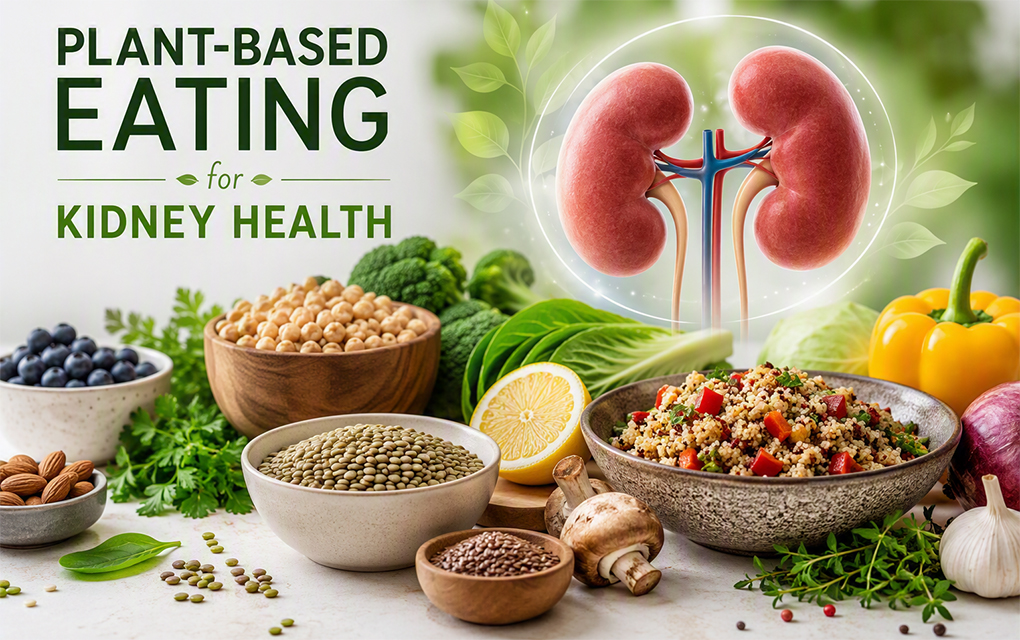
For years, whole-food plant-based advocates have highlighted the benefits of eating more fruits, vegetables, legumes, whole grains, nuts, and seeds. Now, new research is adding kidney health to the growing list of reasons to embrace a plant-centred lifestyle.
A study published in the Journal of Renal Nutrition found that vegan and Pesco-vegetarian dietary patterns were associated with better kidney function than nonvegetarian diets in participants from the Adventist Health Study-2 cohort.
The kidneys perform essential work every day, filtering waste products from the blood, balancing fluids, and helping regulate blood pressure. Researchers evaluated kidney health using estimated glomerular filtration rate (eGFR), a widely used measure of how effectively the kidneys filter blood. Higher eGFR values generally indicate better kidney function.
Chronic kidney disease is a major public health concern, affecting more than 800 million people worldwide and creating significant healthcare costs and challenges.
What researchers found
The study examined 899 participants and compared several dietary patterns, including vegan, lacto-ovo vegetarian, pesco-vegetarian, semi-vegetarian, and non-vegetarian eating styles.
After adjusting for factors such as age, body weight, lifestyle habits, and existing health conditions, researchers found that:
- Vegan dietary patterns were associated with significantly higher eGFR compared with nonvegetarian diets.
- Pesco-vegetarian dietary patterns were also associated with significantly higher eGFR compared with nonvegetarian diets.
- The strongest benefits appeared in the vegan and pesco-vegetarian groups, while lacto-ovo vegetarian and semi-vegetarian patterns did not show the same significant associations.
Lead author Fayth Butler, PhD, MPH, summarised the findings simply: “We now have evidence that a vegetarian diet helps preserve kidney function.”
Beyond nutrients
One of the most intriguing aspects of the research was its examination of metabolites—small compounds produced when the body processes food. Researchers discovered distinct metabolic profiles among people following vegan and pesco-vegetarian diets.
Certain lipid and amino-acid-related metabolites associated with higher creatinine levels were found in lower amounts among participants following vegetarian dietary patterns.
The findings suggest that diet may influence kidney health through specific metabolic pathways, not simply through individual nutrients alone.
The whole food connection
While the study focused on dietary patterns rather than specific meal plans, the findings align closely with the principles of whole-food plant-based living. Diets rich in vegetables, fruits, legumes, nuts, and whole grains have previously been linked to lower rates of conditions such as hypertension and diabetes—two major risk factors for chronic kidney disease.
Researchers noted that plant-based dietary patterns may represent a cost-effective strategy for helping prevent chronic kidney disease and supporting long-term kidney health.
This research does not suggest that everyone must become vegan overnight. However, it does reinforce a growing body of evidence showing that diets emphasising plant foods can have meaningful health benefits.
The broad picture painted here shows that filling your plate with more whole plant foods may do more than support heart health and weight management—it may also help your kidneys continue performing their vital work for years to come.
Sources: Journal of Renal Nutrition study “Vegetarian Dietary Patterns and Diet-Related Metabolites Are Associated With Kidney Function in the Adventist Health Study-2 Cohort” and Loma Linda University Health research news coverage.