

by Innes Hope
Full supermarket shelves are a reassuring sight and shopkeepers take great pride and pleasure restocking them. Customers have happily taken our stable food supply for granted since the end of World War II, so current disruptions and price rises are just temporary, we think. Getting past the initial shock, we adapt, knowing that once this global pandemic is behind us, we’ll be able to shop as usual.
Sorry folks. But food shortages and rising prices are here to stay. The climate crisis guarantees it, and adapting is not going to solve the problem. If we want to avoid a bad case of the empty shelf blues, and the blues in general, we need to move into mitigation mode. The sooner the better.
The good thing is, mitigating turns out to be more enjoyable than adapting! Well that’s how I’m experiencing it. Here’s what I’m enjoying …
Leaving ‘Treat Yourself’ culture behind
I see ‘Treat Yourself’ culture as emotional manipulation luring me to buy unnecessary stuff. As an insult to nature, tempting me to consume Earth’s precious resources beyond my needs. It grows my carbon footprint and insults people struggling to feed their families. Phrases like ‘Go on, you deserve it’ insult my intelligence. Indulgence doesn’t gift me peace and contentment. Gratitude for the simple things does.
Let’s be done with novel treats. Shunning them is not virtues signalling. It is living the virtues that grant us the deep satisfaction of feeling connected to each other and to nature. It is gifting ourselves the joy of gratitude.
SO WE CAN EAT
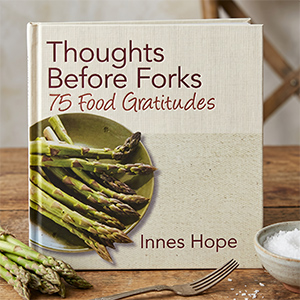
from Thoughts Before Forks
by Innes Hope
Given so much we take for granted,
The earth tilled, the seeds planted,
The knowledge needed, the labourers’ toil,
Backs bent tending the soil,
All so we can eat;
Engineers building mammoth machines
That harvest, thresh, separate, and clean,
Truckies enduring hours on the road,
Forklift drivers stacking the load
All so we can eat;
Workers lugging crate upon crate,
Shop attendants whose tired feet ache.
We’re given all this, from the farmer’s crop
To service with a smile at the counter top
All so we can eat
Sorting the dollars
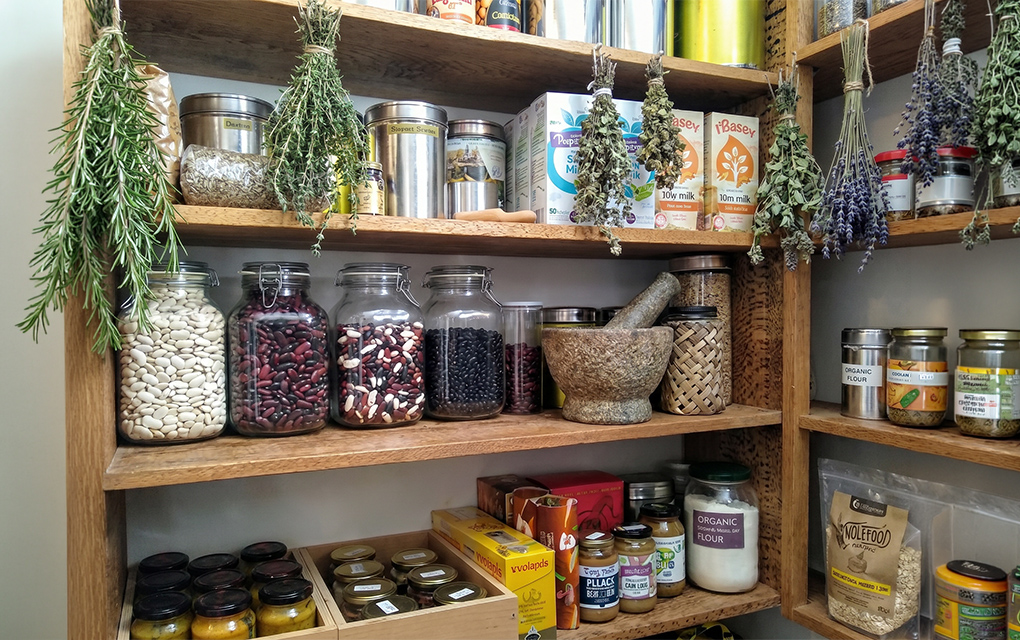
We can’t live on fresh air. We need some money if we want a full pantry and extra supplies. Civil Defence has been encouraging people to set up emergency food supplies for years. I’m finding it rewarding. Plus it’s a fabulous investment – staying ahead of rising prices we’re saving a significant amount of money.
A food stash can be started without spending more than usual, by buying an extra litre or two of plant milk or a couple of cans of beans instead of, say, biscuits, beer or a coffee. Watching our stash grow is a whole new delight. Food security feels good.
When empty shop shelves greet us, we can manage. When purchase limits apply, we can still buy milk and beans, so our stash doesn’t run down too much. A head start, plus eating from our stash and quickly replacing it, are the key. Sorting the dollars at the beginning makes it all possible. So what are the best foods to store?
Becoming ‘Essentials Savvy’
Essentials. By not purchasing unnecessary treats, it’s easier to sus them. Think water and essential nutrients. Our bodies can’t make Vitamin B12 or omegas, so having B12 tabs, and linseed for omegas in one’s stash is a wise choice. If, like me, you can’t take a lot of sun, doctors are usually happy to prescribe Vitamin D. Stocking up on whole carbs is easy when oats, brown rice, wholegrain flours and pasta are available. Essential fats and oils are already present in whole foods. Add a jar or three of peanut butter and tahini to your store of linseed, and you’ve got fat sorted. That leaves protein, and a few more vitamins and minerals.
Maintaining a stash of protein foods
‘Limit: two per customer’ signs on canned beans can be hard on plant-based eaters. But there are several ways around it:
- Buying dried beans, chickpeas, lentils, quinoa, etc, from Asian food stores or the likes of Bin Inn. The food is often cheaper, and those shops usually stock a bigger variety of whole plant foods. As do organic food shops. It’s a good feeling freeing ourselves from supermarket dependency and supporting small business.
- Getting a pressure cooker and using it regularly. ‘Face the fear and do it anyway’ as the saying goes. It doesn’t take long to master basic pressure-cooking skills. Pressure makes protein more available, and food more nutritious and affordable.
- Growing climbing beans. Any variety. Drying and storing them. Free protein!
- At the supermarket, stocking up on tofu, tempe, canned beans, soy milk, frozen broad beans and maybe a few packets of high-protein pasta. This, together with a good store of dried beans, will mean ‘Limit’ signs don’t get us down.
Being creative & resourceful
When food is in short supply, we tend to find new ways of making the most of what we have. Creativity blossoms as we sus the optimum use of food. We take pride in being resourceful, and in creating less waste. Here are a few ideas you might like to try.
- Making your own oat milk, nut milk and soy yogurt. The nut milk solids can be made into soft cheese by adding lemon juice and a pinch of salt.
- Getting out your preserving jars and bottling produce that’s plentiful and cheap. You’ll have your own unique pickles, chutneys, jam and bottled fruit to enjoy.
- Dried foods store well. Dried mushrooms and seaweeds are handy and nutritious. When fresh, canned and bottled fruit is scarce, soak some dried fruit in water. Hydrated, it is better for our health. This is so with nuts and seeds too.
- Maintaining a good store of frozen food; bread, vegetables, soups and ready-to-eat mains. During power outages, plant food eaters have an advantage over our meat-eating friends. Unlike animal foods, most plant foods don’t need to be discarded. Double check, but it is usually safe to re-freeze them.
Growing stuff
Grow something outside. Anything. Veges, flowers, fruit. Anything. Every success and every failure is important and empowering. With fresh produce, you’ve got the rest of your vitamins and minerals sorted.
Growing stuff outdoors we’re in touch with the weather. And there’s one thing we can totally rely on when it comes to the weather. It doesn’t lie. It’s the voice of the climate, speaking the language of sunshine and clouds, floods and storms.
We need to listen. The climate crisis is real. The need to mitigate is urgent. Our food supply is totally dependent on the climate, and we, in turn, are dependent on our growers. Growing something, we gain respect for them, and feel more connected to our food supply.
Instead of being embittered, criticising, and moaning about rising prices, no potatoes or tomatoes, etc, we’re likely to identify with growers, feeling concern and compassion. We’ll be more climate-aware and empowered to act. Enjoying a bit of kai grown in our own garden, (or balcony bucket), we can stay nourished. Starting with one or two plants at a time is a good idea. Silver beet and parsley are easy to grow …
With fresh greens on hand and a stash of essentials in the pantry, we won’t be singing the empty shelf blues. We may even have something to share with friends in need. That feels real good. First things first. Food is survival – the lifeblood of our world family.