

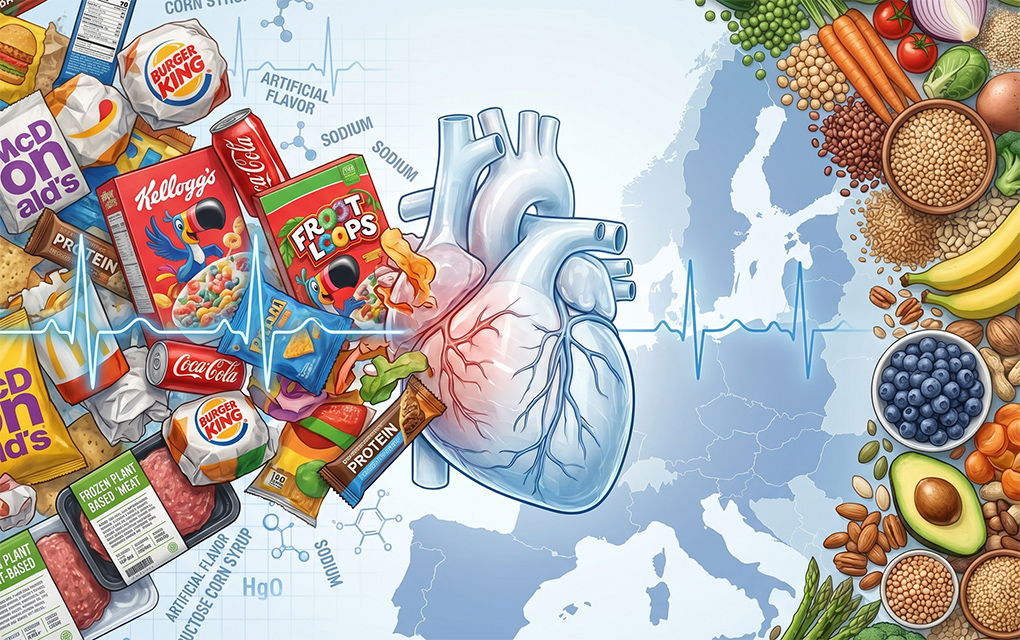

Clinical researchers have been sounding the alarm about ultra‑processed foods (UPFs) for over 10 years. Now, Europe’s leading cardiology bodies have issued their strongest statement yet: limit UPFs to protect heart health.
The new clinical consensus, published in the European Heart Journal this week, pulls together every major study on UPFs and cardiovascular disease to date—and the message is clear and urgent.
UPFs—industrial formulations made from refined ingredients, additives, and altered food structures—have steadily replaced traditional diets across Europe and beyond. Study leader Professor Luigina Guasti notes that these foods have “largely replaced traditional diets” and are consistently linked to obesity, diabetes, hypertension, and cardiovascular death.
Yet despite this mounting evidence, most national dietary guidelines still focus on nutrients, not processing. The report highlights that current advice “does not address the possible harms of UPFs”—a gap that experts say is now impossible to ignore.
The new consensus
The expert panel’s findings are stark:
- Adults consuming the most UPFs have up to a 19% higher risk of heart disease, a 13% higher risk of atrial fibrillation, and up to a 65% higher risk of cardiovascular death compared with those who consume the least.
- UPFs worsen major risk factors including obesity, type 2 diabetes, high blood pressure, and unhealthy blood lipid levels.
- Consumption is rising sharply: UPFs now make up 61% of calories in the Netherlands, 54% in the UK, and between 18–25% in Southern Europe.
The consistency of these findings across populations, diets, and disease categories strengthens the case for action. As the authors note, the evidence “holds true across different cardiovascular risks, diseases and death”.
Biological pathways
The report outlines several biological pathways through which UPFs may drive cardiovascular harm:
- High levels of sugar, salt, and unhealthy fats
- Additives and contaminants that may disrupt metabolism and trigger inflammation
- Altered food structures that promote overeating and gut microbiome changes
Dr Marialaura Bonaccio emphasises that these mechanisms make the associations “biologically plausible” and highlight the need for long‑term intervention trials to test whether reducing UPFs improves cardiovascular outcomes.
A call to doctors
One of the strongest recommendations in the consensus is directed at clinicians. The authors urge doctors to:
- Ask patients about UPF intake during dietary assessments
- Discuss reducing UPFs alongside advice on physical activity, smoking, and alcohol
- Explain that foods marketed as “healthy” may still be ultra‑processed
This shift reflects a broader recognition that food processing—not just nutrients—matters for health. As the report states, “Even foods with good nutritional profiles can be harmful if highly processed”.
Empowering & practical
For Whole Food Living readers, the implications are both empowering and practical:
- Choose whole or minimally processed foods whenever possible.
- Be sceptical of health‑washed UPFs—protein bars, plant‑based meats, and “low‑fat” snacks often fall into this category.
- Look beyond the nutrition panel. Processing level is not listed, but ingredient lists tell the story: long lists, additives, isolates, and unfamiliar compounds are red flags.
- Reclaim traditional food patterns—home cooking, whole grains, legumes, vegetables, fruits, nuts, and minimally processed staples.
A significant shift
This consensus marks a significant shift in how cardiology views food. It signals that UPFs are no longer a fringe nutrition concern—they are a mainstream cardiovascular risk factor.
As Professor Guasti hopes, integrating UPF awareness into routine medical care could improve patient health “without adding significant cost or time”.
For a world increasingly shaped by industrial food, this is a call to return to the basics: real food, minimally altered, eaten in forms our bodies recognise.