

Public health messaging has long focused on aerobic activity as the cornerstone of healthy ageing. Walking, cycling, swimming, and other forms of moderate-to-vigorous movement have all earned their place in the spotlight.
But new research published in JAMA Network Open suggests that another often-overlooked component of physical fitness may be just as important—if not more so—for women in their later years: muscular strength.
In one of the most comprehensive studies of its kind, researchers followed 5,472 ambulatory women aged 63 to 99 for an average of 8.4 years. Their goal was to understand whether simple, clinically accessible measures of strength—grip strength and chair stand performance—could predict mortality risk, even after accounting for physical activity levels, sedentary time, walking speed, inflammation, and other health factors.
The results were striking: greater muscular strength was consistently associated with lower mortality, and this relationship held true across age groups, ethnicities, body sizes, and activity levels.
Strength & resilience
Muscular strength is more than a measure of physical capability. It reflects a complex interplay of neuromuscular function, metabolic health, inflammation, and overall physiological resilience. As the study notes, strength declines rapidly with age, yet it remains essential for maintaining independence, preventing hospitalisation, and supporting quality of life.
To assess strength, researchers used two simple tests:
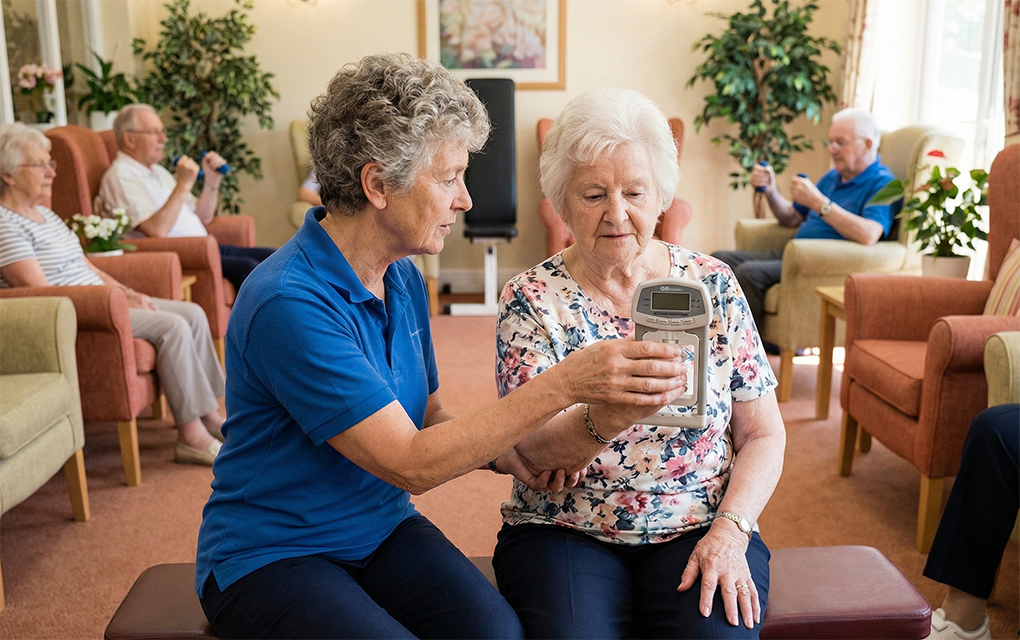
- Grip strength, measured with a handheld dynamometer
- Chair stand time, the number of seconds needed to complete five sit-to-stands without using the arms
These tests are quick, inexpensive, and easily performed in clinical or community settings—making them ideal tools for assessing functional ageing.
What the study found
1. Stronger women lived longer—regardless of activity levels
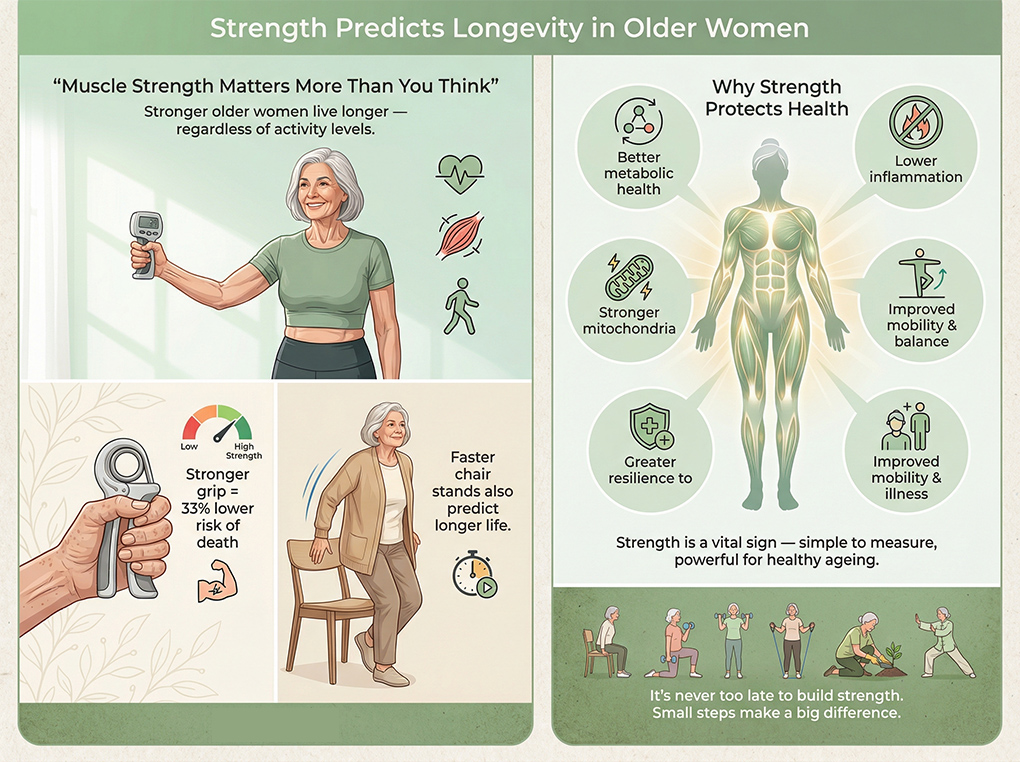
Women in the highest quartile of grip strength had a 33% lower risk of death compared with those in the lowest quartile. Faster chair stand performance showed a similar pattern.
Importantly, these associations remained significant even after adjusting for:
- Age
- Race and ethnicity
- Education
- Body weight
- Smoking and alcohol use
- Blood pressure
- Comorbidities
- Self-rated health
- Walking aid use
- Accelerometer-measured physical activity and sedentary time
- Walking speed (a proxy for cardiorespiratory fitness)
- C-reactive protein (a marker of systemic inflammation)
This level of adjustment is rare in physical activity research and strengthens the conclusion: muscle strength independently predicts longevity.
2. Strength mattered even for women who did not meet aerobic activity guidelines
One of the most compelling findings was that grip strength predicted lower mortality even among women who failed to achieve the recommended 150 minutes of moderate-to-vigorous physical activity per week.
This suggests that strength is not merely a by-product of aerobic fitness—it is a distinct and powerful contributor to healthy ageing.
3. Grip strength and chair stands measure different things
Although both tests predicted mortality, they were only weakly correlated (sharing less than 2% of variation). Grip strength appeared to be a more direct measure of muscular output, while chair stand time may reflect broader aspects of ageing such as fatigue, balance, and lower-body function.
This distinction matters because it highlights the multifaceted nature of strength and functional capacity.
4. The findings were consistent across subgroups
The inverse association between strength and mortality held across:
- Age groups (under and over 80)
- Racial and ethnic groups
- BMI categories
- Levels of physical activity
- Levels of sedentary time
- Walking speed
- Use or non-use of walking aids
This consistency underscores the robustness of the findings.
Strength matters for healthy ageing
Strength supports nearly every aspect of daily life—lifting groceries, rising from a chair, climbing stairs, maintaining balance, and preventing falls. But its benefits extend far beyond mobility.
Physiological pathways linking strength to longevity include:
- Improved metabolic health
Stronger muscles enhance glucose uptake and insulin sensitivity. - Reduced inflammation
Muscle tissue produces anti-inflammatory myokines. - Better mitochondrial function
Strength training stimulates mitochondrial biogenesis and efficiency. - Greater functional reserve
Stronger individuals are better able to withstand illness, injury, and hospitalisation. - Enhanced independence and social engagement
Mobility is a key determinant of social participation, which itself predicts longevity.
The wider implications
The study’s authors emphasise that grip strength and chair stand tests are simple, scalable tools that clinicians can use to assess ageing trajectories. For public health, the message is clear: strength deserves equal billing alongside aerobic activity in guidelines and community programmes.
For older women—especially those who may feel intimidated by gyms or structured exercise—this research offers empowering news. Strength can be built and maintained through accessible, low-cost activities such as:
- Bodyweight exercises (squats, wall push-ups, sit-to-stands)
- Resistance bands
- Light dumbbells
- Tai chi or yoga
- Functional daily movements (carrying groceries, gardening)
Even small improvements in strength may translate into meaningful gains in longevity.
A new narrative
This study adds to a growing body of evidence that reframes how we think about ageing. Rather than focusing solely on aerobic fitness, we should recognise muscular strength as a vital sign—one that reflects the body’s capacity to adapt, recover, and thrive.
The takeaway is simple and hopeful: it’s never too late to build strength, and doing so may be one of the most powerful steps toward a longer, healthier life.