Facebook Instagram
Sign in
  • Home
  • About
    • Founders
    • The Team
    • WFPB Defined
    • PDF Downloads
    • Our Advocates
    • WFPB FAQ
    • Contact
  • Health
    • Exercise
    • LM2025
    • Nutrition
    • Wellness
  • WFPB Recipes
    • Breakfast
    • Desserts
    • Drinks
    • Gluten Free
    • Main
    • Sauces
    • Side Dishes
    • Snacks
    • Soups
  • Environment
  • Recovery
  • Resources
    • Books
    • Movies
    • Tips
  • Viewpoints
    • Danielle Medina
    • Diana Moura
    • Dr Ralph Koelmeyer
    • Innes Hope
    • Janice Carter
    • Nikki Machin
    • Peter Barclay
    • Silva Mirovics
  • Features
    • Garden
    • News Bites
Sign in
Welcome!Log into your account
Forgot your password?
Password recovery
Recover your password
Search
Whole Food Living
Tuesday, September 22, 2026
Facebook
Instagram
Whole Food Living
  • Home
  • About
    • Founders
    • The Team
    • WFPB Defined
    • PDF Downloads
    • Our Advocates
    • WFPB FAQ
    • Contact
  • Health
    • AllExerciseLM2025NutritionWellness
      Health

      The WFPB advantage: Research reveals the best diet for blood sugar health

      September 12, 2026
      Health

      PB eating and kidney health: New research points to a powerful connection

      August 29, 2026
      Health

      Sugary drinks pose a seriously high risk of stomach cancer, study finds

      August 29, 2026
      Exercise

      The fast walkers: What ‘Super Movers’ reveal about ageing and brain health

      August 29, 2026
  • WFPB Recipes
    • AllBreakfastDessertsDrinksGluten FreeMainSaucesSide DishesSnacksSoups
      Main

      Simple Saag Aloo – Spinach and Potato Curry

      August 29, 2026
      Soups

      Creamy Potato and Cauliflower Soup

      August 29, 2026
      Snacks

      Sticky Lemon Muffins

      August 29, 2026
      Desserts

      Air Fried Pineapple

      August 29, 2026
  • Environment
  • Recovery
  • Resources
    • AllBooksMoviesTips
      Features

      Healthier cooking under pressure

      May 6, 2025
      Tips

      12 plant-based tips you wished you had known earlier

      March 30, 2024
      Books

      The China Study – revised & expanded

      June 20, 2023
      Books

      The Starch Solution, Dr John McDougall

      May 24, 2023
  • Viewpoints
    • AllDanielle MedinaDiana MouraDr Ralph KoelmeyerInnes HopeJanice CarterNikki MachinPeter BarclaySilva Mirovics
      Features

      When the pantry speaks: Echoes of Earth Mothers across 160 years

      August 15, 2026
      Nikki Machin

      Thyroid health: Iodine, are you getting enough?

      August 14, 2026
      Viewpoints

      When wellness words lose their meaning, we lose our way

      July 17, 2026
      Viewpoints

      The rating system that rewards risk: Why FSANZ must change course

      July 17, 2026
  • Features
    • AllGardenNews Bites
      Features

      Unlocking flavour: The whole-food cook’s guide to seasoning without salt

      September 12, 2026
      Features

      But it looks like oil: Why oil-free dishes taste richer the next day

      September 12, 2026
      News Bites

      The label revolution: Smarter barcodes could strengthen healthy living

      August 29, 2026
      Features

      ACLM launches comprehensive, game-changing evidence repository

      August 29, 2026

EDITOR PICKS

Unlocking flavour: The whole-food cook’s guide to seasoning without salt

September 12, 2026

Italian Plant-Based Meatballs

July 28, 2020

Slow Cooker Peanut and Potato Curry

June 14, 2025

POPULAR POSTS

Luana Tupou: Diabetes, denial and divine intervention

March 8, 2025

The Plant Power Doctor, Dr Gemma Newman

May 21, 2023

Chocolate Fudge Icing

May 5, 2023

POPULAR CATEGORY

  • Health174
  • Main138
  • Features116
  • Environment65
  • Nutrition60
  • Desserts58
  • Viewpoints54
  • Snacks53
Whole Food Living

FOOD - HEALTH - ENVIRONMENT

OUR MISSION

To introduce and explain the benefits of whole food plant-based eating in the prevention and cure of a wide range of lifestyle illnesses.

OUR COMMUNITY

We're a community of conscious health seekers who want to improve and restore their health, and the health of the planet we share.

FOLLOW US

Facebook
Instagram

© Iclaymedia 2023

  • Disclaimer
  • Privacy
  • Advertisement
  • Contact us

Accumulated deposits

All of these surfaces accumulated various amounts of fat deposit, eventually leading us to wonder, how much of this stuff ends up inside us?

In one home, and perhaps from previous tenants that had occupied the place, we found fine fat particles high on the walls near the ceiling. We knew some of these particles were micro-sized, and how far they carried around the home was staggering.

It set us thinking. What’s happening with us? Does it sit in our lungs? Is it bad for us?
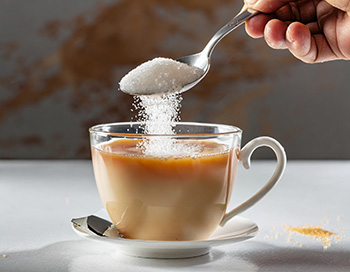
We always knew that too much sugar was bad, but we never stopped (or moderated) using it in stews, sauces and tea. For Peter, two spoonfuls in tea was normal in the seven or eight cups he drank daily.

“Of course, all this was happening while we raised our three children,” Peter says, “and today, I’m ashamed to say, we were more concerned about the potential stains that a glass of spilt Fanta could leave on the carpet than what the consumption of sugar-sweetened beverages was doing to our kids.”

“The fact is, both of us were blind to the impact that our definition of eating healthy had anything to do with scientific investigation on the subject and was severely influenced by shaky media articles and the weight loss bible as written by Jenny Craig.”

One of the ‘advantages’ of whole food plant-only eating is that you quickly become aware of what is happening (or not happening) within your body.

When you are accustomed to two spoonfuls
of sugar in your tea and then drop one, you
suddenly make an astounding discovery
– the tea tastes disgusting.
Strangely, though, if you persist, it tastes almost normal in about three weeks.

“Then I threw in an extra spoonful for old times’ sake,” Peter says, “and I nearly threw up. The same happened when we moved from full cream to light milk.”

At this point, it was still some time before ‘the big push,” but salt was probably the most awkward when we both think back on it, although Catherine would put her love for cheese on the same shelf.

The confusing thing about salt is that you know humans need it, but you’re never too sure how much and who measures their intake of it anyway. Cheese, you just eat and eat.

Of course, cheese contains plenty of salt and many other things, but it never dawned on us until after “the big push” that it also includes a lot of fat. With salt, well, most of the recipe books we read said that you need to “add salt for taste, so why hold back? When it came to food, moderation was never our strong suit.

By the time the children reached their early teenage years, all the family were heavily addicted to the taste of sugar, oil, salt and fat. Eating was moderated by income at different times, although by volume only, not quality. It never occurred to us that a whole new (and much less expensive) world of unadulterated good taste existed until something drastic happened.

The big push

In May 2014, Peter had a stroke. It was a TIA (trans ischemic attack) or mini-stroke, as it is often called, but it was a stroke nonetheless.

“Nothing makes you weigh up your options like a serious medical event,” Peter says, “but the fact was we were also left scratching our heads. Where did we go wrong? All the tests certainly proved that things were wrong, but how?”

Catherine was just as devasted.

“I always thought I was feeding all of us healthy food. I used recipes from Healthy Food Guide and other magazines, but they didn’t help. At the hospital, when the dieticians came to see us, I explained how meals were made up, and all they could say was that we should use less salt. In light of what I know now, it was laughable,” she said.

The next big push came about two weeks after Peter came home from hospital.

“My daughter Bridget, a staunched vegan, visited and suggested we watch Forks over Knives. We stopped eating red meat almost immediately, but it took us another three years to become fully plant-only eaters and still a little while longer to be completely WFPB (whole food plant-based) – no oil, no sugar, no salt.

“My only regret was that I initially held onto the idea that we could moderate (and change the blood tests) while still eating chicken and fish,” Peter says. “That never happened. I couldn’t ‘moderate’, perhaps because I was so addicted to the taste of saturated fat, I guess.”

Today, both of us are committed to a WFPB SOS (sugar, oil, salt) free diet. Today, we know that eating healthy and being happy about it involves far more than just the food itself. Reallly, it’s a whole new way of life. We call it Whole Food Living.

The problem started early

Cloud democratises innovation and allows Kiwis to start small and securely scale their businesses with ease. We’ve seen appetite for cloud grow as businesses see the potential to leverage advanced services such as artificial intelligence (AI) and machine learning (ML). To support this, we’re making a number of big investments to build infrastructure in New Zealand. Many of these we’ve already launched including an AWS Local Zone location in Auckland, which places AWS compute, storage, database, and other services near large populations, enabling customers with low latency needs or a data residency preference access to run workloads with single-digit millisecond latency.

Next up is our $7.5 billion investment to launch an AWS Region in New Zealand, under development in Auckland. An AWS Region is a physical location where we cluster data centres. Our Region here will have three isolated and physically separate Availability Zones (AZ), with each one consisting of one or more data centres, with independent power, cooling, and physical security. Opening an AWS Region in Aotearoa is expected to generate 1000 new jobs, add $10.8bn to New Zealand’s GDP over 15 years, and bring world-class technology closer to Kiwis. We’re excited about combining this capability with our culture of innovation and invention to see where we will be as a nation in 10 years’ time.

WFL medical disclaimer

The medical and/or nutritional information covered in Whole Food Living is for educational purposes only. It is not intended to be a substitute for professional medical advice, diagnosis, or treatment. Please seek medical advice before using diet to treat disease.

Opinions & viewpoints

Whole Food Living (ISSN 2624-4101 – Print. ISSN 2703-4313 – Digital), is subject to copyright in its entirety. The views expressed in this publication are those of the contributors and not necessarily those of Iclay Media. No responsibility will be accepted for unsolicited material. No liability is accepted by Iclay Media, the publisher, or the authors for the information contained in this website. Every effort is made to ensure the accuracy and veracity of all published content but neither Whole Food Living nor its publisher, Iclay Media, is responsible for damage or harm of whatever description resulting from persons using any advice, consuming any product or using any services in any of Whole Food Living’s print, electronic publications or website.

Contact WFL 

Please enable JavaScript in your browser to complete this form.
Name *
Loading

Add WFL as a preferred source on Google
Add as preferred source on Google
Subscribe To Our Newsletter

Subscribe To Our Newsletter

Join our fortnightly mailing list to receive the latest updates on plant-based evidence, recipes and opinions straight to your mailbox. 

You have Successfully Subscribed!