


by Peter Barclay
For years, wearable devices have been marketed as lifestyle accessories—step counters, sleep trackers, digital cheerleaders nudging us toward better habits. But a new expert analysis published by JMIR Publications late last month suggests that something far more consequential is unfolding.
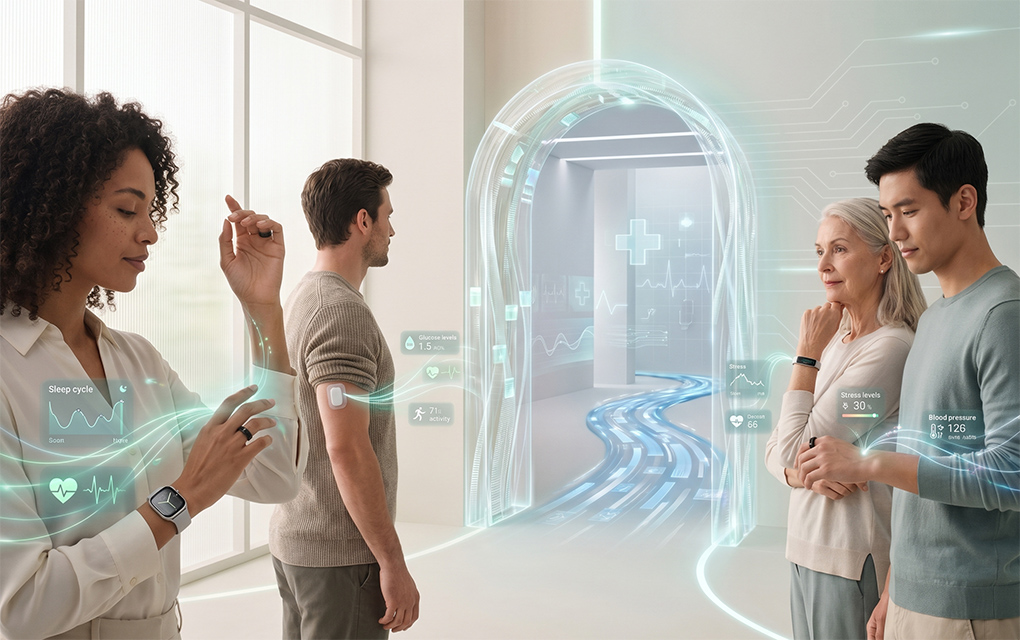
Consumer wearables are no longer just wellness tools; they are positioning themselves as the new gatekeepers of clinical care, reshaping who notices health changes first, who interprets them, and who directs the next steps in a patient’s journey.
It’s a shift WFL first explored last November with integrative pharmacist and lifestyle‑medicine clinician Dr Lara Zakaria, who argued that wearables are ushering in a new era of personalised, data‑driven nutrition and behaviour change. But the JMIR analysis goes further, warning that the rise of wearables as clinical intermediaries brings profound implications for trust, equity, and regulation.
Together, these two perspectives paint a picture of a health system on the brink of transformation, one driven not by hospitals or governments, but by the devices on our wrists.
Owning the conversation
According to MedTech expert Blythe Karow, MBA, author of the JMIR analysis, wearable platforms are rapidly becoming the first point of contact in health care. Continuous physiological data—sleep patterns, heart rate variability, blood pressure trends—enable these devices to detect changes before the user does. With AI layered on top, wearables can now interpret these signals and nudge users toward specific actions or care pathways.
In other words, the first “clinical” conversation is no longer happening in a GP’s office. It’s happening on a smartphone screen.
It’s a seismic shift. For decades, primary care physicians have been the traditional entry point into the health system, coordinating referrals, tests, and treatments. Now, consumer tech companies are quietly stepping into that role—without the regulatory guardrails that govern medical professionals.
From gadgets to routing engines
Karow highlights major investments, signalling that wearable creators are no longer content to remain in the consumer wellness lane. WHOOP’s recent $575 million funding round, backed by Abbott and Mayo Clinic, is one example. Its new affiliate has even been selected into a Medicare outcome‑based chronic care model.
Other companies are moving just as aggressively:
- Oura is integrating with Medicare’s electronic health record infrastructure.
- Apple, Samsung, and Verily are building clinical, regulatory, and reimbursement frameworks that position them as legitimate players in health care delivery.
These platforms are no longer competing to be the best fitness tracker. They are competing to become the routing layer for clinical care, a role traditionally held by doctors.
A perfect echo
In our earlier article, Dr Lara Zakaria described how wearables are enabling a new era of personalised lifestyle medicine. Devices like continuous glucose monitors, Oura Rings, and smart scales allow clinicians to tailor interventions with unprecedented precision.
Her case study of “Sam,” a patient whose metabolic flexibility improved through wearable‑guided nutrition and sleep adjustments, illustrated the promise of this approach.
Zakaria’s message was clear: wearables can empower patients, helping them understand how food, sleep, stress, and movement shape their biology in real time.
But she also warned of pitfalls, data overload, privacy concerns, and the risk of reducing health to metrics rather than lived experience.
The JMIR analysis now adds a new layer: what happens when these same devices begin directing patients into clinical pathways?
Regulations and fault lines
Karow’s analysis raises concerns that consumer tech companies operate on business models built around attention, subscriptions, and data monetisation—not patient welfare. Unlike physicians, who are legally barred from financially benefiting from referrals, wearable platforms face no such restrictions when they control monitoring, AI interpretation, routing, and reimbursement under one roof.
This consolidation is happening faster than policy can respond. US regulatory frameworks are not yet equipped to manage the risks of integrating consumer wearables into clinical care, Karow warns.
The result is a widening gap between technological capability and ethical oversight.
The promise and the peril
Taken together, the JMIR analysis and Zakaria’s LM2025 insights reveal a dual reality:
The Promise
- Wearables can personalise lifestyle medicine, helping people understand their bodies and make adaptive choices.
- They can support early detection, reduce clinician workload, and improve chronic‑disease management.
- They can empower patients to take ownership of their health journeys.
The Peril
- Without regulation, wearables may become unaccountable gatekeepers of clinical care.
- Data‑driven nudges could steer patients toward commercial interests rather than evidence‑based pathways.
- The shift from physician‑led to platform‑led triage risks undermining trust and widening inequities.
Zakaria urged clinicians to balance data with intuition and empathy. Karow now urges policymakers to catch up before consolidation becomes irreversible.
Both perspectives converge on a single truth: technology must serve people, not the other way around.
Where WFL stands
At Whole Food Living, we champion tools that help people understand their bodies, improve their nutrition, and build healthier lives. Wearables can be powerful allies in that mission—when used wisely, transparently, and ethically.
But as these devices move from wellness companions to clinical gatekeepers, the stakes rise dramatically. The future of health care may be shaped not in hospitals or legislatures but by the algorithms that interpret our sleep, steps, and heartbeats.
The question is no longer whether wearables will influence health care. It’s who will guide that influence, and who will protect the public as it grows.
For now, I think we should embrace the promise. But we also need to scrutinise the power and keep people, not platforms, at the centre of care.