

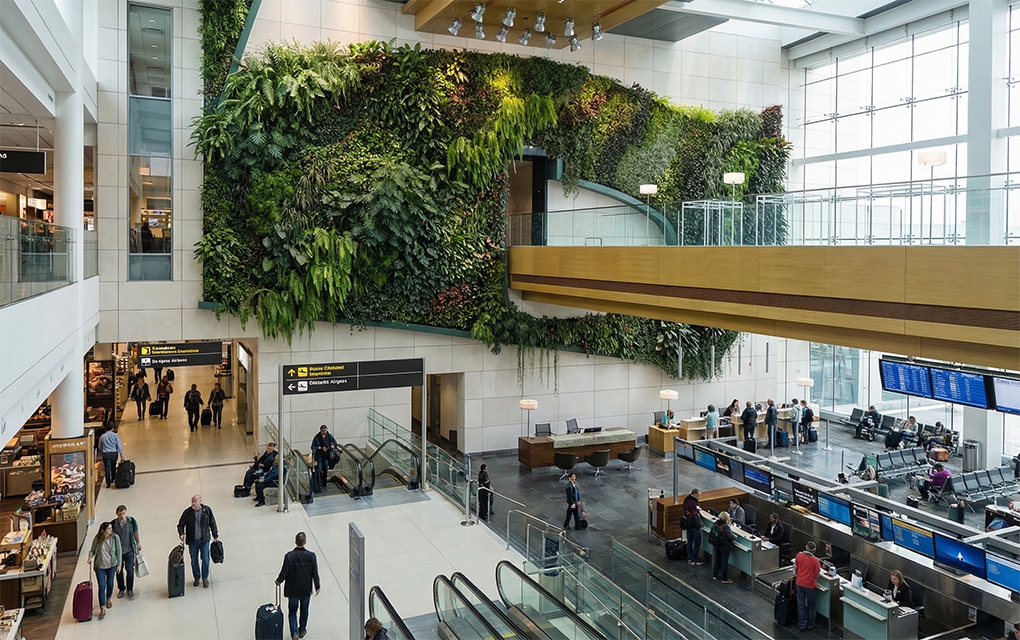

Indoor air quality has quietly become one of the most pressing—and least visible—public health challenges of our time. From the solvents in our paints to the fragrances in our cleaning products, the air inside our homes, offices, and schools can harbour a cocktail of pollutants that undermine wellbeing, productivity, and long‑term health.
Now, new research from the University of Seville suggests that a surprisingly elegant solution may be growing right in front of us: active vertical gardens.
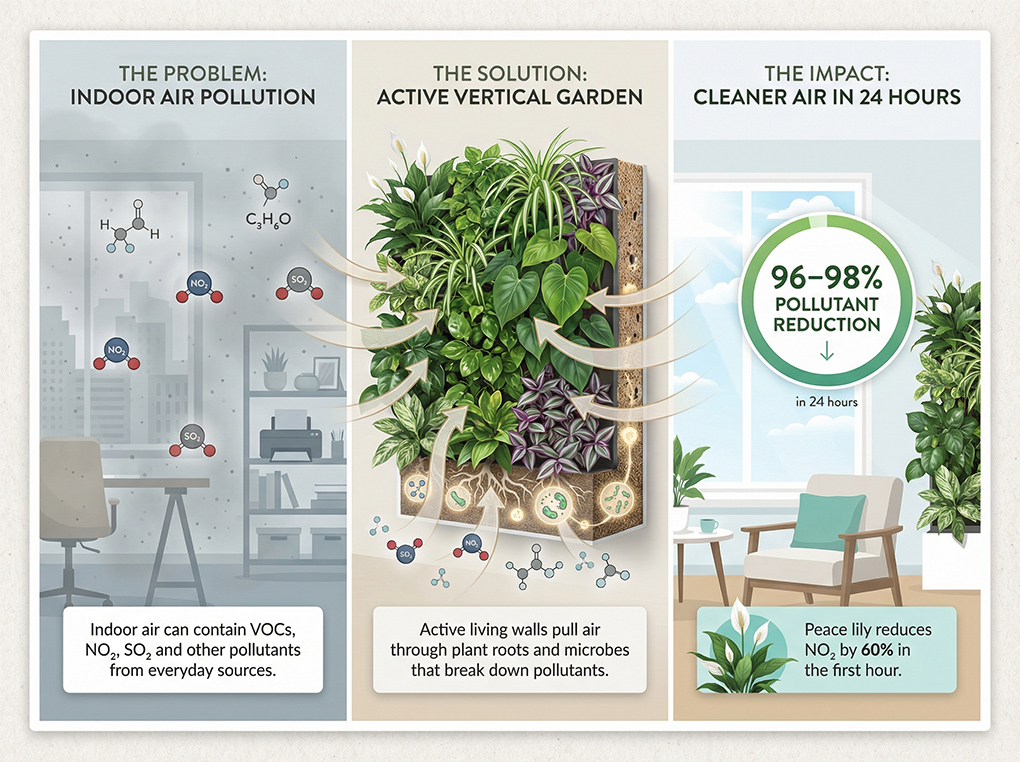
In a controlled study published in Atmospheric Environment, researchers demonstrated that living wall systems—essentially vertical gardens equipped with active airflow—can remove up to 98% of key indoor pollutants within 24 hours.
The findings add weight to a growing body of evidence supporting the role of plants not just as decorative features, but as functional components of healthier indoor environments.
A growing problem
Indoor air pollution is often more concentrated than outdoor pollution, especially in modern, tightly sealed buildings. Common culprits include:
- Volatile organic compounds (VOCs) from paints, furniture, adhesives, and cleaning products
- Gaseous pollutants such as nitrogen dioxide (NO₂) and sulphur dioxide (SO₂) from cooking, heating, and outdoor infiltration
- Everyday activities like heating, cooking, and even personal care routines
These pollutants contribute to what’s known as sick building syndrome, a cluster of symptoms—headaches, fatigue, irritation of the eyes and throat—that can erode comfort, learning, and productivity. For workplaces and schools, the implications are significant.
Nature’s air filters
To explore whether plants could meaningfully reduce indoor pollutants, the research team installed an active living wall (ALW) inside a sealed glass chamber at the Higher Technical School of Agricultural Engineering in Seville. They tested five common indoor plant species:
- Spathiphyllum wallisii (peace lily)
- Tradescantia zebrina (zebra plant)
- Philodendron scandens (wandering dude)
- Ficus pumila (climbing fig)
- Chlorophytum comosum (spider plant)
The chamber was infused with a mix of pollutants, including NO₂, SO₂, and several VOCs such as formaldehyde, acetone, n‑hexane, and n‑heptane. Over 24 hours, researchers monitored how effectively each plant species reduced pollutant concentrations.
The results were striking. Across all species, pollutant levels dropped by 96–98% within a day. Formaldehyde and sulphur dioxide were removed most efficiently, while nitrogen dioxide also showed strong reductions.
One standout performer was Spathiphyllum wallisii (peace lily), which achieved a 60% reduction in NO₂ within the first hour—a rapid response that highlights the potential of species‑specific plant selection for targeted air purification.
Why they work so well
Unlike passive potted plants, active living walls incorporate mechanical airflow. Air is drawn through the plant substrate, where pollutants are absorbed, broken down, or captured by plant tissues and associated microorganisms. This combination of biological and mechanical filtration significantly enhances pollutant removal.
The study also found that different species excelled with different pollutants, suggesting that diverse plantings may offer the most comprehensive air‑cleaning benefits.
Wider implications
For building designers, employers, and homeowners, the findings offer a compelling case for integrating vertical gardens into indoor spaces. Benefits include:
- Improved air quality without relying solely on mechanical filtration
- Enhanced wellbeing, with plants known to reduce stress and improve mood
- Space efficiency, as vertical systems require minimal floor area
- Aesthetic and acoustic advantages, contributing to more pleasant environments
While living walls are not a replacement for proper ventilation or source control, they represent a powerful complementary strategy—one that aligns beautifully with biophilic design principles and the human need for connection with nature.
A natural solution
As indoor air pollution continues to rise on global health agendas, this research reinforces a simple truth: sometimes the most effective solutions are also the most natural. Vertical gardens offer a way to bring life into our built environments while quietly working to make the air we breathe cleaner and safer.
This study is a further reminder that health isn’t just about what we eat. It’s also about the spaces we inhabit. By putting the right plants in the right places, those spaces can become healthier, more vibrant, and more restorative.