

Xanthan gum is one of the most ubiquitous food additives on the planet. It stabilises ice cream, thickens sauces, keeps gluten‑free bread from crumbling, and helps plant‑based yoghurts achieve that familiar creamy texture. It’s also widely used in medical nutrition, especially for people with dysphagia, where thickened liquids can be essential for safe swallowing.
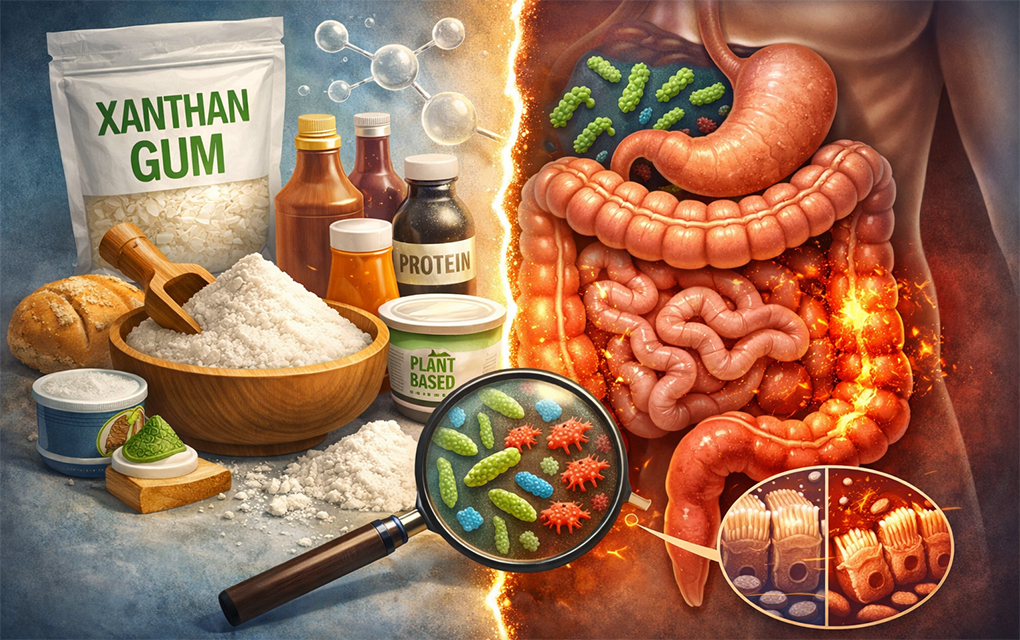
A new study from the Federal University of São Paulo (UNIFESP) suggests that long‑term, daily intake of xanthan gum may have unintended consequences for gut health, including colon inflammation, altered microbiota, and loss of intestinal barrier integrity. The findings, published in PLOS One, add important nuance to global conversations about food additives and ultra‑processed foods.
Researchers fed rats xanthan gum for ten weeks and observed several significant biological changes:
- Colon inflammation increased, especially at medium and high doses.
- The intestinal barrier became more permeable due to increased expression of Claudin‑2, a protein that regulates cell‑to‑cell permeability.
- Pro‑inflammatory cytokines IL‑1β and TNF‑α rose, reinforcing the inflammatory response.
- Gut microbiota shifted toward a pattern associated with dysbiosis, including an increase in Elusimicrobiota, a phylum linked to inflammatory states.
The lead researcher emphasises that this does not mean xanthan gum should be demonised. Occasional, small amounts appear safe; the concern lies with daily, cumulative exposure.
How it’s made
Xanthan gum is not a whole‑food ingredient — it’s a biotechnology product created through microbial fermentation.
- The microbe is produced by Xanthomonas campestris, a plant‑infecting bacterium commonly seen when vegetables like cabbage or kale begin to spoil.
- Fermentation: The bacteria are fed a carbohydrate source (often corn sugar). As they metabolise the sugars, they secrete a polysaccharide — xanthan.
- Purification: The polysaccharide is separated, filtered, and precipitated (typically using alcohol).
- Drying & milling: The resulting gel-like material is dried and milled into the fine powder used in food manufacturing.
This process produces a highly functional thickener — but one that behaves very differently from whole‑food alternatives like chia, flax, psyllium, or arrowroot.
The real concerns
Dysphagia care: Xanthan gum is widely used in thickened beverages for people with dysphagia, including in hospitals and aged‑care facilities worldwide. The study highlights the importance of monitoring gut health in individuals who rely on daily xanthan‑based thickeners and cannot tolerate natural alternatives such as cornstarch.
Ultra‑processed foods: Xanthan gum is a staple ingredient in many ultra‑processed foods, supplements, and protein shakes. The findings reinforce global dietary guidelines that recommend limiting foods high in additives.
Infant safety: The study also helps explain earlier cases of necrotising enterocolitis in premature infants in the United States, where xanthan‑thickened formula was implicated in severe intestinal inflammation and several deaths. The FDA now bans its use in premature infants and advises against its use in all infants.
NZ and Australia
New Zealand and Australia have some of the world’s highest per‑capita consumption of gluten‑free and plant‑based products — categories where xanthan gum is heavily used. It also appears frequently in supermarket sauces, dressings, and ready‑to‑eat convenience foods.
Both countries have strong dysphagia‑care sectors, particularly in aged care, where xanthan‑based thickeners are common. The new findings may prompt clinicians and dietitians to revisit long‑term use guidelines, especially for older adults who consume thickened liquids daily.
Protecting the gut
For individuals who must use xanthan gum regularly, researchers recommend:
- Monitoring gut health
- Supporting microbial balance with probiotics
- Using whole‑food thickeners when tolerated
- Reducing reliance on ultra‑processed foods
Currently, the ‘official’ line is that Xanthan gum remains safe for most people when consumed occasionally and in small amounts. However, this new research suggests that chronic daily intake may contribute to inflammation and dysbiosis — especially in vulnerable populations.
The overall message is simple and universal: Dose matters. Frequency matters. Context matters.
And as always, a diet centred on whole, minimally processed foods remains the most reliable path to gut resilience.