

Why This Common Kitchen Myth Deserves to Be Retired
by Catherine Barclay
For generations, we’ve been taught that oil is the foundation of “proper” cooking. A splash in the pan, a drizzle over vegetables, a glug to “stop things sticking”—it’s so normalised that cooking without oil can feel almost rebellious. So when someone peers over your shoulder and asks, “Don’t you need oil to cook that?”, it’s not ignorance speaking. It’s tradition.
But here’s the truth: you absolutely can cook beautifully, flavourfully, and confidently without oil – and in many cases, your food will taste better, feel lighter, and support your long‑term health in ways that oil‑based cooking simply can’t match.
Let’s unpack the myth, the science, and the practical techniques that make oil‑free cooking not only possible, but joyful.
The myth that stuck
Oil became a kitchen staple for three main reasons:
- Habit — We copy what we grew up with. Most of us watched parents or grandparents start every dish with oil.
- Marketing — The rise of “heart‑healthy oils” in the 80s and 90s cemented the idea that oil is not just useful, but beneficial.
- Convenience — Oil makes food slippery, shiny, and quick to brown, so it feels like a shortcut to flavour.
But none of these reasons makes oil necessary. They simply make it familiar.
What it does (and doesn’t do)
Oil performs a few technical functions in cooking, but none are irreplaceable.
1. Preventing sticking
You don’t need oil for this. Water, vegetable stock, or even the natural moisture from vegetables can create a non‑stick environment when used correctly.
Example: Caramelising onions without oil
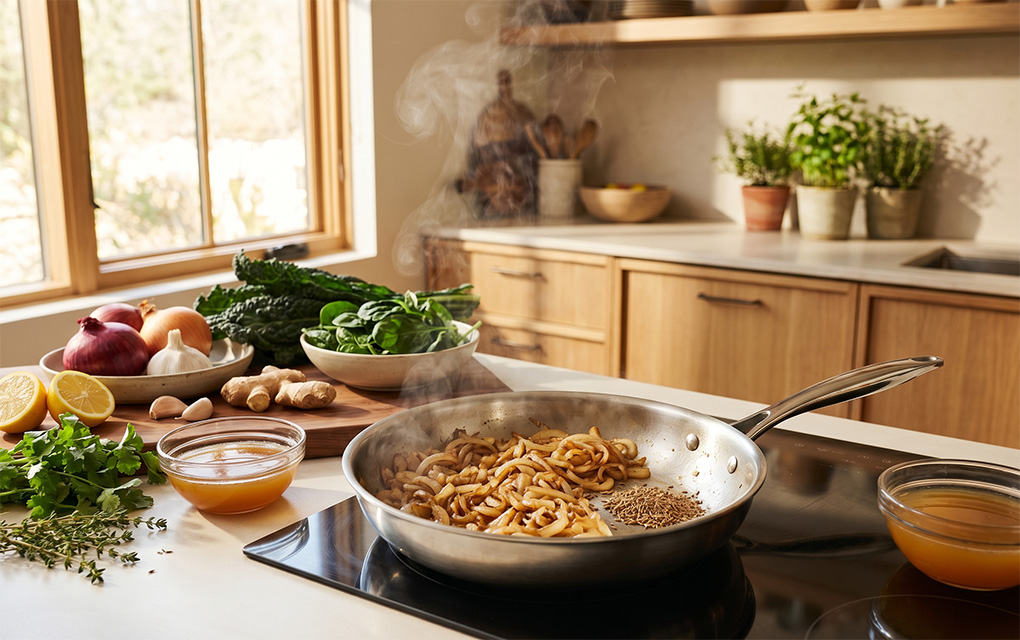
Add sliced onions to a hot pan with a splash of water. Let them soften, then allow the water to evaporate until the onions come into direct contact with the pan. When they begin to brown, add another tablespoon of water to “deglaze” the sticky bits. Repeat this cycle.
The result: deeply golden, sweet, jammy onions – no oil, no compromise.
2. Browning and caramelisation
Browning is caused by heat, not oil. The Maillard reaction—the chemical process that creates golden colour and deep flavour—occurs when food is exposed to high heat. Oil can accelerate browning, but it’s not required for it.
3. Adding flavour
Oil doesn’t create flavour; it carries it. Herbs, spices, aromatics, acids, and umami‑rich ingredients do the heavy lifting.
Example: Cooking cumin seeds without oil
Heat a dry pan until warm, then add cumin seeds. They’ll begin to pop, darken, and release their aroma within seconds.
Add a splash of water or stock to stop them burning and continue building your dish. You get the same fragrant, earthy base—without the grease.
4. Improving texture
Crispness, gloss, and tenderness can all be achieved without oil using techniques like high‑heat roasting, air‑frying, reduction glazes, and starch‑based thickeners.
Cooking oil is highly refined
Even the most “natural” oils are ultra‑processed extracts—stripped from whole foods, concentrated, and calorie‑dense. A single tablespoon contains around 120 calories and no fibre, water, or meaningful micronutrients.
Whole foods like nuts, seeds, olives, and avocados provide:
- fibre
- antioxidants
- minerals
- satiety
- slow‑release energy
Oil provides…fat. And that’s it.
For people seeking heart‑friendly, weight‑steady, inflammation‑reducing eating patterns, reducing or eliminating added oils is one of the simplest, most impactful shifts.
How to cook without oil
This is where the magic happens. Oil‑free cooking isn’t deprivation—it’s skill. And once you learn the techniques, you’ll never look back.
1. Water or stock sautéing
Start with a tablespoon or two of water, stock, or even the liquid from your chopped vegetables. Keep the heat medium‑high and add more liquid only as needed.
Perfect for: onions, garlic, ginger, mushrooms, carrots, celery, spices, and aromatics.
2. High‑heat roasting
A hot oven (200–230°C) transforms vegetables into caramelised, crisp‑edged perfection. Toss them with spices, lemon juice, balsamic vinegar, or mustard instead of oil.
3. The tapioca glaze trick
Here’s a Whole Food Living favourite:
Mix water, a spoonful of tapioca flour, and a splash of soy sauce or lemon.
It thickens into a glossy, silky coating that mimics the shine of oil—without the heaviness.
4. Non‑stick or stainless‑steel mastery
A quality stainless‑steel wok or pan becomes naturally non‑stick when preheated properly. Add your vegetables only once the pan is hot enough for water droplets to dance … like Torvill and Dean on heat.
5. Air‑frying without oil
Air‑fryers rely on circulating heat, not fat. Vegetables, tofu, falafel, and even potatoes crisp beautifully with no oil at all.
But what about flavour?
Oil‑free cooking actually amplifies flavour because you’re not coating your ingredients in a layer of fat. Instead, you build flavour through:
- fresh herbs
- citrus
- vinegars
- miso
- tamari
- smoked paprika
- garlic and ginger
- roasted spices
- reductions and glazes
Your food becomes brighter, cleaner, and more complex.
A return to real food
Oil‑free cooking isn’t a trend. It’s a return to the way humans cooked for thousands of years—before industrial extraction made liquid fat cheap and abundant.
It’s also a return to:
- whole ingredients
- natural flavours
- nutrient density
- lightness and vitality
- food that supports long‑term wellbeing
When someone asks, “Don’t you need oil to cook that?”, I find the best answer is:
“No. You just need good technique, fresh ingredients, and the confidence to break free from old habits. Once you taste the difference, you won’t miss the oil at all.”