


The Amazon rainforest, long considered one of Earth’s most vital climate stabilisers, is now experiencing conditions that scientists once projected for the distant future. Two new studies led by Brazil’s National Institute for Space Research (INPE) reveal that the region’s dry season is lengthening dramatically, rainfall patterns are shifting, and the forest’s ability to recover from fire and drought is weakening at an alarming pace.
For those who understand the deep interconnection between planetary health and human wellbeing, the findings offer a sobering reminder: climate change is no longer a forecast. It is unfolding in real time.
One of the most striking findings is the extension of the Amazon’s dry season—from four months to as long as six months—accompanied by a water deficit exceeding –150 mm during that period. This shift, documented in the International Journal of Climatology, signals a profound destabilisation of the hydrological cycle that sustains the world’s largest tropical forest.
The research team warns that these changes are not isolated anomalies. They align with the onset of a potential super El Niño in 2026–2027, a climate phenomenon driven by Pacific Ocean warming that can raise global temperatures by more than 2°C above average and disrupt rainfall patterns worldwide.
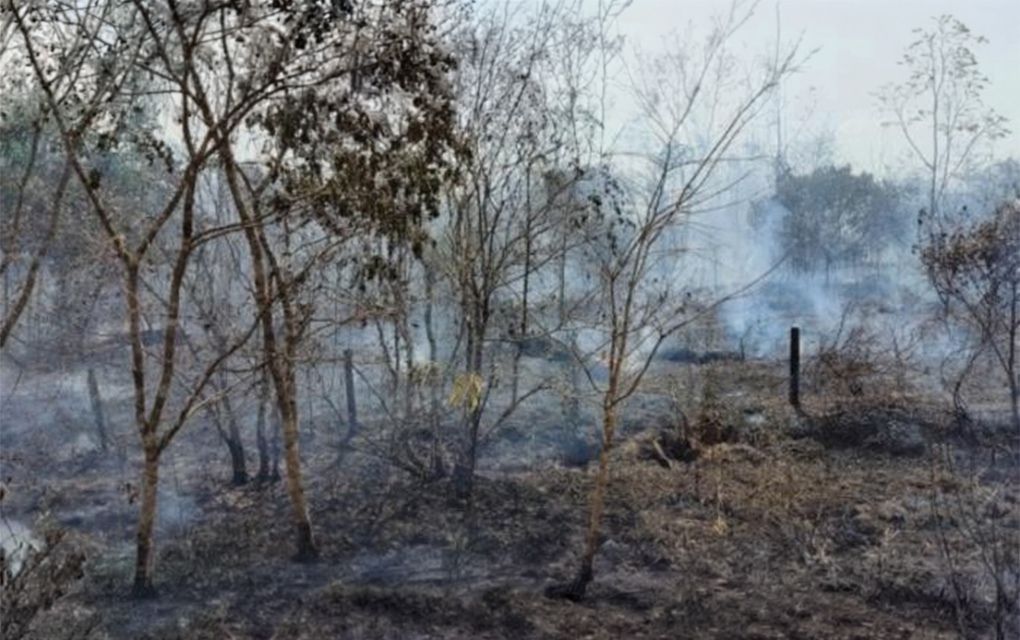
A companion study, published in Perspectives in Ecology and Conservation, examined the extreme drought of 2023–2024—one of the most severe in recent memory. During this period, burned areas increased by 9%, and forest degradation alerts rose by 19%, with up to 4.2 million hectares affected at the drought’s peak.
Standing forests weakening
Crucially, the researchers found that fires are increasingly linked not just to deforestation but to the weakening of standing forests themselves. Degradation—where forests remain but lose structure, moisture, and resilience—has become a dominant driver of fire vulnerability.
This cycle of drought → fire → degradation → reduced recovery is accelerating, pushing the ecosystem closer to thresholds from which it may not easily rebound.
Environmental engineer and lead author Débora Dutra describes a stark shift in scientific understanding:
“We’re now observing the most pessimistic anomaly extremes occurring in the present,” she says.
Her advisor, biologist Liana Anderson, underscores the disconnect between scientific evidence and policy action. With global climate goals set for 2030, she argues that the window for meaningful intervention is narrowing rapidly:
“We must view the connection between the environment, development, and the economy as an inseparable triad.”
Opportunity to rethink
For Anderson, the crisis is also an opportunity to rethink development pathways and accelerate sustainable initiatives that promote environmental and social justice.
The studies rely on a key metric: Maximum Cumulative Water Deficit (MCWD), developed by researcher Luiz Aragão and widely used to assess water stress in tropical ecosystems.
By combining MCWD with advanced climate models from the Coupled Model Intercomparison Project (CMIP6), the team projected future scenarios for the southwestern Amazon—an area with more than 90% forest cover but under intense pressure from deforestation.
Under high-emissions pathways, the models show:
- Longer, more intense dry seasons
- Water stress increasing between June and September
- Deficits potentially exceeding –21 mm/month by century’s end in the worst-case scenario
- Rising tree mortality, biodiversity loss, and reduced carbon‑sink capacity
From buffer to amplifier
This last point is particularly concerning: as the Amazon loses its ability to absorb carbon, it risks shifting from a climate buffer to a climate amplifier.
The researchers argue that Brazil’s fire management strategies must evolve. Their analysis of the 2023–2024 drought highlights the need for integrated fire governance that combines:
- Climate indicators
- Early warning systems
- Stronger institutional coordination
- Recognition of forest degradation as a key risk factor
This approach is already being tested through the Fire in Focus initiative, a collaboration between scientists and firefighting agencies across Brazil. The program aims to bridge the gap between research and frontline action, producing annual wildfire reports and training materials for prevention and response teams.
Significant consequences
Beyond ecological impacts, the studies point toward significant economic and social consequences. Dutra’s ongoing doctoral research will quantify the potential economic losses from wildfires, including effects on health and community wellbeing.
This holistic approach reflects a growing recognition: climate change is not only an environmental issue but a public health and economic stability issue—one that touches food systems, water security, and the social fabric of communities across the globe.
Essentially, these studies show that the Amazon is far from a distant wilderness. It is a living climate engine that shapes rainfall patterns across South America, influences global weather systems, and stores vast amounts of carbon. Its destabilisation has direct implications for:
- Food security, through disrupted rainfall and crop yields
- Biodiversity, including species vital to medicinal and nutritional research
- Global climate stability
- Indigenous and local communities who steward the forest and directly rely on it to survive.
For those committed to sustainable living, plant‑forward diets, and environmental stewardship, the Amazon’s trajectory is a call to action.