


Emerging research suggests that some of the most powerful tools for supporting gut health may begin with the foods we eat every day. Scientists have identified a naturally occurring compound produced by gut bacteria that appears to help protect and repair the intestinal lining, offering new insights into digestive wellness and future approaches to inflammatory bowel disease (IBD).
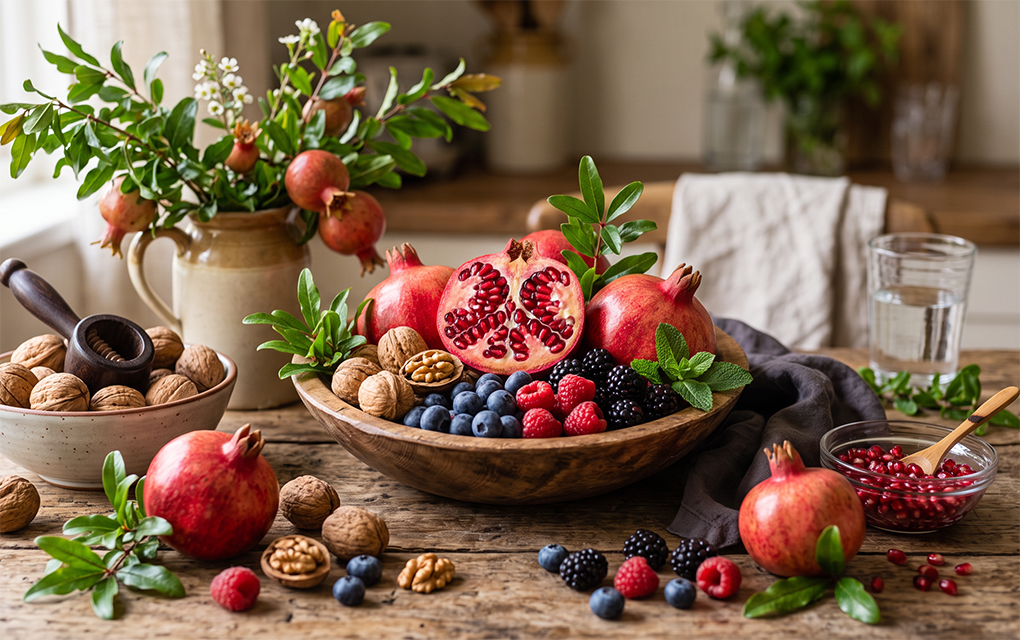
Researchers at the University of Louisville have focused on a compound called urolithin A (UroA), which is not found directly in foods but is produced when gut bacteria break down certain plant compounds present in foods such as pomegranates, walnuts, and berries.
Once formed in the digestive tract, UroA appears to activate protective mechanisms within the intestinal lining that help maintain the integrity of the gut barrier. The findings were published in Nature Communications.
The intestinal barrier
The intestinal lining serves as a critical gateway between the digestive system and the rest of the body. It allows nutrients to be absorbed while helping keep potentially harmful bacteria and substances confined to the gut. In conditions such as Crohn’s disease and ulcerative colitis, this barrier can become damaged, contributing to ongoing inflammation, discomfort, and other complications.
Maintaining a healthy gut barrier is increasingly recognised as an important component of digestive health and overall wellness.
Inflammation – a healing role
One of the study’s most surprising findings is that a biological pathway often associated with inflammation may also play a healing role under the right circumstances. Researchers found that UroA selectively activates a receptor known as AHR within intestinal epithelial cells, the cells that form the gut’s protective lining. This, in turn, activates the NLRP6 inflammasome, a cellular defence system.
Rather than increasing inflammation, activation of this pathway by UroA appeared to:
- Support repair of the intestinal lining
- Strengthen the gut barrier
- Increase production of protective mucus
- Enhance antimicrobial defences within the intestine
These effects suggest that certain naturally produced compounds may help the body maintain balance and resilience in the digestive tract.
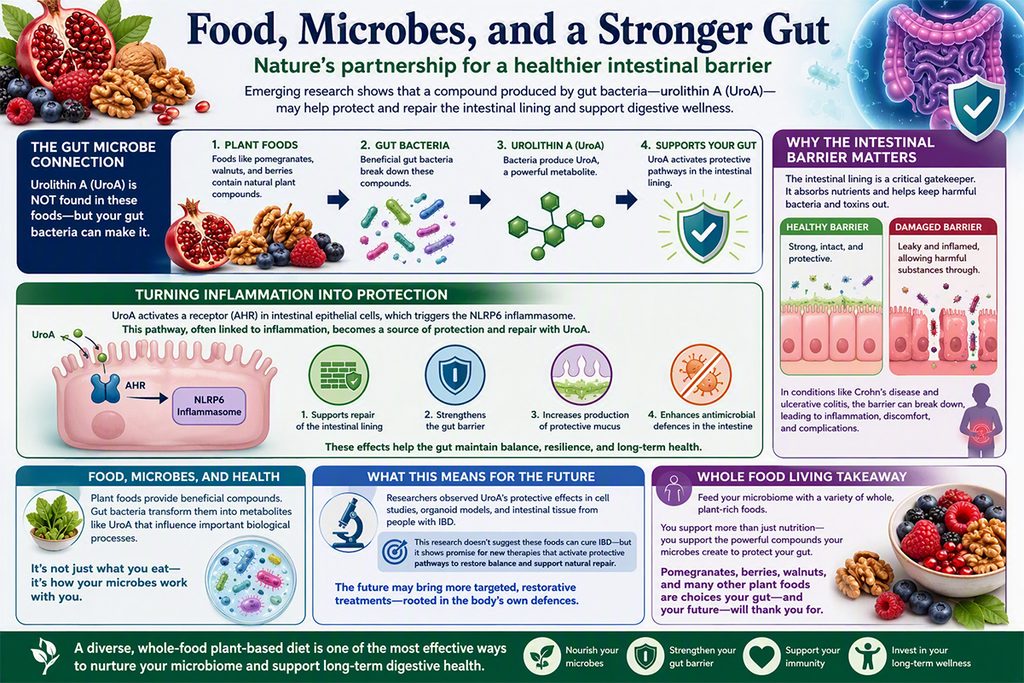
The study highlights the remarkable partnership between diet and the gut microbiome. Foods rich in beneficial plant compounds may not work alone. Instead, gut bacteria transform them into metabolites such as UroA, which can then influence important biological processes throughout the body.
This reinforces a key principle of whole-food nutrition: the health benefits of plant foods often extend beyond their vitamins and minerals. Their interaction with the gut microbiome may be equally important.
Mechanism tested
The researchers tested the mechanism in cell studies, organoid models, and intestinal tissue samples from people with IBD, observing similar protective effects across these systems.
While this research does not suggest that eating pomegranates, walnuts, or berries can cure inflammatory bowel disease, it does provide promising evidence that diet-derived microbial compounds could one day help guide more targeted therapies.
Rather than broadly suppressing the immune system, future treatments may focus on activating protective pathways that help restore intestinal balance and support natural repair processes.
The best investment
A diet rich in diverse plant foods remains one of the most effective ways to nurture a healthy gut microbiome. This new research adds to growing evidence that foods such as pomegranates, berries, and walnuts may support health not only through their nutrients but also through the beneficial compounds our gut microbes create from them.
As scientists continue to uncover the intricate relationship between food, gut bacteria, and immunity, one thing remains clear: feeding your microbiome with a variety of whole foods is an investment in long-term digestive health.