



by Peter Barclay
When the COVID‑19 pandemic swept across the globe, one of the most bewildering aspects wasn’t just the speed of transmission—it was the sheer unpredictability of the disease. Two people could be exposed to the same viral load, at the same time, in the same household, and yet experience wildly different outcomes. One might suffer only a mild cough; the other could end up in intensive care.
For years, scientists have known that this variability stems from a complex interplay between the genes we inherit and the lives we lead. But until now, the precise ways these forces imprint themselves onto our immune cells have remained largely mysterious.
A new study from the Salk Institute for Biological Studies—published this week in Nature Genetics —offers the most detailed look yet at how inherited and environmental epigenetic changes shape the immune system. The findings not only deepen our understanding of why people respond differently to infections but also open the door to more personalised, predictive approaches to treating infectious diseases.
And for those of us who care deeply about lifestyle medicine, prevention, and the long arc of health, this work offers a powerful reminder: our bodies carry the molecular memory of both our ancestry and our lived experience.
A legacy of discovery
The Salk Institute, perched on the bluffs of La Jolla, California, is one of the world’s most iconic scientific institutions. Founded in 1960 by Jonas Salk—the developer of the first safe and effective polio vaccine—the institute has become synonymous with bold, curiosity‑driven research. Its campus, designed by architect Louis Kahn, is itself a monument to the pursuit of knowledge: clean lines, open courtyards, and laboratories bathed in natural light.
Today, Salk scientists are leaders in genetics, neuroscience, plant biology, cancer research, and aging. Their latest contribution—a comprehensive atlas of epigenetic changes across human immune cells—continues that legacy of discovery.
To understand the significance of this new atlas, it helps to revisit what epigenetics actually is.
Every cell in your body contains the same DNA sequence. Yet a neuron behaves nothing like a liver cell, and a liver cell behaves nothing like a T cell. The difference lies in the epigenome: a constellation of chemical tags that sit atop DNA and determine which genes are switched “on” or “off.”
These tags—collectively known as epigenetic markers—are influenced by two major forces:
- Genetic inheritance (the molecular legacy passed down from your parents)
- Life experience (infections, vaccinations, environmental exposures, stress, nutrition, and more)
Unlike DNA, which is relatively fixed, the epigenome is dynamic. It shifts as we age, encounter pathogens, and move through the world.
Yet until now, scientists didn’t know whether inherited and experiential epigenetic changes affected immune cells in similar ways—or whether they left distinct molecular fingerprints.
Our molecular record
The new atlas answers that question with unprecedented clarity.
“Our immune cells carry a molecular record of both our genes and our life experiences, and those two forces shape the immune system in very different ways,” says senior author Joseph Ecker, PhD, professor, Salk International Council Chair in Genetics, and Howard Hughes Medical Institute investigator.
“This work shows that infections and environmental exposures leave lasting epigenetic fingerprints that influence how immune cells behave. By resolving these effects cell by cell, we can begin to connect genetic and epigenetic risk factors to the specific immune cells where disease actually begins.”
To build this atlas, the Salk team collected blood samples from 110 individuals with a wide range of genetic backgrounds and exposure histories. These included people who had experienced:
- Influenza
- HIV‑1
- MRSA and MSSA infections
- SARS‑CoV‑2
- Anthrax vaccination
- Exposure to organophosphate pesticides
The researchers then examined four major immune cell types:
- T cells
- B cells
- Monocytes
- Natural killer (NK) cells
Each cell type plays a distinct role in immunity, from long‑term memory to rapid response. By comparing epigenetic markers—specifically differentially methylated regions (DMRs)—across these cells, the team was able to map where inherited changes (gDMRs) and experiential changes (eDMRs) occur.
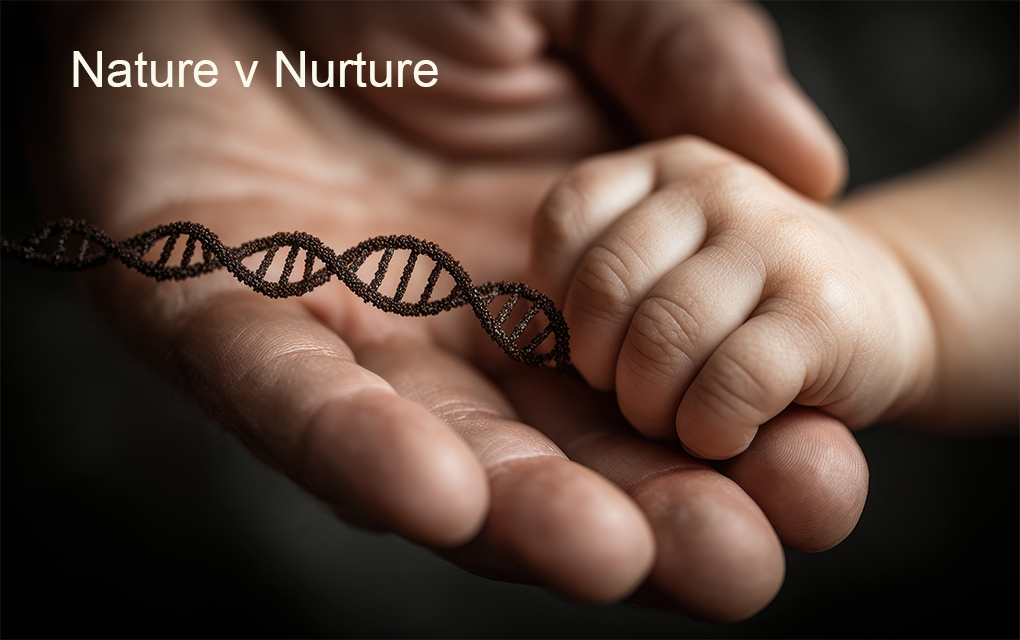
Nature and Nurture
The results were striking.
“We found that disease-associated genetic variants often work by altering DNA methylation in specific immune cell types,” says co-first author Wubin Ding, PhD, a postdoctoral fellow in Ecker’s lab. “By mapping these connections, we can begin to pinpoint which cells and molecular pathways may be affected by disease risk genes, potentially opening new avenues for more targeted therapies.”
The team discovered that:
- Inherited epigenetic changes (gDMRs) cluster around stable gene regions, especially in long‑lived T and B cells.
- Experiential epigenetic changes (eDMRs) appear in more flexible regulatory regions—areas that activate during immune responses.
In other words:
- Genetics shapes the long-term architecture of the immune system.
- Life experiences shape its moment‑to‑moment responsiveness.
This distinction helps explain why two people with similar genetic risk profiles may still respond differently to the same infection—or why someone with low genetic risk might still experience severe disease after certain exposures.
“The debate between nature and nurture is a long-standing discussion in both biology and society,” says co-first author Wenliang Wang, PhD, a staff scientist in Ecker’s lab and now at Peking University. “Ultimately, both genetic inheritance and environmental factors impact us, and we wanted to figure out exactly how that manifests in our immune cells and informs our health.”
A roadmap for diagnosis
One of the most exciting aspects of this work is its potential for real‑world application.
“Our human population immune cell atlas will also be an excellent resource for future mechanistic research on both infectious and genetic diseases, including diagnoses and prognosis,” says co-first author Manoj Hariharan, PhD, a senior staff scientist in Ecker’s lab. “Often, when people become sick, we are not immediately sure of the cause or potential severity—the epigenetic signatures we developed offer a road map to classify and assess these situations.”
Imagine a future where clinicians can examine a patient’s immune cell epigenome and determine:
- How severe their infection is likely to become
- Whether they carry protective or high‑risk epigenetic markers
- Which treatments are most likely to work
- How their immune system will respond to future exposures
This is the promise of precision prevention.
What about future predictions?
Ecker believes the atlas could eventually help predict how individuals respond to specific pathogens. With enough data, researchers could identify epigenetic markers shared by survivors of severe infections. These markers could then be used to assess new patients.
“For example,” Ecker explains, “if enough COVID‑19 patients contribute their immune cells to the database, researchers could find that survivors all share the same eDMR. From there, scientists could profile a new COVID‑19 patient to see whether they already have this protective eDMR, and if not, they could identify protective regulatory mechanisms associated with that eDMR and target them therapeutically.” Wang adds:
“Our work lays the foundation for developing precision prevention strategies for infectious diseases. For COVID‑19, influenza, or many other infections, we may one day be able to help predict how someone may react to an infection, even before exposure, as cohorts and models continue to expand. Instead, we can just use their genome to predict the ways the infection will impact their epigenome, then predict how those epigenetic changes will influence their symptoms.”
Impact on Lifestyle Medicine
For Whole Food Living readers, the implications are profound.
This research reinforces what lifestyle medicine has long championed: our daily choices leave molecular traces that shape our long-term health.
Nutrition, stress, sleep, environmental exposures, and infections all contribute to the epigenetic landscape of our immune cells. While we cannot rewrite our genetic inheritance, we can influence the epigenetic marks that guide immune function.
The Salk atlas doesn’t just map these marks—it validates the idea that our lived experience is biologically meaningful.