


by Peter Barclay
The word ageing is a pretty undefined term. Generally, it might be framed as a slow erosion of memory, vitality, and independence, but it’s hard to know when it actually begins. For me, I think the process started in my late 50s, when I grudgingly faced up to the fact that I needed reading glasses.
That was the first step in accepting that life was moving on, but even now, at 71, I still struggle with the thought that I might actually be old.
Words and phrases like older, later years, and sunshine years I handle easily, but oldie, sun-setter, and codger I feel awkward about. And putting it bluntly, ‘sun-setter’ surely can’t apply because I’m an early riser anyway. Emotionally, of course, for me and many others, I’m sure, the picture is far more nuanced.
Many people report greater emotional stability, deeper gratitude, and improved emotional regulation as they age. Others struggle with loneliness, loss of identity, insecurity or mood changes linked to cognitive decline or lifestyle factors.
Recent research helps clarify what’s happening beneath the surface, and where lifestyle choices, including radical shifts like adopting a WFPB diet, may offer unexpected emotional benefits.
Cognitive vs emotional decline
Cognitive decline and emotional decline are related but distinct processes. They do not always occur together.
Science says cognitive decline is strongly influenced by diet quality, inflammation, and neurodegenerative processes. Healthy dietary patterns, including plant‑forward diets, are associated with slower cognitive ageing and reduced dementia risk.
Emotional decline (e.g., increased anxiety or depression) can accompany cognitive decline, but it’s not inevitable. Emotional resilience often remains intact even when memory falters.
It’s been found that depression and anxiety can worsen cognitive performance, but dietary patterns may moderate this relationship. A 2025 study found that dietary patterns influence how depression and anxiety relate to cognitive function, suggesting nutrition plays a role in protecting emotional and cognitive health simultaneously.
Cognitive decline can create emotional strain (frustration, fear, loss of confidence), but emotional decline is not inevitable. Many older adults maintain strong emotional stability even with mild cognitive changes.
Loss of purpose
Retirement, children leaving home, or reduced social roles can trigger a profound sense of purposelessness. This is one of the strongest predictors of emotional decline in ageing populations. It’s important because:
- Purpose is linked to lower inflammation, better sleep, and improved emotional regulation.
- People with a strong sense of meaning show slower cognitive decline and better mental health outcomes.
- Loss of purpose can amplify feelings of loneliness, which is itself a risk factor for cognitive deterioration.
The good news here is that a sense of purpose can be rediscovered by:
- Community involvement
- Creative pursuits
- Caregiving roles
- Advocacy or volunteering
- Health transformations (including dietary change)
Purpose is not a static trait; it’s a renewable resource.
Differences between sexes
Men and women can face ageing issues very differently. But are women more emotionally resilient than men? The answer here is complex, and partly biological.
Women experience a dramatic hormonal transition during perimenopause and menopause, including estrogen decline, which affects cognition, mood, and inflammation.
Estrogen loss increases vulnerability to neuroinflammation and cognitive decline, yet women often show strong emotional resilience and social connectedness, which buffer these impacts.
Men tend to experience more social isolation in later life, which can worsen emotional outcomes, but women generally maintain richer social networks, a key protective factor for emotional wellbeing.
The question that interests me most is: Can a radical lifestyle change, like switching to WFPB, improve mood during ageing?
Well, emerging evidence suggests the answer to this is yes, and potentially in quite meaningful ways.
Emotional resilience
These are some of the mechanisms that link WFPB diets to emotional resilience
- Reduced inflammation: Plant‑rich diets lower systemic and neuroinflammation, which is linked to mood disorders and cognitive decline.
- Improved gut–brain signalling: Fibre increases short‑chain fatty acids and supports neurotransmitter production, stabilising mood.
- Better metabolic stability: Whole foods reduce blood sugar volatility, which is associated with irritability and emotional reactivity.
- Enhanced cognitive protection: Healthy dietary patterns correlate with slower cognitive decline and reduced dementia risk.
- Psychological empowerment: Making a radical change can restore a sense of agency and purpose—especially powerful during life transitions.
Although going WFPB has its own challenges, people generally report:
- Improved mood
- Greater emotional stability
- Reduced anxiety
- Renewed sense of purpose (“I’m doing something for my future self”)
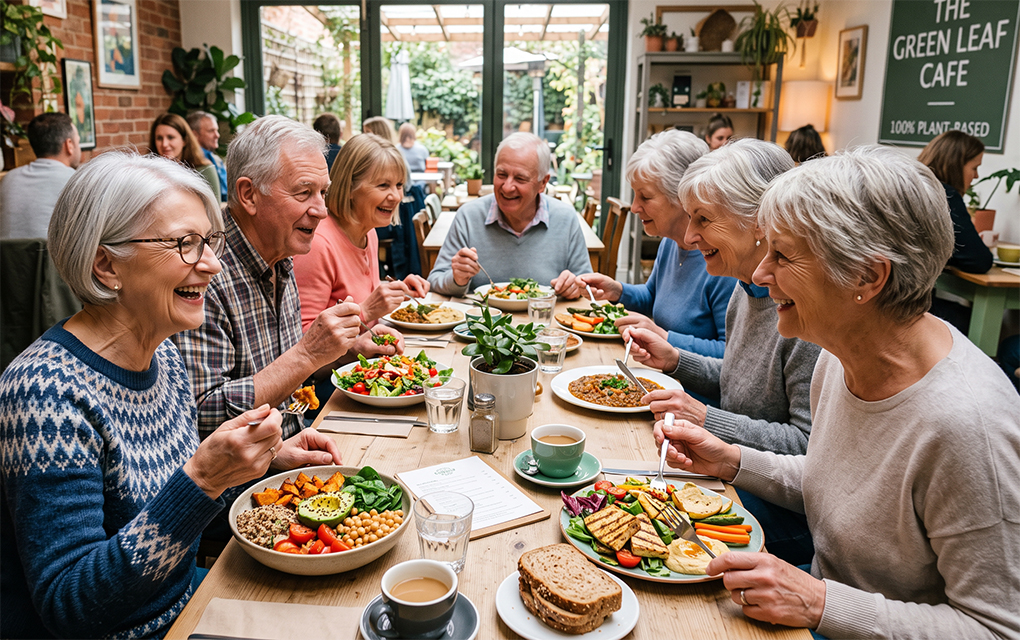
- Increased social connection through shared food culture
While not a cure‑all, WFPB eating can be a potent emotional intervention both biologically and psychologically.
Emotional evolution
Reading around on this subject over time has been a fascinating experience. I like the idea that, in some quarters, ageing is seen as more of an emotional evolution than a decline. The emotional impacts of ageing are shaped by:
- biology
- social context
- purpose
- nutrition
- identity
- community
Ageing can bring vulnerability, but it can also bring clarity, emotional depth, and resilience. Science increasingly supports what many people intuitively feel: emotional wellbeing in later life isn’t predetermined—it’s shaped by choices, relationships, and meaning.
But a radical shift, like embracing a whole food plant‑based lifestyle, can be a catalyst for emotional renewal, offering both biological protection and a powerful narrative of self‑care.