


by Catherine Barclay
While hunting through some of the YouTube videos we have set down for future newsletter promotion, I chanced upon an interesting short (only 1min 42) from the T Colin Campbell Centre for Nutrition Studies.
It really is an interesting snapshot (view it below) of what makes plant-based eating so healthy for us, but I was surprised to find no mention of iron in relation to the comments made about meat.
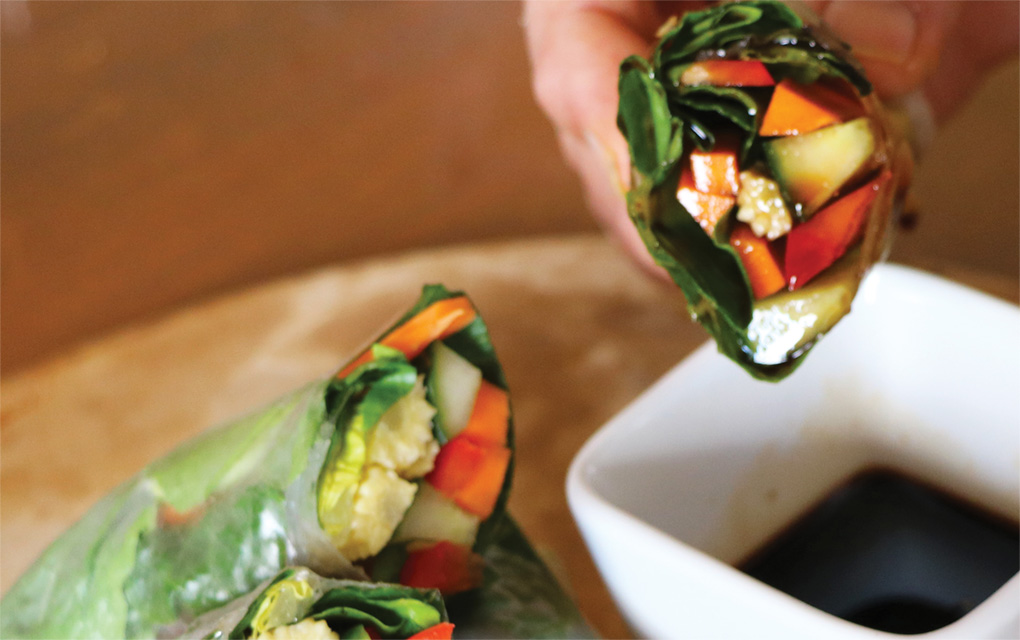
Crispy rice paper wraps
These fresh rice‑paper wraps pair gentle plant‑based iron with a burst of vitamin C from the capsicum, helping your body absorb iron more easily. A simple example of how whole foods work together to nourish you naturally.
View recipe
Perhaps I’m a little more sensitive to this subject because, as an avid meat-eater throughout my youth and through my childbearing years, I was always low in iron. Significantly low in fact.
I never knew how low until, as part of an office group donation effort, I went to donate blood. A short time later, I was contacted and told that I should not donate blood because my iron levels were dangerously low.
It threw me into a spin, and after checking with a doctor, I was given tablets. Eating meat obviously had low to no impact on my iron levels. After turning plant-based, however, my iron levels have never been better.
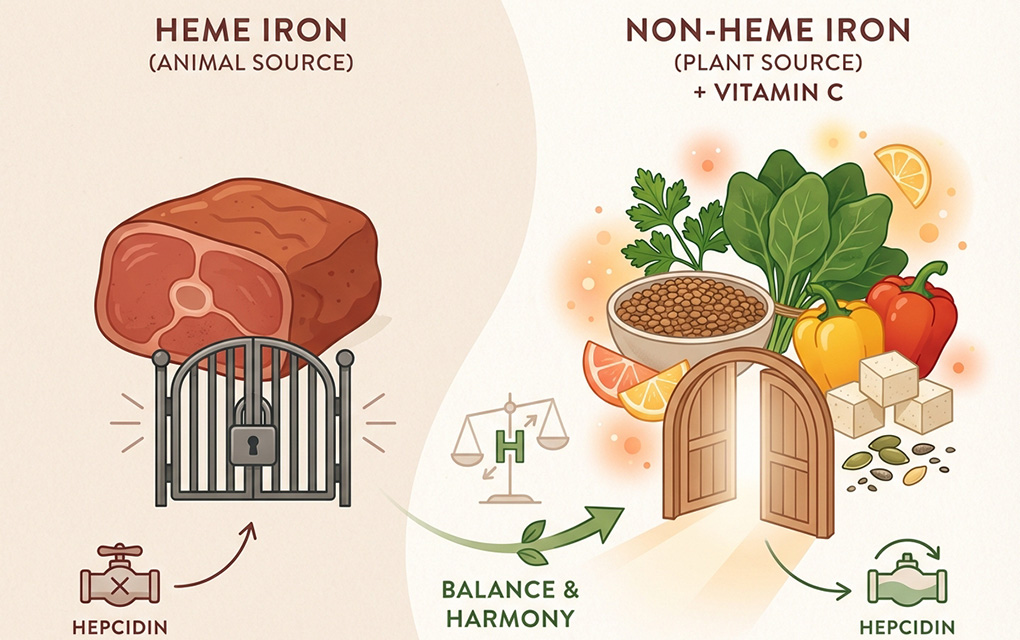
Today, I understand that meat contains iron, but it is very different from the iron we absorb from plants. Iron from meat is known as heme iron and behaves very differently. It has to do with the context and the performance of the master hormone hepcidin.

Wonder salad
A vibrant bowl built on plants that naturally pair gentle non‑heme iron with vitamin‑C‑rich ingredients, helping your body absorb iron with ease. Fresh, colourful nourishment in every forkful.
View Recipe
It turns out that my body wasn’t in a state that could use it properly. Heme iron bypasses the body’s regulatory system, especially when hepcidin is dysregulated — which happens with chronic inflammation, gut irritation, stress, infection (I was always such a sickly child, I can still hear my mother now), metabolic issues, and low-grade immune activation. I won’t delay you on all the background details on that.
Iron isn’t just a nutrient — it’s a conversation between your gut, your immune system, and your cells. When you choose whole plant foods rich in non‑heme iron and pair them with vitamin C, you’re not forcing iron in. You’re creating the internal environment where your body can absorb and use it naturally.
Plant‑based iron sources bring something extra, too: fibre, antioxidants, polyphenols, and the protective compounds that only whole foods can offer. These nutrients don’t just help you absorb iron — they support gut health, reduce inflammation, and nourish the microbiome. It’s iron delivered in a package designed by nature, not industry.

Tremendous Tabbouleh
Packed with parsley, lemon and fresh veggies, this tabbouleh naturally pairs plant‑based iron with vitamin C to help your body absorb it with ease. Bright, zesty nourishment in every spoonful.
View Recipe
Choosing non‑heme iron with vitamin C isn’t about restriction; it’s about alignment. It’s about fuelling your body in a way that feels clean, steady, and supportive.
It’s about trusting the wisdom of whole plants and the body’s own regulatory intelligence. And it’s about embracing a style of eating that energises you today while protecting your long‑term wellbeing.
Many everyday plant foods provide meaningful amounts of non‑heme iron, and combining them with vitamin‑C‑rich foods boosts absorption. The lists below group the richest sources across legumes, seeds, nuts, vegetables, fruits, and grains, drawing on recent nutrition data.

Quick Vegetable Pasta
A bright, veggie‑packed pasta that naturally pairs plant‑based iron with vitamin‑C‑rich ingredients, helping your body absorb iron with ease. Comforting, colourful nourishment in every bowl.
View recipe
Legumes with high iron
Legumes consistently top plant‑based iron charts, with several offering 4–15 mg per cup.
- Tofu — 13.3 mg per cup
- Natto (fermented soybeans) — 15.1 mg per cup
- Soybeans — 9.1 mg per cup cooked
- Lentils — 6.6 mg per cup cooked
- White beans / Navy beans — 6.6 mg per cup cooked
- Kidney beans — 5.2 mg per cup cooked
- Chickpeas — 4.7 mg per cup cooked
Nuts and seeds rich in iron
Seeds in particular are standout sources, with some exceeding 10 mg per cup.
- Sesame seeds — 21 mg per cup dried
- Pumpkin seeds — 11.4 mg per cup whole
- Flaxseeds — 9.6 mg per cup whole
- Cashews — 7.8 mg per cup dried
- Pine nuts — 7.5 mg per cup whole
- Almonds — 5.3 mg per cup, dry roasted
These are easy to sprinkle into salads, porridges, and plant‑based bowls to lift iron intake.
Vegetables with meaningful iron
Vegetables generally contain less iron per serving than legumes or seeds, but several still contribute well—especially when cooked.
- Artichokes — ~1 mg per cup cooked
- Asparagus — >1.5 mg per cup cooked
- Potatoes (with skin) — a good source; iron is concentrated in the skin
- Tomatoes (sun‑dried or concentrated) — higher iron than fresh forms
- Sweet potatoes — moderate iron even when peeled
Leafy greens like spinach and silverbeet contain iron too, though their oxalate content reduces absorption.
Fruits with notable iron
Fruits are not major iron sources, but a few contribute meaningfully and pair well with vitamin C.
- Dried apricots
- Prunes
- Raisins
- Mulberries
Note: Values vary by brand and drying method; typically 1–3 mg per 100 g.)
Whole grains and other plant foods
- Quinoa
- Oats
- Amaranth
- Fortified whole‑grain breads and cereals (especially relevant in NZ, where fortification varies)
- Dark chocolate/cocoa (surprisingly rich, though best used sparingly)
Getting the most from plant iron
- Pair iron‑rich foods with vitamin C (citrus, kiwifruit, capsicum) to boost absorption.
- Avoid drinking tea or coffee with meals, as polyphenols can inhibit uptake.
- Cooking reduces oxalates in some vegetables, improving bioavailability.
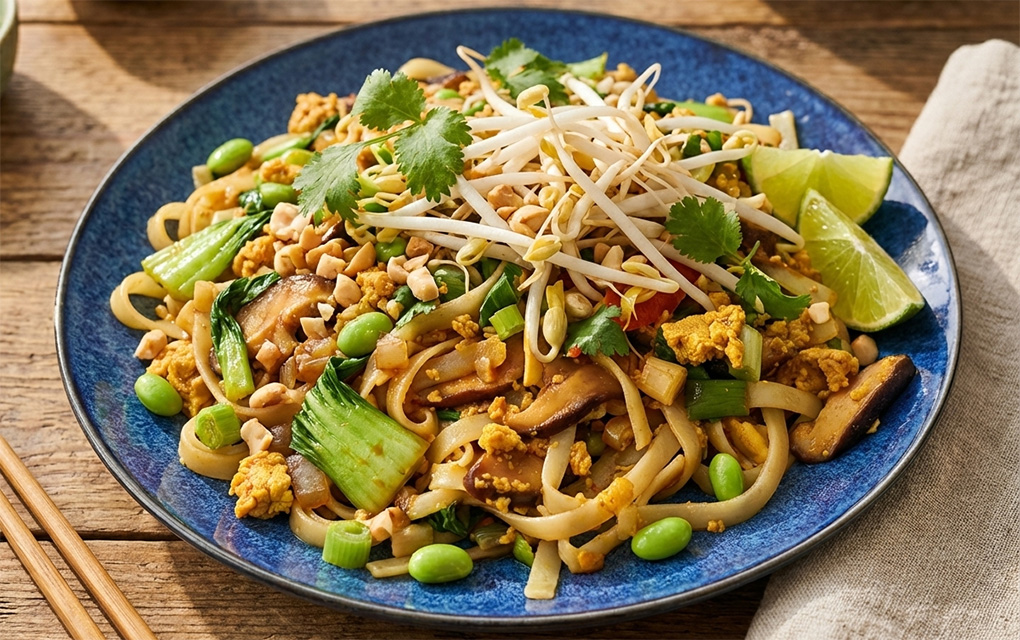
Vegetable Pad Thai
This vibrant Pad Thai brings together plant‑based iron and vitamin‑C‑rich veggies, helping your body absorb iron naturally while delivering fresh, feel‑good flavour in every bite.
View Recipe
What are oxalates?
Oxalates (or oxalic acid) are small organic molecules produced by plants and also made in small amounts by the human body. In foods, they often appear bound to minerals, forming compounds such as calcium oxalate or iron oxalate.
These compounds are usually harmless and are excreted in urine or stool, but in some people, they can accumulate and contribute to kidney stone formation. Oxalates can limit the absorption of calcium, magnesium, iron and zinc.