

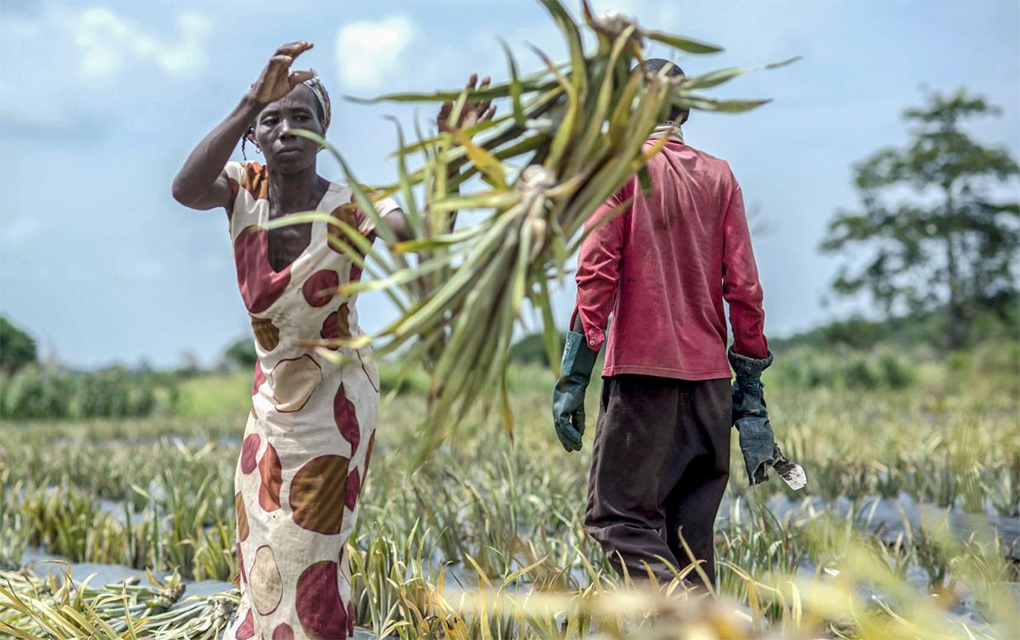

by Peter Barclay
For decades, the dominant narrative in agriculture has been framed as a trade-off: produce more food for a growing population or protect the environment. A new vision emerging from the regenerative agriculture movement suggests that choice may be false.
According to development expert Hugh Locke, the key to feeding billions more people while restoring ecosystems lies in cultivating fields across the Global South.
In his new book, Whole Earth Farming: Smallholders and the Great Regenerative Transformation, Locke argues that the world’s approximately 475 million smallholder farms represent one of the greatest untapped opportunities in food system transformation. Smallholder farmers already produce roughly 30 per cent of the world’s food, yet they remain among the least supported participants in global agriculture.
A new agricultural revolution
The world population is projected to grow by about 1.5 billion people by 2050, with much of that growth occurring in developing nations. Conventional thinking often assumes that meeting future food demand will require increased industrialisation, more inputs, and greater pressure on natural resources.
Locke presents a remarkably different proposition. If approximately half of the world’s smallholder farmers, about 240 million farming families, were supported in adopting regenerative agricultural practices and agroforestry systems, they could potentially generate all of the additional food needed by global population growth through 2050. At the same time, these farms could improve soil health, restore biodiversity, strengthen rural economies, and enhance climate resilience.
The idea reframes smallholder farmers not as recipients of aid, but as leaders of the next agricultural transformation.
“The world’s smallholder farmers are too often treated as beneficiaries of development assistance when they should be recognised as architects of the next agricultural transformation,” Locke says.
Defining the terminology
Regenerative agriculture has become one of the most discussed concepts in food and farming. Yet definitions vary widely, creating confusion for consumers and producers alike.
Locke emphasises that regenerative agriculture is not simply a list of approved farming techniques. Instead, it is an outcomes-based approach focused on improving the natural systems that agriculture depends upon. Practices may include crop rotation, cover cropping, intercropping, compost application, reduced tillage, agroforestry, and livestock integration, but the ultimate measure of success is whether the land and community are actually healthier over time.
For Whole Food Living followers, this distinction is significant. Regeneration is not just about how food is produced. It is about whether farming improves soil fertility, protects water resources, supports biodiversity, strengthens local communities, and creates resilient food systems.
The approach draws from Indigenous and ancestral farming traditions, organic and agroecological practices, and modern scientific understanding of soils and ecosystems. Rather than seeking a one-size-fits-all solution, regenerative agriculture adapts to local conditions and cultures.
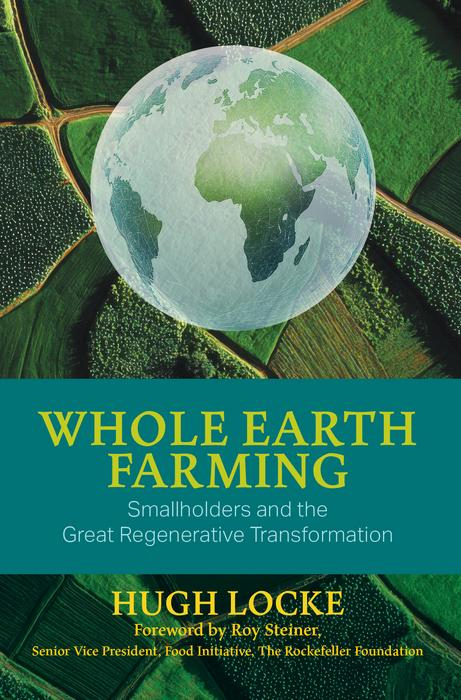
Smallholder farmers already produce 30% of the world’s food. Helping half of them adopt regenerative farming could feed population growth through 2050 while restoring nature. – Author Hugh Locke, Whole Earth Farming
The Haitian experience
Some of the book’s most compelling evidence comes from Haiti, where Locke co-founded the Smallholder Farmers Alliance in 2010 alongside Haitian agronomist Timote Georges.
Today, the organisation works with approximately 10,000 farmers. By providing sustainable farming support, training, seeds, and services, participating farmers have reportedly increased yields by about 40 per cent. Household incomes have risen between 50 and 100 per cent, depending on local circumstances. Members also plant approximately one million trees annually.
A centrepiece of the program is a model known as “tree currency.” Farmers plant and care for trees in exchange for agricultural support and resources. The system directly links environmental restoration with economic opportunity, creating incentives that benefit both farmers and ecosystems.
The Haiti experience demonstrates a principle often overlooked in policy discussions: when farmers receive practical support and access to knowledge, productivity and ecological stewardship can advance together.
Beyond sustainability
For many consumers, “sustainable” agriculture implies reducing environmental harm. Regenerative agriculture aims for something more ambitious: creating net-positive outcomes.
Instead of merely slowing soil degradation, regenerative systems seek to rebuild soil organic matter. Instead of limiting biodiversity loss, they aim to enhance biodiversity. Instead of simply adapting to climate change, they work to increase resilience while pulling carbon out of the atmosphere.
This shift represents a profound change in mindset. Agriculture becomes not just a source of food, but an engine for ecological renewal.
For households concerned about where their food comes from, regenerative agriculture offers a compelling bridge between personal wellness and planetary health. Healthy soils produce nutrient-rich crops, while diverse farming systems strengthen local food security and ecosystem function.
The climate connection
One of the book’s most intriguing aspects is its exploration of agriculture’s climate potential.
According to research Locke cites, a large-scale transition to regenerative agriculture among approximately 240 million smallholder farms could remove substantial amounts of carbon dioxide from the atmosphere through soil carbon sequestration during active accumulation periods. When combined with reduced reliance on synthetic fertilisers, the mature annual climate benefit could approach levels comparable to the annual emissions of the global aviation sector.
Importantly, Locke cautions against viewing regenerative agriculture as a climate silver bullet.
“Regenerative agriculture is not a license to keep emitting carbon elsewhere,” he notes. Its value lies in delivering multiple benefits simultaneously: healthier soils, greater biodiversity, stronger farm economies, increased food production, and more resilient communities.
That holistic perspective aligns closely with the values of many health-conscious consumers, who increasingly seek food choices that support environmental and community well-being alongside nutrition.
Why smallholders matter
The global food conversation often focuses on large-scale industrial farms, advanced technology, and multinational supply chains. Yet smallholder farmers, many cultivating fewer than five acres, already feed billions. Approximately two billion individuals live and work on smallholder farms worldwide.
Locke argues that these farmers may be uniquely suited to lead regenerative transformation because many continue to practice diversified agriculture and retain generations of local agricultural knowledge. What they frequently lack is access to financing, training, research, markets, and extension services.
Removing those barriers could unlock extraordinary social, economic, and environmental returns.
A vision of abundance
I think the most powerful aspect of Whole Earth Farming is its optimism.
At a time when discussions about food systems are often dominated by scarcity, climate risk, and ecological decline, Locke advances a vision rooted in possibility. He proposes that humanity does not need to choose between feeding more people and restoring nature. Both goals can be pursued simultaneously if investments are directed toward the farmers who have long operated on the margins of agricultural policy.
For the whole food movement, this message resonates deeply. The future of healthy eating may depend not only on what appears on our plates, but also on how we support the people who grow our food and the landscapes that sustain them.
If Locke’s vision proves correct, the next great agricultural revolution will not be driven solely by technology or industrial scale. It will emerge from millions of small farms restoring soils, planting trees, strengthening communities, and demonstrating that abundance and ecological stewardship can grow side by side.