


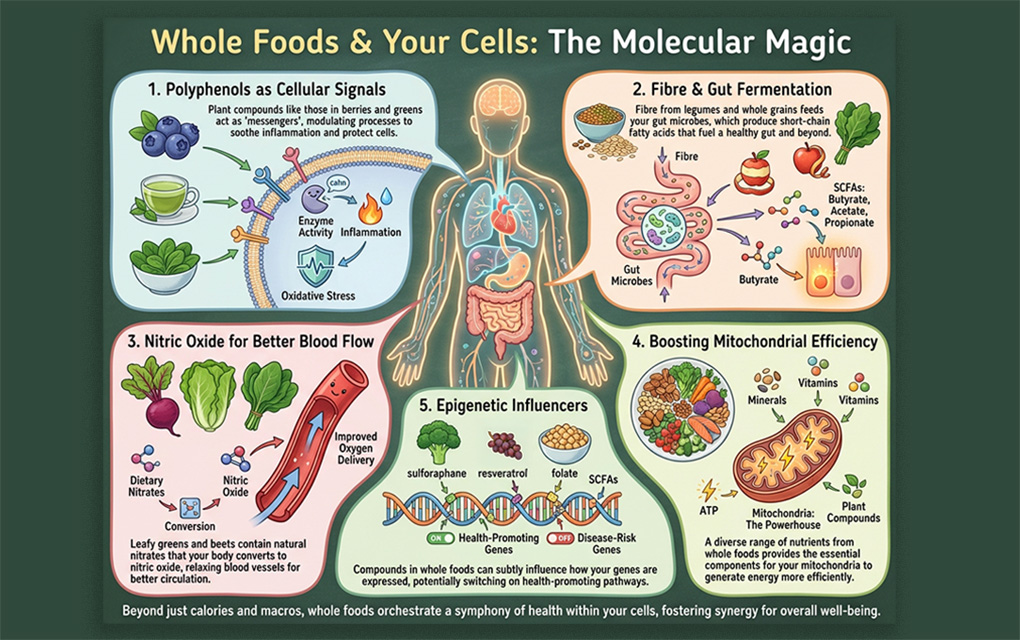

The power of whole foods runs far deeper than vitamins, minerals, or calorie counts. At the cellular level, natural foods behave more like biochemical messengers—nudging metabolism, shaping gene expression, feeding microbial allies, and supporting the tiny energy factories inside every cell.
When we understand this “molecular magic,” everyday foods like berries, greens, and legumes become far more than ingredients. They become active participants in our biology. For instance, polyphenols are colourful plant compounds found in berries, herbs, cocoa, olives, and leafy greens. They’re often described as antioxidants, but their real impact is more sophisticated.
Inside the body, polyphenols act like cellularsignals. They interact with receptors, influence enzyme activity, and help regulate inflammation. For example, the deep purple pigments in blueberries—anthocyanins—activate pathways that protect cells from oxidative stress and support vascular health.

Whole Food Living:
The Good Food Series
Over the New Year break, I began thinking about the essentials of food and what makes it ‘good’. For Peter and me, it doesn’t work when some guru says we should eat something just because they say it’s good. We want to know why. The series (published fortnightly) will consist of 12 features exploring the science, culture and shared joy of natural eating. Hope you enjoy, Catherine.
Green tea catechins help regulate blood sugar responses. Even the bitter notes in dark leafy greens come from polyphenols that help modulate detoxification enzymes in the liver.
What makes polyphenols especially fascinating is that many aren’t fully absorbed in the small intestine. Instead, they travel to the colon, where gut microbes break them down into smaller, highly active metabolites. This means polyphenols don’t just nourish you—they also nourish the microbial community that supports you.
The magic of fibre
Fibre is often described as “roughage,” but its real magic happens in the large intestine. There, gut bacteria ferment certain fibres—especially those from legumes, oats, apples, onions, and leafy greens—into short-chain fatty acids (SCFAs) such as butyrate, acetate, and propionate.
These SCFAs have remarkable effects:
- Butyrate fuels colon cells, strengthens the gut lining, and reduces inflammation.
- Propionate helps regulate appetite and supports metabolic balance.
- Acetate travels through the bloodstream, influencing immune function and even brain signalling.
This fermentation process is one of the clearest examples of how whole foods communicate with the body. A bowl of lentils isn’t just fibre and protein—it’s a biochemical conversation between your diet, your microbiome, and your immune system.
Greens & nitric oxide
Leafy greens like spinach, rocket, and silverbeet (Swiss chard) are rich in naturally occurring nitrates. When you eat them, oral bacteria convert these nitrates into nitrites, which the body then transforms into nitric oxide (NO)—a molecule that relaxes blood vessels, improves circulation, and enhances oxygen delivery.
This pathway is so powerful that athletes often use beetroot juice to boost endurance. But for everyday wellbeing, nitric oxide supports healthy blood pressure, cognitive function, and overall vascular resilience.
What’s striking is how our body systems depend on whole foods. Processed foods rarely contain meaningful nitrate levels, and mouthwash that kills oral bacteria can actually reduce nitric oxide production. It’s a reminder that the body’s chemistry is deeply intertwined with natural foods and the microbes that help break them down.
Food to energy
Mitochondria are the tiny powerhouses inside cells that convert food into usable energy. Whole foods support mitochondrial function in several ways:
- Polyphenols (like those in berries and herbs) help reduce oxidative stress inside mitochondria.
- Healthy fats from nuts, seeds, and avocados provide clean-burning fuel.
- Minerals such as magnesium—abundant in greens and legumes—are essential for ATP (Adenosine triphosphate) production, the body’s energy currency.
- Plant diversity supports a healthier microbiome, which in turn influences mitochondrial signalling.
When mitochondria work efficiently, energy levels feel steadier, recovery improves, and metabolic health strengthens. This is one reason people often report feeling more “alive” or “clear-headed” when shifting toward whole foods.
Food talks
Epigenetics refers to chemical tags that sit on top of DNA and influence which genes are switched on or off. Whole foods contain compounds that help shape these tags.
- Sulforaphane from broccoli sprouts activates detoxification genes.
- Resveratrol from grapes and berries influences longevity pathways.
- Folate from leafy greens supports DNA repair and methylation.
- SCFAs from fibre fermentation help regulate genes involved in inflammation.
This doesn’t mean food rewrites your DNA. Instead, it gently guides gene expression—supporting pathways linked to resilience, repair, and long-term health.
Why this matters
Understanding the molecular magic of whole foods shifts the conversation from restriction to nourishment. A handful of blueberries isn’t “just carbs”—it’s a polyphenol-rich signal to your cells.
A bowl of chickpeas isn’t “just fibre”—it’s fuel for beneficial microbes that produce anti-inflammatory compounds. A plate of greens isn’t “just salad”—it’s a nitric oxide boost for your blood vessels.
Whole foods work synergistically, not in isolation. Their power comes from how their compounds interact with each other, your microbiome, and your cellular machinery.