



If you’ve ever wondered why nutrition researchers rave about leafy greens—or why athletes swear by beetroot juice before a race—the answer often comes down to one tiny, mighty molecule: nitric oxide.
Nitric oxide (NO) doesn’t look like much on paper. It’s a simple gas, made of just one nitrogen atom and one oxygen atom. Yet inside the human body, it behaves like a master communicator. It tells blood vessels when to relax, helps red blood cells deliver oxygen more efficiently, and supports the smooth flow of blood to the heart, brain, and muscles. In many ways, nitric oxide helps your blood vessels “breathe.”
What’s remarkable is how deeply this system depends on whole foods—especially leafy greens—and the microbes that live in your mouth. It’s a beautiful example of how human biology is designed to work in partnership with nature, not in isolation from it.

This is the third in our fortnightly Healthy Food Series. The series consists of 12 features exploring the science, culture and shared joy of natural eating … The previous article in this series covered ‘Fibre fermentation‘ – feeding the gut and fuelling the body.
A natural relay system
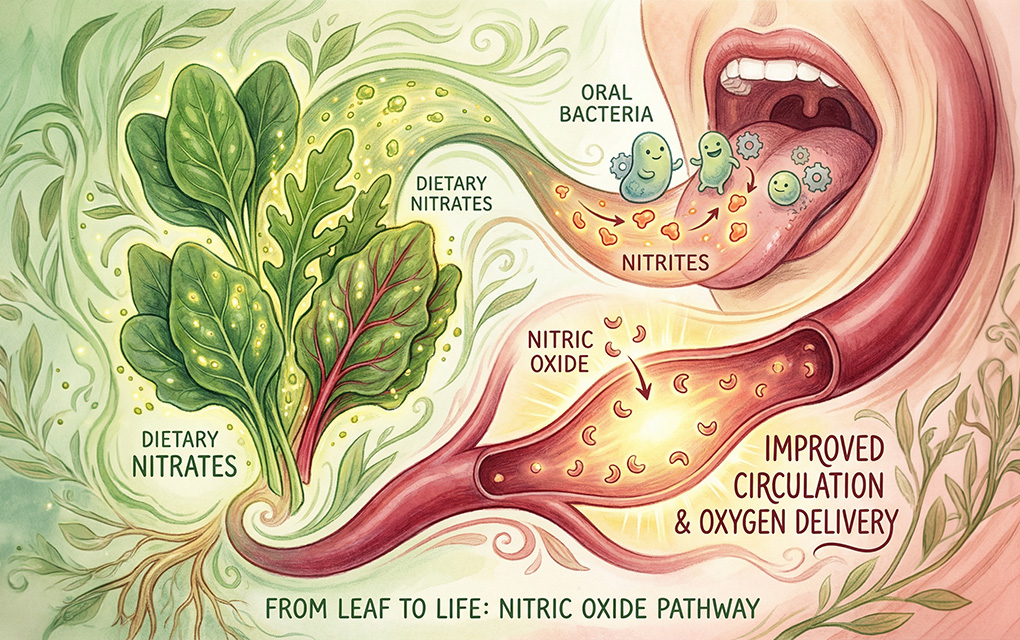
Leafy greens such as spinach, rocket, silverbeet (swiss chard), and beetroot leaves are naturally rich in dietary nitrates. These nitrates are not the same as the synthetic additives used in processed meats; they’re part of the plant’s own nutrient profile, packaged with antioxidants, fibre, and minerals.
Here’s where the magic begins.
Step 1: Eating the greens
When you chew leafy greens, the nitrates they contain enter your saliva.
Step 2: Oral bacteria take the baton
Specialised bacteria on your tongue convert these nitrates into nitrites. This step is crucial—humans can’t perform this conversion on their own. We rely entirely on our oral microbiome to do it for us.
Step 3: Nitrites to nitric oxide
When you swallow, nitrites travel to the stomach and bloodstream, where they’re converted into nitric oxide (NO). This molecule then signals blood vessels to relax and widen, improving circulation and oxygen delivery.
It’s a beautifully efficient system: plants provide the nitrates, microbes convert them, and your body uses the final product to support vascular health.
Why nitric oxide matters
Nitric oxide is often associated with athletic performance—and for good reason. Endurance athletes commonly use beetroot juice to boost stamina because Nitric Oxide improves oxygen efficiency. But the benefits extend far beyond sport.
1. Healthy blood pressure
When blood vessels relax, blood flows more easily. This helps maintain healthy blood pressure and reduces strain on the cardiovascular system.
2. Cognitive function
Your brain is a high‑demand organ. It needs a constant supply of oxygen and nutrients. Nitric oxide helps ensure that blood vessels in the brain stay flexible and responsive, supporting mental clarity and long‑term cognitive health.
3. Vascular resilience
Over time, nitric oxide helps maintain the elasticity of blood vessels. Flexible vessels are better able to adapt to changes in blood flow, temperature, and physical activity.
4. Exercise and movement
Even for non‑athletes, nitric oxide supports better oxygen delivery during everyday activities—walking, gardening, climbing stairs, or simply staying active throughout the day.
5. Metabolic health
Improved circulation supports nutrient delivery and waste removal, both of which are essential for metabolic balance.
In short, nitric oxide is a quiet but powerful ally in maintaining whole‑body vitality.
Whole foods vs supplements
One of the most striking aspects of the nitrate–nitrite–nitric oxide pathway is its dependence on whole foods. You can’t simply take a nitrate pill and expect the same results. Here’s why.
Whole foods contain the full package
Leafy greens don’t just deliver nitrates—they come with:
- Vitamin C, which helps stabilise nitrites and supports nitric oxide production
- Polyphenols, which protect nitric oxide from breaking down too quickly
- Fibre, which feeds gut microbes that influence vascular health
- Minerals, such as magnesium and potassium, that support blood pressure regulation
This synergy is impossible to replicate in a supplement.
Processed foods fall short
Highly processed foods rarely contain meaningful levels of nitrate. Even when they do, they lack the antioxidants and plant compounds that keep nitric oxide stable and beneficial.
Your oral microbiome
Perhaps the most surprising factor is the role of oral bacteria. Without them, nitrate conversion simply doesn’t happen. This means:
- Antibacterial mouthwash can reduce nitric oxide production
- A diverse, healthy oral microbiome enhances nitric oxide availability
- Chewing leafy greens (not just swallowing them) supports the process
It’s a reminder that the body isn’t a machine with isolated parts—it’s an ecosystem.
The beauty of beetroot
Beetroot is one of the richest natural sources of dietary nitrates. When athletes drink beetroot juice before training or competition, they often experience:
- Improved oxygen efficiency
- Reduced perceived exertion
- Better endurance
- Enhanced blood flow to working muscles
This isn’t a placebo effect. It’s the nitrate–nitrite–nitric oxide pathway working at full speed.
But you don’t need to be an athlete to benefit. A simple daily habit—like adding a handful of spinach to your lunch or enjoying a beetroot salad—can support your vascular system in meaningful ways.
Supporting the pathways
The good news is that supporting nitric oxide production is simple, delicious, and deeply aligned with whole‑food living.
1. Eat leafy greens every day
Aim for at least one generous serving of nitrate‑rich greens daily. Great options include:
- Spinach
- Rocket (arugula)
- Silverbeet
- Beetroot leaves
- Bok choy
- Lettuce varieties
Raw or lightly cooked is ideal, as nitrates are water‑soluble.
2. Include beetroot regularly
Roasted beetroot, beetroot hummus, grated beetroot in salads, or fresh beetroot juice all contribute to nitric oxide production.
3. Protect your oral microbiome
Your mouth is part of your digestive system, not separate from it.
- Avoid antibacterial mouthwash unless medically necessary
- Brush and floss gently
- Eat plenty of fibrous plant foods that support microbial diversity
4. Pair greens with vitamin C
Vitamin C helps stabilise nitrites and enhances nitric oxide availability. Try:
- Spinach + lemon
- Rocket + orange segments
- Silverbeet + tomatoes
- Beetroot + berries
5. Move your body
Physical activity stimulates nitric oxide production within blood vessel linings. Even a brisk walk can help.
The big lesson
The nitrate–nitrite–nitric oxide pathway is more than a biochemical curiosity. It’s a reminder of how deeply human health is intertwined with the natural world.
- We rely on plants to supply the raw materials
- We rely on microbes to perform essential conversions
- We rely on whole foods—not isolated compounds—to keep the system balanced
When we eat in a way that honours this partnership, the body responds with vitality, resilience, and ease.
In a world where supplements and shortcuts are constantly marketed as solutions, nitric oxide pathways offer a refreshing truth: sometimes the most powerful health support comes from the simplest foods—fresh greens, vibrant beetroot, and the living ecosystem inside your mouth.