

by Catherine Barclay
From a personal perspective, I never expected to be writing about endometriosis and certainly not as someone who is more than seven years postmenopausal. Yet here I am, still processing a diagnosis that arrived on May 22nd like a bolt from the blue and reshaped the way I understand my own body.
It all began after a routine sinus operation last November. Within a week, I noticed a small amount of bleeding “down below.” I was assured it had nothing to do with the surgery, but something didn’t sit right with me. Later, I learned that certain antibiotics and anticoagulants can sometimes be associated with vaginal bleeding. That was enough for me to book an appointment with my GP.
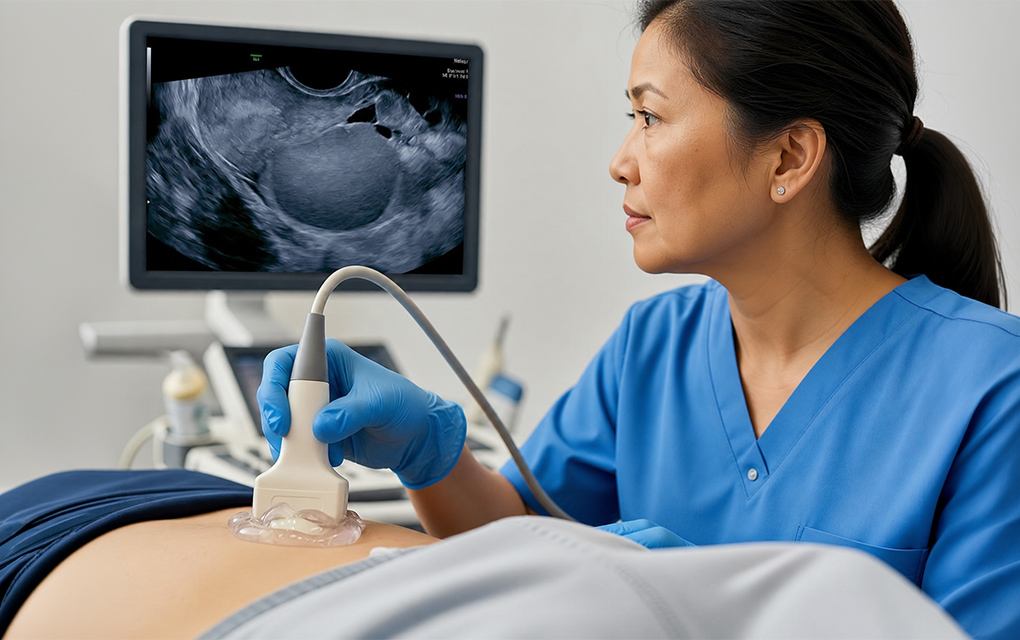
He referred me to a gynaecologist, who in turn sent me for an abdominal ultrasound. During the scan, the sonographer asked casually, “Have you ever been diagnosed with endometriosis?”
“No,” I replied, thinking little of it. She had found a cyst on the surface of my right ovary and noted increased endometrial thickness.
Major surgery considered
My gynaecologist recommended a MyoSure polypectomy — a minimally invasive procedure to remove polyps and collect tissue for pathology. More major surgery was mentioned, but she preferred to avoid anything unnecessary. I agreed. We scheduled a follow‑up scan in three months to monitor the cyst.
At the second ultrasound, a different sonographer asked the same question: “Have you had endometriosis?” Again, I said no. When I returned to the gynaecologist, she told me the cyst hadn’t grown, but she didn’t like the look of it. She recommended keyhole surgery to remove my right ovary and both fallopian tubes.
Throughout all of this, my blood tests were normal. No red flags. No cancer markers. But until everything was over and the pathology came back, that quiet, persistent doubt never fully left me.
On the day of the surgery, everything changed. My gynaecologist told me she had discovered severe stage‑four endometriosis. She had “cleaned up” adhesions and separated organs that had fused together over time.
I was stunned. Completely blindsided. She asked if I’d ever had severe pain. I told her no. Her response: “You must have a high pain threshold.”
Symptoms that made sense
As soon as she left the room, I grabbed my phone. What exactly is endometriosis? What are the symptoms? And why had no one ever suggested this to me before?
Suddenly, parts of my life began to click into place.
I remembered the strong period pain that would send me to bed with heated wheat bags and painkillers. Some months, Peter had to cook dinner because I simply couldn’t. But I dismissed it — didn’t all women have period pain?
Fatigue was another constant companion. I’d feel overwhelmingly tired around my periods, sometimes struggling to stay awake while driving home from work.
In later years, lying on my right side, doing certain yoga poses, or even stretching while cleaning, would send a dull pain down my right side. I assumed it was my hip or just general unfitness. Now, and after much reading, I know it was likely my organs pulling against adhesions or something to do with my sciatic nerve.
I never experienced the extreme pain many women describe, but I’m convinced the chronic inflammation rippled through my body in quieter ways. One example is my low iron before going plant‑based. Research shows chronic inflammation can block iron absorption — and that matched my experience perfectly. A study by Atkins et al. (2018) even found that standard iron supplements often fail to restore iron levels in people with endometriosis. That was me to a T.
Lifestyle changes that helped
Thankfully, long before my diagnosis, Peter’s TIA in 2014 nudged us toward a plant‑based lifestyle. By 2018, we were fully Whole Food Plant‑Based. Looking back, I’m convinced this shift softened the severity of my symptoms by reducing systemic inflammation.
The pain I did experience was fleeting — usually only when stretching — and it disappeared as soon as I stopped the movement. My iron levels improved. My energy stabilised. The only lingering issue has been bloating, which I’m now addressing by reducing gluten and refined wheat.
What I’ve since learned is that many women with endometriosis report dramatic improvements when they adopt a plant‑predominant diet — removing dairy, red and processed meat, refined sugars, highly processed foods, trans fats, alcohol, and excess caffeine. When they reintroduce these foods, symptoms often return almost immediately.
The plant-based connection
The more I read, the more everything aligns. Studies show that a plant‑based diet:
- lowers inflammation
- improves estrogen balance
- supports a healthier gut microbiome
Over the past few weeks, I’ve taken a deep dive into the research, and it all reinforces what we’ve been advocating for years. I feel profoundly grateful that we embraced this way of eating long before I knew I needed it.
A high‑fibre, omega‑3‑rich, antioxidant‑dense, minimally processed, low‑saturated‑fat diet isn’t just good for general health — it’s a lifeline for women living with endometriosis.
The information gap
Information about endometriosis is improving, but there is still a long way to go — especially when it comes to recognising the role of lifestyle and diet in managing symptoms.
Diagnosis remains the hardest part. Two separate sonographers spotted signs in me, yet it still took keyhole surgery to confirm it. That seems to be the reality for many women.
My message to anyone newly diagnosed or who thinks they have this condition is to: Read, learn, and diligently explore the connection between nutrition and endometriosis.
There are two books I highly recommend:
- Endometriosis: A Key to Healing Through Nutrition — Dian Shepperson Mills & Michael Vernon
- Your Body in Balance — Dr Neal Barnard
Both explain the “why” behind the dietary connection in a way that just makes sense. If there’s even a hint that food could change your life — perhaps even spare you from major surgery — isn’t it worth exploring?
As Dr Barnard says, sometimes the fastest, most effective way to reclaim your health is to skip the slow transition and commit fully to plant‑based eating.
For me, that commitment came years before I knew I had endometriosis. Now, it feels like the greatest stroke of luck I could have asked for.
Interesting research
A recently published research paper covering the safety of tampons has found that they could have an estrogenic impact and may be linked to endometriosis and uterine fibroids. The paper was published in the Journal of the Endocrine Society on April 17, 2026.
Other points of interest
- Global Prevalence: Endometriosis affects approximately 10% of women and individuals assigned female at birth of reproductive age worldwide, translating to roughly 190 million people.
- Diagnostic Delay: On average, it takes 7 to 10 years from the onset of symptoms for an individual to receive an official diagnosis.
- Fertility Impact: The condition is closely linked to fertility challenges, affecting 30% to 50% of individuals experiencing infertility.
- Surgical Findings: While the condition affects people of all ages, large-scale surgical data show that advanced-stage disease (Stages III and IV) is most frequently identified in individuals aged 35 to 45, accounting for over 50% of cases in that age bracket.
- Inflammatory Nature: Endometriosis is a chronic, estrogen-dependent inflammatory disease where tissue resembling the uterine lining grows outside the uterus.
- Anti-Inflammatory Diets Help: Whole-food, plant-based diets rich in antioxidants, omega-3 fatty acids, and fibre can help lower systemic inflammation and reduce pelvic pain.
- Estrogen Regulation: High-fibre foods (like legumes, oats, and vegetables) assist the liver and gut in binding and excreting excess estrogen, which may decrease flare-ups.
- Foods to minimise or exclude: Diets high in saturated fats, red meat, alcohol, dairy and highly processed foods are linked to increased prostaglandin production, which can worsen cramping and inflammation.
- Gut Health Connection: Endometriosis frequently co-occurs with digestive issues (often called “endo belly”); maintaining a healthy gut microbiome through diverse plant fibres can improve overall symptom management.