



by Peter Barclay
New Zealand agriculture stands at a historic turning point. The proposed withdrawal of Heinz Wattie’s from frozen‑vegetable production — including the closure of its Auckland, Christchurch, and Dunedin factories, the end of frozen‑vegetable lines, and the loss of roughly 350 jobs — is more than a corporate restructuring. It is a signal that the country’s long‑standing model of regionally anchored food production is under acute strain.
For decades, frozen vegetables have been a quiet pillar of national food security, regional employment, and grower stability. Their potential disappearance forces a deeper question: What kind of agricultural nation does New Zealand want to be in a climate‑changing world?
Local roots uprooted
Wattie’s has been part of the New Zealand food story since 1934. But as a subsidiary of the Kraft Heinz Company, its decisions now reflect global pressures rather than local priorities. The company cites high inflation, rising energy costs, and difficult manufacturing conditions as reasons for discontinuing frozen‑vegetable production and shutting three major facilities.
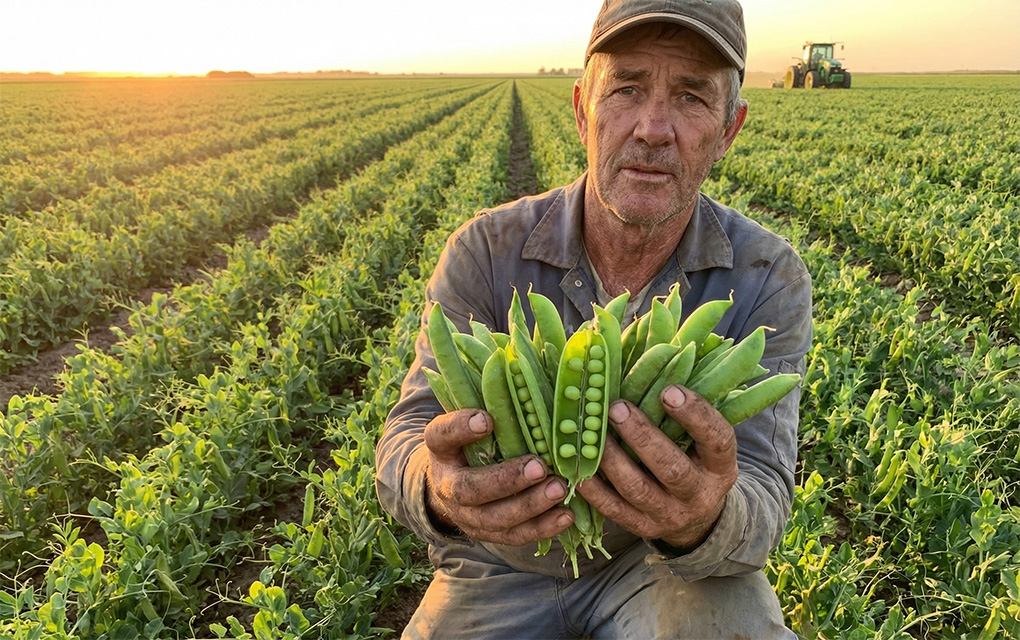
Packing operations for frozen lines in Hastings — the heart of the country’s pea and corn production — would also cease.
For growers, this is not simply a commercial inconvenience. It is the loss of their primary buyer, processor, and partner. More than 200 contracted growers could be affected.
The ripple effects extend far beyond the farm gate: transport operators, seasonal workers, small towns built around processing plants, and the national supply of affordable frozen vegetables all stand to lose.
Dairy level scale
The frozen‑produce sector has always been structurally different from dairy or sheep‑and‑beef, and has never achieved dairy-level scale. Several forces kept it small:
- Geography and land use — New Zealand’s terrain overwhelmingly favours pastoral farming. Vegetable cropping requires flat, fertile, irrigated land — a scarce resource.
- Dependence on processors — Unlike dairy farmers, who own their processing through co‑operatives, vegetable growers relied on private processors like Wattie’s. When Wattie’s sold out to the massive American J.J.Heinz Company in 1992 for $565 million, growers lost influence over investment decisions.
- Crop diversity — Peas, corn, carrots, beans, broccoli, and mixed vegetables all require different harvesting and processing systems, making large‑scale standardisation difficult.
- Import pressure — Cheaper frozen vegetables from large‑scale producers overseas have steadily eroded domestic competitiveness.
The result is a sector that has always been vulnerable — and now faces existential risk
Lessons from the US Midwest
New Zealand’s situation echoes the long arc of agricultural consolidation in the American Midwest. There, multinational agribusinesses dominate grain processing, seed supply, and commodity markets. The consequences have been profound:
- Growers became price‑takers as local processors were absorbed into global supply chains.
- Rural communities hollowed out as consolidation reduced local employment.
- Environmental resilience declined as monocultures expanded and soil health deteriorated.
- Decision‑making moved offshore, leaving local farmers with little control over their own futures.
New Zealand is hardly the American Midwest — but the warning signs are similar. When a single multinational controls the processing lifeline for an entire sector, local growers become exposed to global cost structures, corporate strategy shifts, and shareholder priorities.
The proposed Wattie’s closures show how quickly those priorities can change.
A moment of reckoning
If New Zealand loses domestic frozen‑vegetable production, several risks emerge:
- Food security weakens — Frozen vegetables are a key source of affordable nutrition, especially for low‑income households.
- Supply chains become fragile — Climate shocks, shipping disruptions, and geopolitical tensions could interrupt imported supply.
- Regional economies suffer — The loss of 350 jobs is only the beginning; entire communities depend on these facilities.
- Growers lose viability — Without a processor, many will have no market for their crops.
- Environmental stewardship declines — Local production allows for local accountability; offshore production does not.
This is not simply a business closure. It is a structural fracture in the national food system.
Would a co-operative help?
A grower‑owned co‑operative — similar to Fonterra or Zespri — is one potential path forward. But it faces significant hurdles:
- High capital costs for freezing infrastructure.
- Small domestic market that limits economies of scale.
- Crop diversity that complicates unified governance.
- Retailer dominance that pressures margins.
Yet the idea is not impossible. In fact, the current crisis makes it more viable than at any time in the past 40 years:
- Growers now understand the risks of relying on a multinational.
- The processing vacuum creates a clear need.
- Food‑security concerns give the idea political momentum.
But a co‑operative would almost certainly require government co‑investment, import‑parity safeguards, and regional development incentives to succeed.
The climate catalyst
The climate crisis adds a new dimension to this crossroads. Seasonal volatility, extreme weather, and shifting growing zones are already affecting crop reliability. New Zealand’s vegetable sector — concentrated in a few regions — is particularly exposed.
This raises two strategic questions:
A. Should New Zealand expand into plant‑protein production?
Global demand for plant‑based proteins is rising. New Zealand has the agronomic expertise, branding power, and clean‑green reputation to compete — but currently lacks the processing infrastructure and investment focus.
A pivot toward:
- pea protein
- fava‑bean protein
- lupin protein
- hybrid plant‑protein foods
could create new value chains that are less vulnerable to climate variability and more aligned with global dietary trends.
B. Should New Zealand acquire farmland overseas to hedge climate risk?
This is controversial — but not unprecedented. Countries like Singapore, China, and the UAE already invest in offshore farmland to secure food supply.
For New Zealand, offshore land acquisition could:
- diversify climate exposure
- stabilise supply of key crops
- support domestic processing industries
- create counter‑seasonal production opportunities
But it also raises ethical, political, and environmental questions that would require careful navigation.
Resilience vs scale
New Zealand will never match the industrial scale of the American Midwest or European vegetable giants. But scale is not the only path to resilience.
A future‑ready agricultural system could be built on:
- regional processing hubs owned by growers
- climate‑resilient crop diversification
- plant‑protein innovation
- strategic offshore partnerships
- government‑supported food‑security infrastructure
- stronger domestic branding for NZ‑grown frozen foods
The proposed Wattie’s closures are painful — but they also create space for reinvention.
The confronting question
The crossroads are clear. One path leads to deeper dependence on imports, loss of regional jobs, and erosion of food security. The other leads to a reimagined agricultural system that embraces climate‑resilient crops, new value chains, and grower‑led ownership models.
The question is no longer whether New Zealand can save frozen‑vegetable production in its old form. The big question is:
Can New Zealand use this moment to build a new agricultural future — one that includes plant‑protein innovation, climate‑risk diversification, and maybe offshore farm ownership — before the next climate shock forces its hand?
On the moe cynical side, of course, the vegetable growers left behind in all this are more likely to convert their farms to dairy.
Note: Check this Newsroom article for a much more in-depth assessment of what brought Watties to this point.