

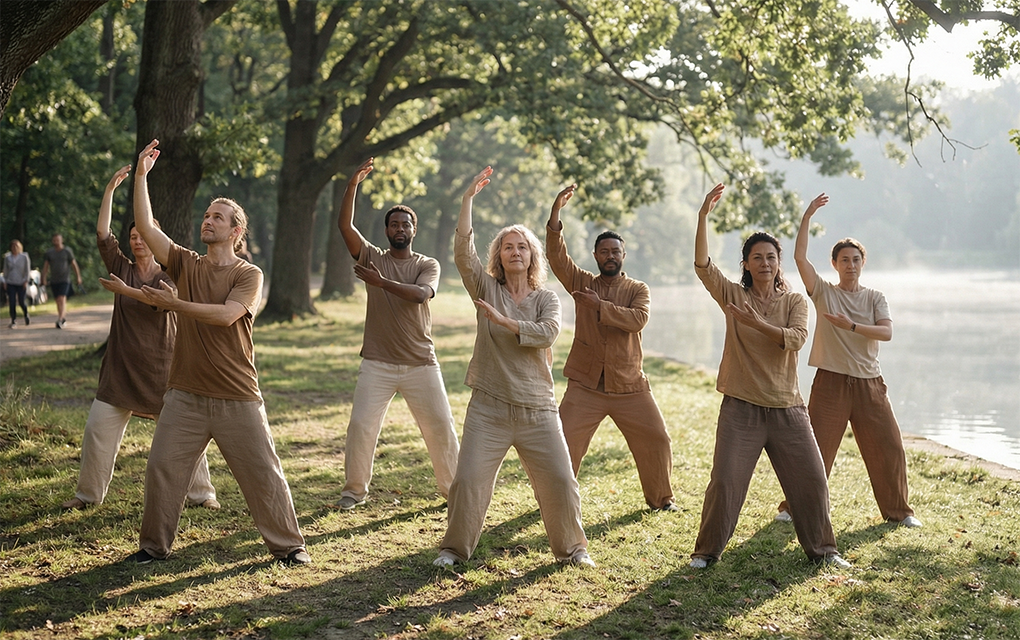

For centuries, communities across China have gathered in parks, courtyards and open squares to practise baduanjin — a gentle, rhythmic mind‑body routine built around eight flowing movements. It’s slow, meditative and deceptively simple.
Now, modern science has confirmed what generations have long believed: this ancient practice can meaningfully lower blood pressure, rivaling the benefits of brisk walking and even some first‑line medications.
A new multicentre randomised clinical trial, published in the Journal of the American College of Cardiology, followed 216 adults aged 40 and older with stage 1 hypertension (systolic blood pressure between 130–139 mm Hg). Participants were assigned to one of three groups for a full year: baduanjin, brisk walking, or self‑directed exercise. The results were striking.
Practising baduanjin five days a week reduced 24‑hour systolic blood pressure by around 3 mm Hg and office systolic blood pressure by 5 mm Hg — improvements comparable to those seen in major medication trials. Even more compelling, these benefits were sustained at both the three‑month and one‑year marks, without the need for ongoing supervision.
Easy access
High blood pressure remains one of the world’s most preventable drivers of heart disease, yet long‑term adherence to exercise programs is notoriously difficult. Many people struggle with routines that require equipment, gym memberships, or structured classes.
Baduanjin, by contrast, is accessible almost anywhere. It takes just 10–15 minutes, requires no equipment, and is gentle enough for most adults — including those who may feel intimidated by traditional exercise prescriptions.
This is where lifestyle medicine shines. Its power lies not only in evidence‑based interventions but in interventions people can realistically maintain. Baduanjin fits that brief beautifully. It blends aerobic, isometric and flexibility components with mindful breathing, offering a holistic experience that supports both physical and emotional well-being.
Ancient wisdom validated
The study’s senior author, Dr Jing Li of China’s National Centre for Cardiovascular Diseases, emphasised the practice’s simplicity and scalability. Because baduanjin is low‑ to moderate‑intensity and widely standardised, it can be taught quickly and practised safely in community settings. That makes it a promising tool for public‑health strategies, especially in regions where access to structured exercise programs is limited.
Harlan Krumholz, Editor‑in‑Chief of JACC, noted that the effect size mirrors that of landmark drug trials — but without cost, side effects or barriers to access. For lifestyle‑medicine advocates, this is a powerful reminder that culturally rooted, low‑tech practices can play a meaningful role in cardiovascular prevention.
Clear and simple
The message here is clear and simple: small, sustainable habits can have an outsized impact. Baduanjin offers a gentle entry point for those new to movement, a restorative option for those managing stress, and a scientifically validated tool for anyone looking to support heart health naturally.
It’s also a reminder that lifestyle medicine isn’t about reinventing the wheel. Sometimes the most effective interventions are those that have been quietly serving communities for centuries — waiting for the science to catch up.