

The Netherlands this week released a sweeping update to its national food‑based dietary guidelines, marking one of the most ambitious moves yet by a European nation to align public health nutrition with environmental sustainability.
The revised recommendations—announced by the Netherlands Nutrition Centre and widely welcomed by nutrition and sustainability experts—reflect a decisive pivot toward plant‑forward eating and a reduced reliance on animal‑derived foods.
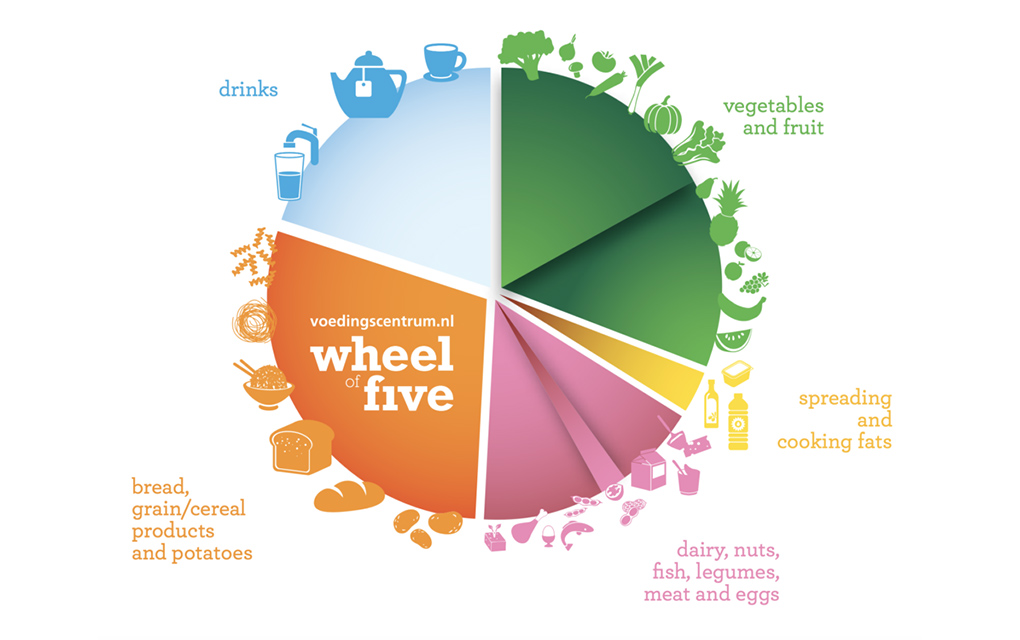
At the heart of the update is the country’s long‑standing “Wheel of Five” (Schijf van Vijf), a familiar framework that continues to emphasise vegetables, fruits, legumes, and whole grains while limiting salt, saturated fat, and added sugars.
But this 2026 revision introduces significant quantitative changes that signal a new era in national nutrition policy, with notable shifts:
- Legume intake has been increased to 250g per week, elevating beans, lentils, and peas to a central role in the Dutch diet.
- Meat intake has been reduced from a maximum of 500g to 300g per week, with no more than 100g of that coming from red meat.
- Cheese recommendations have been halved, from 40g to 20g per day.
- Dairy guidance now explicitly encourages alternating with fortified plant‑based alternatives, a move that acknowledges both environmental pressures and evolving consumer habits.
A growing consensus
These changes reflect a growing consensus across Europe: dietary guidelines must address not only human health but also planetary boundaries. As Anna‑Lena Klapp of ProVeg International noted in a LinkedIn post, the Netherlands is sending “a strong, forward‑looking signal” that nutrition policy can—and should—support both people and the planet.
The Dutch update follows a wave of similar moves across the continent. Sweden’s 2023 guidelines incorporated environmental sustainability for the first time, though experts have noted that the Dutch recommendations go further in reducing animal‑based foods.
Commenters on the announcement highlighted the contrast, with some suggesting the Netherlands has now set a new benchmark for integrating climate science into national nutrition policy.
Other countries—including Germany, Denmark, and the UK—have been exploring or implementing sustainability‑aligned dietary guidance, but the Netherlands’ explicit quantitative reductions in meat and dairy stand out as among the most ambitious.
Positive reaction
Reactions from nutritionists, public health specialists, and sustainable food advocates have been overwhelmingly positive. Many see the update as a long‑awaited alignment between scientific evidence and national policy.
- Dietitians praised the increased emphasis on legumes and the recognition of fortified plant‑based alternatives as nutritionally appropriate options.
- Sustainability advocates described the update as a “landmark moment” that could accelerate innovation in plant‑based foods and ingredients.
- Lifestyle medicine leaders celebrated the guidelines as a win for chronic disease prevention, citing strong evidence linking reduced red meat intake to lower risks of cardiovascular disease, diabetes, and certain cancers.
Some experts also pointed out areas for future improvement. For example, plant‑based meat alternatives were not given explicit quantitative recommendations; instead, they were left to consumer guidance tools such as the “Do I Choose Healthy?” app. Several commentators suggested that clearer guidance could help consumers navigate the rapidly expanding plant‑based product landscape.
A powerful signal
The Dutch update offers a glimpse of what evidence‑aligned, sustainability‑aware dietary policy can look like. For instance, New Zealand’s own dietary guidelines have not yet integrated environmental considerations, despite mounting calls from public health researchers, climate scientists, and food system advocates.
The Netherlands’ approach demonstrates that national guidelines can evolve to reflect modern realities: rising chronic disease rates, the climate impact of food production, and the growing availability of nutritious plant‑based foods.
But the Dutch guidelines are more than a national update—they are a signal to governments worldwide that the future of nutrition is inseparable from the future of the planet.
By explicitly reducing meat and dairy recommendations and elevating legumes and plant‑based alternatives, the Netherlands has positioned itself at the forefront of a global shift toward sustainable, health‑promoting diets.
As one sustainability expert commented, this is “a powerful signal that health and environmental sustainability are two sides of the same coin.”
For countries watching closely—including New Zealand—the message is clear: aligning dietary guidelines with climate science is no longer a radical idea. Outside of the USA at least, it’s becoming the new normal.