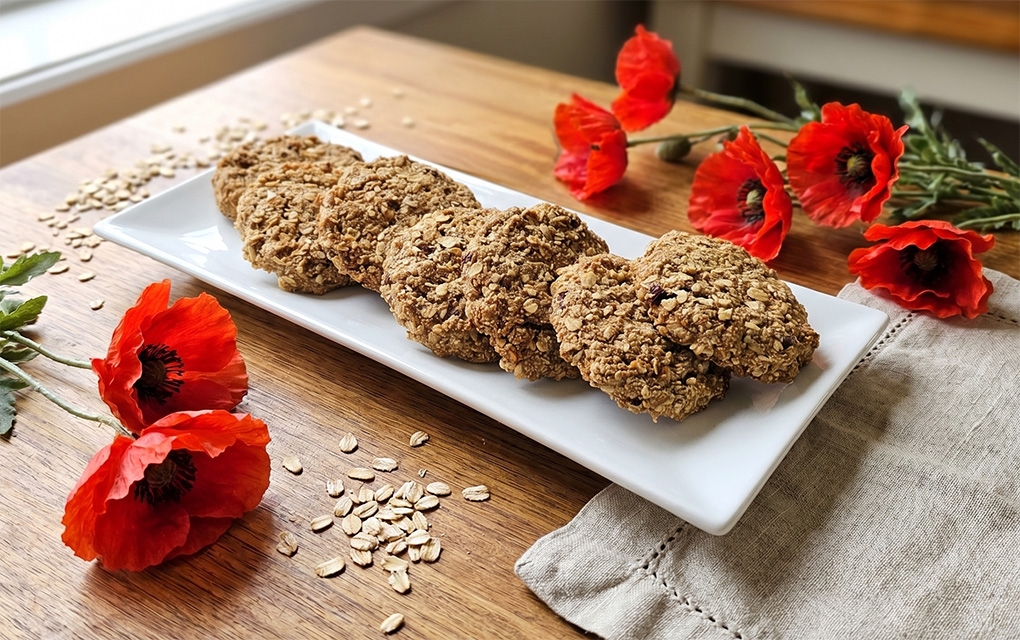

Anzac biscuits carry a story far bigger than their humble ingredients. Born during the First World War, they were originally crafted by women in Australia and New Zealand who wanted to send something nourishing, durable, and lovingly made to soldiers serving overseas. Butter was scarce, eggs were impractical for long transport, and so the earliest versions relied on oats, flour, coconut, and golden syrup — ingredients that could survive the long sea journey while still offering a taste of home. Over time, the Anzac biscuit became a symbol of resilience, resourcefulness, and remembrance, baked each April as a quiet act of honouring those who served.
This whole‑food, plant‑based version keeps the spirit of the classic while leaning into ingredients that support modern wellbeing. Rolled oats form the backbone — a slow‑burning carbohydrate rich in beta‑glucan, a soluble fibre known to support healthy cholesterol levels and steady energy. Oat flour adds softness while keeping the biscuits naturally gluten‑friendly (depending on your oats), and desiccated coconut brings that familiar chewy‑crisp texture along with healthy fats that support satiety.
Instead of golden syrup, this recipe uses date paste and a touch of blackstrap molasses to recreate the caramel depth and colour of the original. Dates offer natural sweetness paired with fibre, potassium, and polyphenols, helping to moderate blood sugar response compared to refined sugars. Blackstrap molasses contributes iron, calcium, and magnesium — minerals often lacking in modern diets — while still delivering that unmistakable Anzac warmth.
A spoonful of peanut, almond, or cashew butter adds richness and helps bind the mixture without oils or butter. Nut butters bring plant‑based protein and heart‑healthy monounsaturated fats, making each biscuit more sustaining. Baking soda activated with a splash of boiling water gives the biscuits their classic lightness without the need for eggs.
The result is a biscuit that honours tradition while embracing nourishment: chewy, golden, deeply aromatic, and built entirely from whole ingredients. It’s a recipe that feels both nostalgic and forward‑thinking — a way to celebrate Anzac Day with something that supports wellbeing, connection, and the simple act of baking with purpose.
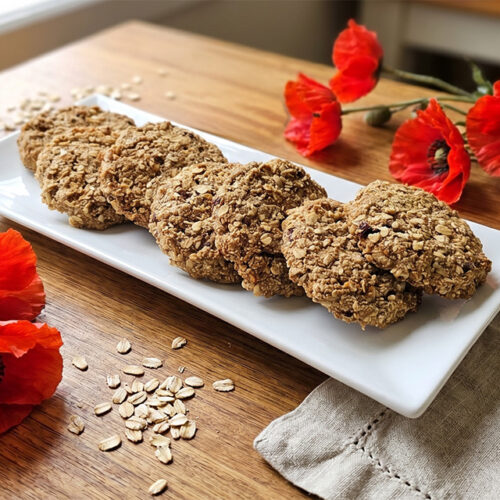
WFPB Anzac biscuits

Ingredients
Dry
- 1 cup rolled oats
- 1 cup desiccated coconut
- ¾ cup oat flour I blended rolled oats to make the flour
- ½ tsp baking soda
Wet
- ½ cup date paste or 20 regular pitted dates blended with a splash of hot water until smooth.
- 2 tbsp peanut butter or almond, cashew butters
- 1 tbsp blackstrap molasses provides the "golden syrup" depth and colour
- 2-3 tbsp boiling water
Instructions
- Heat your oven to 160°C (320℉) (fan-forced). Line a baking tray with parchment paper or a silicone mat.
- In a large bowl, whisk together the oats, coconut, flour, and bakingsoda.
- In a small bowl, whisk the date paste, nut butter, and molasses until smooth.
- Optional: Traditional recipes use boiling water and baking soda for a specific lift. You can mix the boiling water into your wet ingredients just before pouring them into the dry.
- Pour the wet mixture into the dry ingredients. Mix until a sticky dough forms. If it feels too dry to hold a ball, add an extra teaspoon of water.
- Roll tablespoons of dough into balls and place them on the tray. Flatten them firmly with the palm of your hand or a fork (WFPB dough doesn’t spread as much as the butter-heavy original).
- Bake for 15–20 minutes. They should look deep golden.
- This is the most important step! They will be soft when they come out. Let them cool completely on the tray to firm up and get that characteristic "snap.
Notes
- For Extra Crunch: If you prefer a very crunchy biscuit, leave them in the oven (turned off) with the door slightly ajar for an extra 10 minutes after baking.
- The Sweetener: If you find date paste too mild, you can use a small amount of maple syrup, but the date paste keeps it firmly in the “whole food” category by retaining the fibre.
- Storage: These keep well in an airtight container for up to 5 days, though they are best on day two once the flavours have fully melded.