

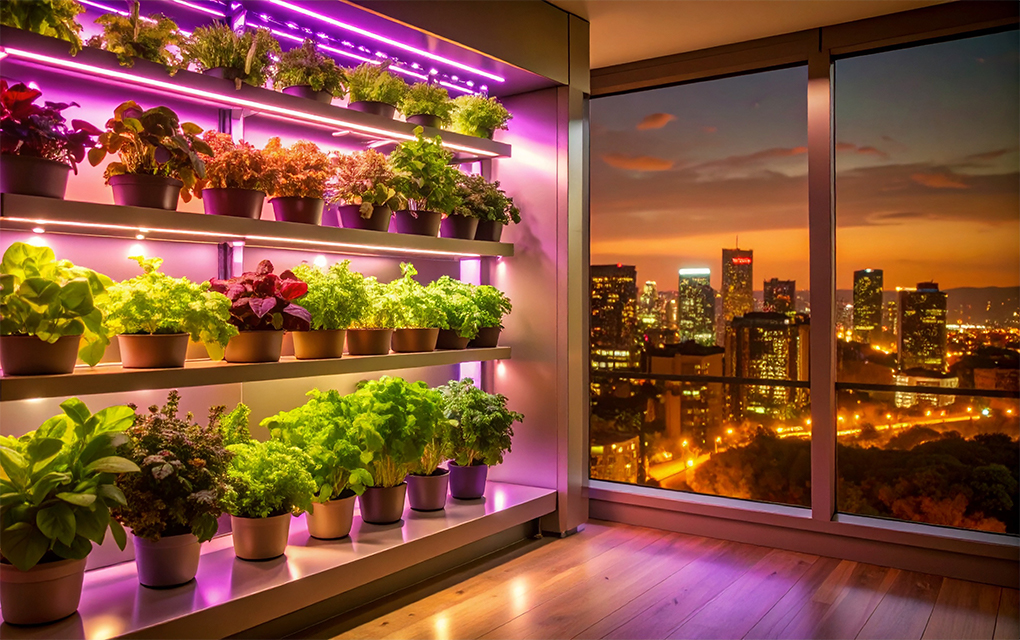

– by Vera Xia –
Sydney, like many other Australian cities, has a long history of urban farming. Market gardens, oyster fisheries and wineries on the urban fringe once supplied fresh food to city markets. As suburbs expanded, many farms in and around cities were converted to houses, roads and parks. The process is continuing.
But this isn’t the whole story. Urban farming is making a comeback in a different guise.
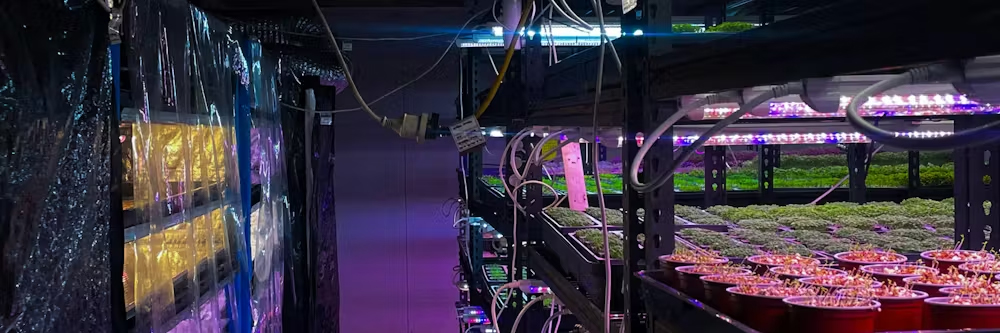
Underneath the Barangaroo towers in Sydney’s CBD, a basement carpark has been transformed into a farm. Trays of more than 40 different varieties of sprouts and microgreens grow under LED lights, often maturing within two weeks. Within hours of harvest, they’re in the kitchens of nearby restaurants.
The urban farmers use sensors, ventilation systems and smartphone apps to ensure growing conditions are ideal. From around 150 square metres, farmers produce about 5,000 punnets a week. Farms such as this one at Urban Green Sydney are part of a broader shift towards high-tech urban farming.
In my research, we asked what these new forms of urban farming mean for cities. Do they make cities and their far-flung food supply chains more resilient to climate change – or do they consume energy without enough to show for it?
Greenhouse or laboratory?
Greenhouses are a way of controlling the growing conditions for plants. The technology has deep historical roots, from early greenhouse experiments during the Roman Empire to progress in 15th century Korea and advances during the Victorian era such as the Wardian Case, which allowed live plants to survive long sea voyages.
Traditional greenhouses act as climate-controlled enclosures for plants. These days, smart greenhouses use sensors and digital monitoring to optimise, and often automate, plant growth.
Large-scale rural farms such as South Australia’s Sundrop Farms already demonstrate how smart greenhouses, renewable energy and desalination can power food production in harsh climates. Overseas, countries including Spain and China have rolled out smart greenhouses at scale in rural areas.
But these technologies are being urbanised, appearing in commercial buildings, rooftops and even domestic kitchens.
One of the best places to see what smart greenhouses look like is the Agritech Precinct at Western Sydney University. Here, researchers experiment with the “unprecedented control” of temperature, humidity and light the technologies permit on crops such as eggplants and lettuce.
The greenhouses use drones to water crops, robotic arms to harvest them and smart lighting systems to manage growth. Visiting these facilities doesn’t give you the sense you’re in a farm. It feels more like a laboratory.
Technologies like these are promoted in official plans for Greater Sydney, which call for “new opportunities for growing fresh food close to a growing population and freight export infrastructure associated with the Western Sydney Airport”, particularly in Sydney’s peri-urban areas.
Australia is funding research on improving these technologies as a way to future-proof food production.
Researchers are conducting similar experiments with smart greenhouses around the world, from the United States to the Netherlands.
Which crops work best?
Smart greenhouses can’t do everything.
Grain crops need much more space. Fruit trees don’t work well with space constraints. Some vegetable crops don’t lend themselves well to intense high-tech production.
The cost of running LED lights and smart systems mean farmers have to focus on what’s profitable. Many hyped urban farming ventures have failed.
These challenges don’t mean the approach is worthless. But it does mean farmers have to be selective about what they grow. To date, crops such as tomatoes, leafy greens, and herbs have proven the best performers. These crops can be grown relatively quickly in space-restricted, repurposed urban areas mostly hidden from public view and sold to restaurants or individual buyers.
Smart greenhouses producing these type of crops have emerged in Melbourne, Perth and Adelaide.
Urban farmers often draw on the promise of sustainability and low food miles in their branding. But the technologies raise questions around equity. Do these farms share environmental and social benefits fairly across the city, or are they concentrated in a few rich areas?
Your own smart greenhouse
The humble veggie patch is an Australian staple. But the shift to apartment living and larger building sizes risks crowding it out.
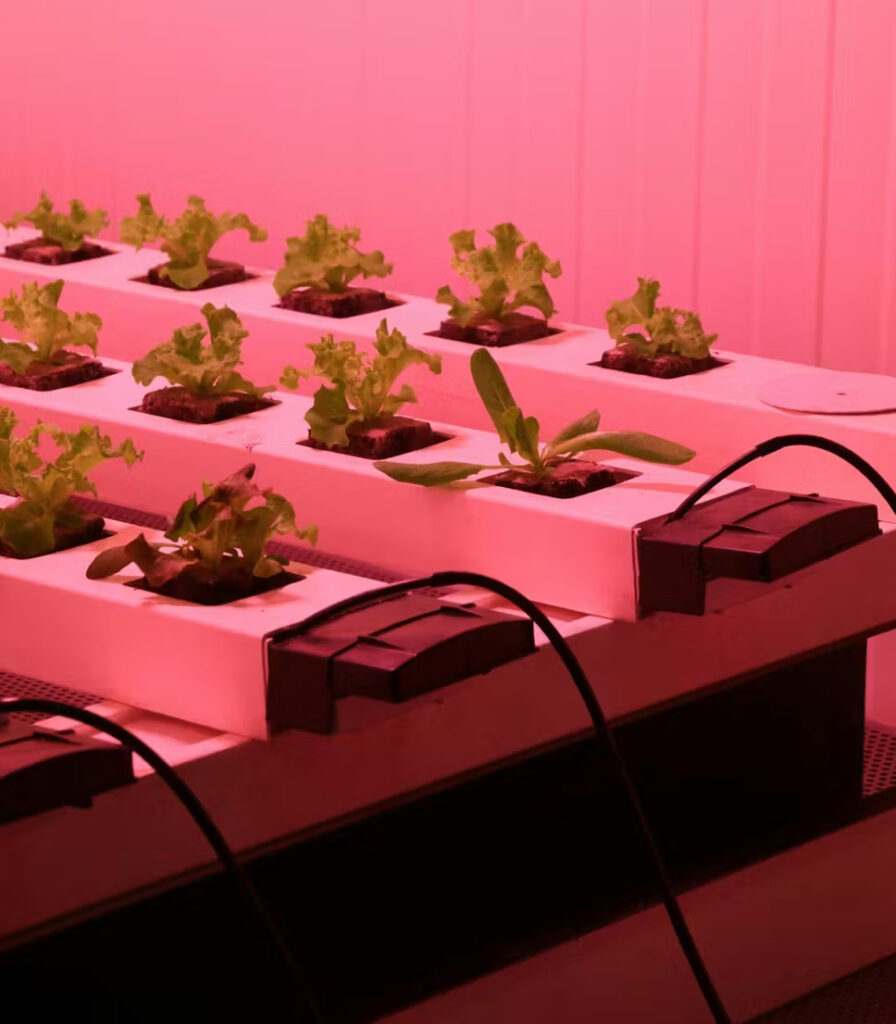
At household scale, smart greenhouses and apps are making it possible for some people to begin producing larger volumes of food in kitchens, balconies and backyards as a DIY method of boosting food security and self-sufficiency.
Compact growing appliances promise to automate production of fresh herbs and baby vegetables. Hydroponic grow tents can grow almost anything indoors (though they are commonly used for illicit crops). Maker communities are using open-source tools such as Hackster to automate watering, lighting and data collection.
Using these technologies at home seems positive, acting to boost home-grown food supplies and increase resilience in the face of food supply chain issues. In fact, it’s perhaps the most uneven frontier. Rather than working to spread smart agriculture across a cityscape, these approaches resemble prepping – efforts to boost individual household resilience.
The best of it
At their best, smart greenhouses dotted around cities work to create controlled environments where food can be produced close to where it is eaten. These high-tech, climate controlled environments are often hidden from view.
They promise resilience against the disruption climate change is bringing to agriculture and shorter supply chains. But these food production technologies also risk deepening inequality if they’re mainly taken up by wealthy consumers.
Whether these technologies ultimately benefit cities will depend on how they are integrated and positioned within our urban systems.
For urban authorities, the challenge is to ensure these emerging methods of producing food in the heart of cities boosts resilience collectively rather than fragment it. It will take policy guidance to ensure the benefits of these smart farms are shared equally.
About the author
Vera Xia is a Lecturer in Design and Urban Technologies at the University of Sydney’s School of Architecture, Design and Planning. She holds a PhD in urban and regional planning and researches how digital technologies are being used, applied, and adapted in everyday life, public spaces, and urban infrastructure. Her current work explores urban technologies, including smart street furniture, social fitness apps, light festivals, and smart greenhouses, and how they’re reshaping cities and social experiences for both human and non-human actors.