

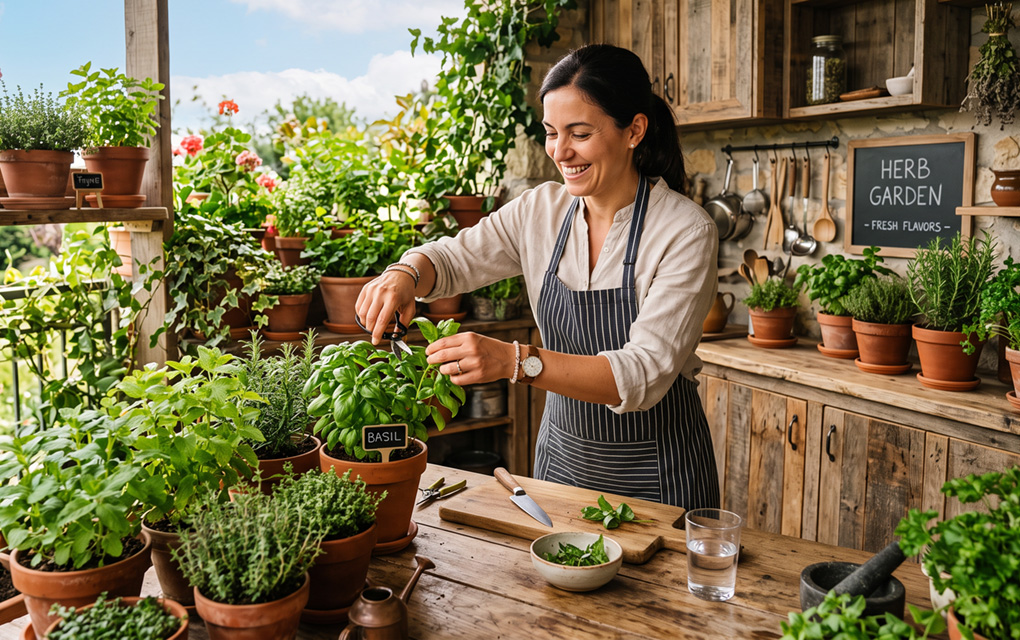

A quiet kind of magic happens when you step outside and snip something fresh for your meal. A handful of parsley, a sprig of thyme, a few leaves of basil, a twist of lemon balm. These aren’t just garnishes — they’re invitations. They remind us that flavour doesn’t have to come from salt, oil, or packaged sauces. It can come from the living world just outside the back door, even if that “garden” is nothing more than a few pots on a balcony or a sunny windowsill.
For many of us, the shift to whole‑food plant‑based cooking begins in the kitchen. But the deeper transformation — the one that changes how we think about food, time, and nourishment — often starts in the garden. And the good news is that you don’t need a quarter acre or raised beds or a horticulture degree. You just need a small space, a few hardy plants, and the willingness to experiment.
In fact, small gardens are uniquely suited to WFPB cooking. They’re manageable, abundant, and endlessly inspiring. They teach us to season boldly, to cook with freshness, and to build flavour from the ground up. They also reconnect us to the rhythms of growth, which is something modern life often rushes us past.
This is the story of how tiny gardens can reshape the way we cook — and why garnishes deserve a much bigger role in the whole‑food kitchen.
The Power of Garnishes in WFPB Cooking
When you remove salt and oil from your cooking, you quickly discover something important: flavour becomes a craft. You start paying attention to acidity, aromatics, textures, and the subtle differences between herbs. You learn that parsley brightens, basil sweetens, coriander lifts, rosemary deepens, and mint cools. You learn that a dish can be transformed not by what you add during cooking, but by what you add at the very end.
Garnishes are not decorative. They’re functional. They’re chemistry.
Fresh herbs contain volatile compounds — tiny aromatic molecules that evaporate quickly and hit your senses fast. That’s why adding fresh herbs at the end of cooking creates such a vivid, immediate flavour. It’s also why growing your own herbs makes such a difference. Store‑bought herbs are often days old, already losing their aromatic punch. But when you harvest from your own garden, those compounds are still alive, still bright, still ready to do their job.
For WFPB cooks, this is gold. It’s the difference between “healthy food” and food that feels alive.
Small Gardens Are Perfect for Busy Lives
One of the biggest misconceptions about gardening is that it takes time – hours of it. But small gardens flip that idea on its head. They’re designed for people with busy schedules, limited space, or who simply want to start small.
A tiny herb garden can be:
- Three pots on a windowsill
- A planter box on a balcony
- A cluster of terracotta pots by the front door
- A vertical rack on a sunny wall
- A repurposed wooden crate filled with soil
These micro‑gardens take minutes to maintain. A little water. A little sunlight. A little trimming. And in return, they give you daily abundance.
The trick is choosing plants that thrive in small spaces and reward frequent harvesting. Herbs are ideal because they grow fast, tolerate trimming, and don’t require deep soil. Many also prefer being slightly crowded, which makes them perfect for compact living.
The Essential WFPB Garnish Garden
If you’re building a small garden specifically for whole‑food cooking, start with herbs that deliver maximum flavour with minimal fuss. These are the plants that will transform your meals day after day.
Parsley — Brightness, Balance, and Gentle Detox Support
Bright, clean, and endlessly versatile, parsley is the backbone of a garnish garden. It lifts soups, stews, grains, salads, and sauces. It grows well in pots and loves regular harvesting.
Health benefits: Parsley is rich in vitamin C, vitamin K, and folate, making it a quiet powerhouse for immune support, bone health, and cellular repair. Its natural chlorophyll content helps neutralise odours and may support gentle detoxification by binding to certain compounds in the digestive tract. Parsley also contains apigenin, a plant compound linked to reduced inflammation and improved metabolic health. A handful a day adds brightness to your food and resilience to your body.
Coriander (Cilantro) — Freshness, Digestion, and Heavy‑Metal Support
A polarising herb, but a powerhouse for WFPB cooking. It adds freshness to curries, bowls, tacos, and dressings. Grow it in cooler seasons for best results.
Health benefits: Coriander leaves are rich in antioxidants, including quercetin, which supports heart health and reduces inflammation. They’re also known for their potential to help the body bind and excrete heavy metals, thanks to unique chelating compounds. Cilantro supports digestion, reduces bloating, and may help regulate blood sugar. Its bright flavour mirrors its physiological effect — lightening, refreshing, and gently cleansing.
Basil — Sweetness, Calm, and Anti‑Inflammatory Strength
Sweet, fragrant, and perfect for tomatoes, pasta sauces, salads, and homemade pestos. Basil thrives in warm weather and needs plenty of sun.
Health benefits: Basil contains eugenol, a compound with natural anti‑inflammatory properties that can help soothe the body after stress or exercise. It’s also rich in vitamin K, supporting bone strength, and beta‑carotene, which protects cells from oxidative damage. Basil’s essential oils have been studied for their calming effects on the nervous system, making it a beautiful herb for both flavour and emotional grounding.
Mint — Cooling, Digestive Ease, and Natural Energy
Mint is unstoppable — in the best way. It’s refreshing, cooling, and brilliant in salads, fruit bowls, dressings, and teas. Keep it in its own pot to prevent takeover.
Health benefits: Mint is one of nature’s most effective digestive herbs. Its menthol content relaxes the muscles of the digestive tract, reducing bloating, cramping, and discomfort. Mint also supports respiratory ease and can help open airways. Its bright aroma has been shown to improve alertness and reduce fatigue, making mint a natural pick‑me‑up without caffeine. A handful in your water or salad delivers both flavour and clarity.
Chives — Gentle Detox, Heart Health, and Antimicrobial Support
The quiet achiever. Chives add oniony brightness without overpowering a dish. They’re perfect for potatoes, soups, tofu scrambles, and grain bowls.
Health benefits: Chives belong to the allium family, which includes garlic and onions — plants known for their heart‑protective and anti‑inflammatory properties. They contain allicin, a compound that may help lower cholesterol and support healthy blood pressure. Chives also offer mild antimicrobial benefits and are rich in vitamin A, supporting eye health and immune function. They’re a gentle way to bring allium benefits into dishes without strong flavours.
Thyme — Deep Immunity, Respiratory Support, and Antioxidant Power
Earthy and grounding. Thyme is excellent for roasting vegetables, flavouring broths, and adding depth to savoury dishes. It’s hardy and drought‑tolerant.
Health benefits: Thyme is packed with thymol, a potent antimicrobial compound that supports respiratory health and helps the body fight off pathogens. It’s traditionally used for coughs, colds, and sinus congestion. Thyme also contains rosmarinic acid, a powerful antioxidant linked to reduced inflammation and improved immune resilience. A sprinkle of fresh thyme adds depth to your food and strength to your system.
Lemon Balm — Calm Energy, Mood Support, and Gentle Digestion
A gentle citrus‑mint herb that adds brightness to teas, fruit, salads, and desserts. It’s calming, aromatic, and easy to grow.
Health benefits: Lemon balm is rich in terpenes and polyphenols that support calm focus and emotional balance. It’s been studied for its ability to reduce anxiety, improve sleep quality, and support cognitive clarity. Lemon balm also aids digestion and may help ease mild nausea or discomfort. Its citrus‑mint profile mirrors its physiological effect — uplifting yet soothing, bright yet grounding.
Rocket (Arugula) — Peppery Energy, Nitric Oxide Boost, and Detox Support
Not technically a garnish herb, but a brilliant finishing green. Peppery, bold, and perfect for topping bowls, pizzas, and pastas.
Health benefits: Rocket is a cruciferous green, meaning it contains glucosinolates — compounds linked to improved detoxification and reduced inflammation. It’s also rich in nitrates, which help the body produce nitric oxide, a molecule that supports blood flow, exercise performance, and cardiovascular health. Rocket delivers vitamin C, folate, and calcium in a peppery, energising package that wakes up both your palate and your physiology.
Designing Your Tiny Garden for Maximum Yield
Small gardens thrive when you design them intentionally. Here are a few principles that make a big difference:
1. Group by Water Needs
Mint likes moisture. Thyme prefers dryness. Basil sits somewhere in the middle. Grouping plants by their water preferences keeps them happy and reduces maintenance.
2. Use Deep Pots for Hungry Herbs
Parsley and basil appreciate deeper soil. Chives and thyme are content with shallower pots.
3. Harvest Often
Frequent trimming encourages new growth. Herbs are happiest when they’re used regularly — which is perfect for WFPB cooking.
4. Feed the Soil, Not the Plant
A small handful of compost every few weeks keeps your herbs thriving. Healthy soil equals healthy flavour.
5. Keep It Close to the Kitchen
The easier it is to reach your garden, the more you’ll use it. Proximity is everything.
How Small Gardens Change the Way You Cook
Something shifts when you start cooking with herbs you’ve grown yourself. You begin to season differently. You taste more carefully. You experiment more freely. You start building meals around freshness rather than convenience.
A simple bowl of lentils becomes something special when topped with parsley and lemon balm. A tray of roasted vegetables becomes aromatic with thyme and rosemary. A salad becomes vibrant with mint and rocket. Even a humble potato becomes extraordinary with chives and basil.
Small gardens encourage creativity. They make cooking feel less like a chore and more like a craft. They remind you that flavour is alive — and that you can grow it.
A Garden Is a Ritual, Not a Project
The beauty of a small garden isn’t just in the harvest. It’s in the ritual. The morning check‑in. The evening watering. The quiet moment of snipping herbs before dinner. These tiny acts anchor you. They slow you down. They reconnect you to the seasons, even if your garden is only a metre wide.
In a world that moves fast, small gardens offer a pause. And in a lifestyle built around whole‑food nourishment, that pause matters.
The Invitation
If you’ve ever wanted to grow your own garnishes, start now. Start small. Start with one pot, one herb, one sunny spot. Let it be simple. Let it be joyful. Let it be yours. Because when you grow flavour, you grow confidence. You grow creativity. You grow connection.