


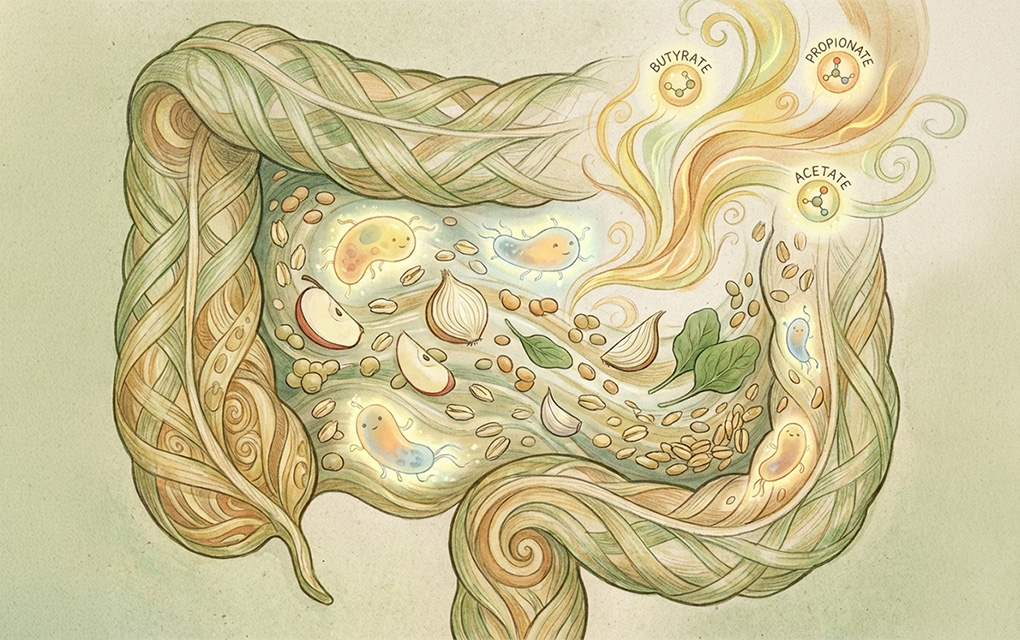

Fibre has long been described in simple, mechanical terms: something that adds bulk, keeps you regular, and helps food move through the digestive tract. While these functions matter, they barely scratch the surface of what fibre actually does. The most extraordinary part of fibre’s story begins only after it reaches the large intestine. This is where fermentation takes place, where trillions of gut microbes get to work, and where fibre transforms into compounds that influence health far beyond the digestive system.
These compounds are known as short‑chain fatty acids, or SCFAs. They are produced when gut bacteria ferment fibres from foods such as legumes, oats, apples, onions, garlic, and leafy greens. The three primary SCFAs—butyrate, propionate, and acetate—play distinct roles in supporting gut integrity, immune balance, metabolic health, and even brain function. They are a powerful example of how whole foods communicate with the body at a biochemical level.

This is the second in our fortnightly Healthy Food Series. The series consists of 12 features exploring the science, culture and shared joy of natural eating … The previous article in this series covered the ‘molecular magic‘ of what happens when whole food passes through the body.
The alchemy of fermentation
Unlike sugars and starches, many fibres resist digestion in the stomach and small intestine. They travel through the upper digestive tract largely intact, carrying with them the structural complexity of plants: long carbohydrate chains, resistant starches, and prebiotic fibres that human enzymes cannot break down. When these fibres reach the large intestine, they finally meet the microbes equipped to handle them.
The large intestine is home to trillions of bacteria, each with specialised enzymes capable of fermenting different types of fibre. This fermentation process produces SCFAs, and each one has a unique role in maintaining health.
Butyrate
Butyrate is the preferred energy source for the cells lining the colon. These cells rely on butyrate to repair, regenerate, and maintain a strong gut barrier. A healthy gut lining prevents unwanted substances from leaking into the bloodstream, reducing inflammation and supporting immune balance.
Butyrate also helps regulate immune activity within the gut, encouraging a calm, balanced response rather than chronic overactivation. Early research suggests that butyrate may influence the gut–brain axis, supporting mood and cognitive health. Foods that encourage butyrate production include legumes, oats, leafy greens, and resistant starch sources such as cooled potatoes and green bananas.
Propionate
Propionate travels from the colon to the liver, where it plays a role in metabolic regulation. It helps stimulate hormones that signal fullness, which is one reason high‑fibre meals tend to be naturally satisfying. Propionate also supports stable blood sugar levels by influencing glucose production in the liver. Some studies suggest it may help reduce cholesterol synthesis, adding another layer to its metabolic benefits.
Foods rich in inulin and fructooligosaccharides—such as onions, garlic, leeks, and Jerusalem artichokes—are particularly effective at supporting propionate production.
Acetate
Acetate is the most abundant SCFA and has the widest reach. After being produced in the colon, it enters the bloodstream and travels throughout the body. Acetate interacts with immune cells, influences inflammation, and even crosses the blood–brain barrier, where it may play a role in appetite regulation and brain signalling. It also contributes to energy metabolism, helping the body balance fat storage and energy use.
A wide range of plant foods support acetate production, especially fruits, vegetables, and whole grains.
The biochemical conversation
When you eat a bowl of lentils, you’re not just consuming fibre and protein. You’re initiating a biochemical conversation between your diet, your microbiome, and your immune system. The fibres in those lentils reach the large intestine, where microbes ferment them into SCFAs. Those SCFAs then signal to the gut lining, immune cells, liver, and brain, influencing inflammation, appetite, metabolic balance, and overall resilience.
In response, the body adjusts processes such as hormone release, gut barrier repair, and energy regulation. Meanwhile, the microbiome itself shifts, becoming more diverse and robust. This is why whole foods matter so deeply. They nourish not only you, but the ecosystem inside you.
Outperforming supplements
Fibre supplements and isolated prebiotics can be helpful, but they cannot replicate the complexity of whole foods. An apple, for example, contains pectin, polyphenols, vitamin C, and a matrix of plant compounds that work together to support microbial activity. A supplement offers only one piece of that puzzle.
Whole foods provide multiple types of fibre, a spectrum of polyphenols, essential nutrients, and the natural synergy that comes from eating plants in their complete form. This synergy is one reason whole‑food diets consistently support better gut health than diets reliant on isolated fibre products or high amounts of animal products.
Dietary diversity
Different microbes ferment different fibres, and different fibres produce different SCFAs. A varied diet encourages a diverse microbial community, which is one of the strongest predictors of gut health. Including legumes, whole grains, fruits, vegetables, nuts, seeds, and leafy greens creates a rich environment for fermentation. Each plant food adds something unique to the microbial landscape.
Supporting SCFA production
Legumes such as lentils, chickpeas, and black beans are rich in resistant starch and fermentable fibres that support butyrate production. Oats contain beta‑glucans that feed beneficial bacteria.
Apples and pears offer pectin, a favourite substrate for butyrate‑producing microbes. Onions, garlic, and leeks provide inulin and fructooligosaccharides, powerful prebiotics that encourage propionate production.
Leafy greens contribute fibre and polyphenols that support microbial diversity. Whole grains like barley, brown rice, and quinoa offer a mix of soluble and insoluble fibres that feed a wide range of microbes.
Nourishing the microbiome
Supporting fibre fermentation doesn’t require strict rules or complicated protocols. It’s about embracing a way of eating that celebrates plants in all their diversity. Adding legumes to soups and salads, choosing whole grains over refined ones, including fruit with breakfast, cooking with onions and garlic, and building meals around vegetables are simple habits that create a ripple effect through the microbiome and the body. Trying new plant foods regularly helps expand microbial diversity even further.
Much more than roughage
Fibre is far more than roughage. It is a messenger, a communicator, and a bridge between the food you eat and the systems that keep you healthy. Through fermentation, fibre becomes a source of gut nourishment, immune support, metabolic balance, reduced inflammation, improved appetite regulation, and enhanced microbial diversity.
When you choose whole foods—lentils, oats, apples, onions, leafy greens—you’re not just feeding yourself. You’re feeding the trillions of microbes that help fuel your body from the inside out.
A bowl of lentils becomes a biochemical conversation. A handful of greens becomes a message of repair. An apple becomes a signal of balance. And every meal becomes an opportunity to nourish the ecosystem within.