


by Peter Barclay
A joint position paper circulating in the UK sets out something unusually coherent in modern food policy: a fully integrated Ten‑Point Plan designed to shift the nation toward plant‑rich diets, strengthen domestic horticulture, reduce environmental harm, and improve public health.
It stands out because it treats food not as a collection of disconnected issues—health in one corner, farming in another, climate somewhere else—but as a single, interdependent system that must be addressed holistically.
The authors argue that the UK cannot meet its food‑strategy goals without “significant policy interventions” to support a transition toward plant‑rich eating. Their plan spans public procurement, food labelling, education, farming incentives, and coordinated public‑health campaigns, signalling a level of alignment rarely seen in national food policy.
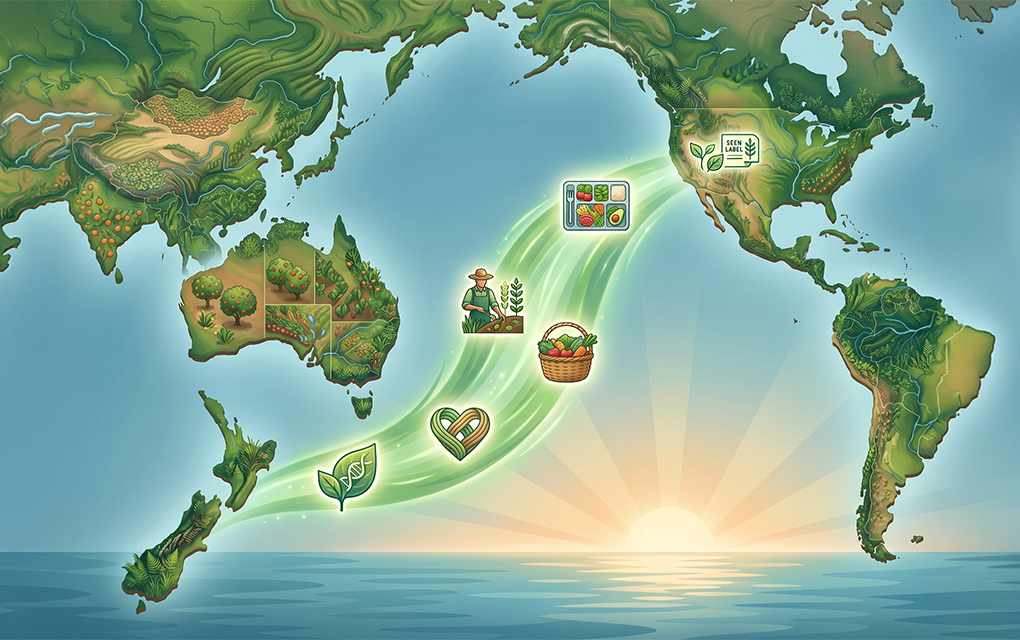
For Whole Food Living readers, the key question is not only what the UK intends to do, but whether a similar strategy could take root in New Zealand, Australia, and the United States—three countries with very different agricultural economies, political cultures, and public attitudes toward food.
This review focuses on those three regions and sets aside Asia for now. As explored in an earlier article, China in particular is an outlier, and the broader Asian context is far more complex and varied. Meanwhile, several European nations are already moving toward plant‑centred dietary guidance, with the Netherlands the most recent example, announcing significant shifts earlier this month.
So, could a UK‑style Ten‑Point Plan work elsewhere? I think the short answer is yes—but with important caveats. And those caveats are where the story becomes most compelling.
What the plan proposes
The Ten‑Point Plan is built on two pillars: increasing demand for plant‑based foods and increasing domestic supply. The measures include:
- Leveraging public procurement so schools, hospitals, and government institutions serve more plant‑rich meals.
- Requiring large food companies to report protein splits, fruit and vegetable sales, and targets for increasing plant‑based offerings.
- Boosting horticulture through targeted payments, research support, marketing assistance, and fair‑pricing mechanisms.
- Supporting farmers to diversify into plant proteins and reduce reliance on high‑impact animal agriculture.
- Improving access to healthy food through vouchers, community gardens, and cooking education.
- Strengthening public understanding of plant‑rich diets through integrated health campaigns.
- Standardising labelling on environmental impact, fibre content, and production methods.
- Improving training for health professionals and chefs in plant‑based nutrition.
- Updating dietary guidelines to reflect the latest evidence.
- Investing in alternative proteins and ensuring a robust regulatory framework.
The plan is framed as affordable, politically palatable, and aligned with public opinion. Polling cited in the document shows strong support for government action to make plant‑based foods more accessible, affordable, and available in public institutions.
Could it work in NZ?
Trust us, Kiwis, but New Zealand is arguably the most complex case. Our agricultural economy is deeply tied to animal‑based exports—dairy, beef, and lamb remain central to GDP, rural employment, and national identity. Yet New Zealand also has enormous, untapped potential in horticulture, legumes, nuts, and alternative proteins.
Where the UK model fits:
- Public procurement: Schools and hospitals could shift menus without threatening export industries. This is low‑risk and high‑impact.
- Horticulture expansion: NZ already excels in kiwifruit, apples, berries, and emerging crops like hazelnuts. Targeted support could accelerate diversification.
- Community access and education: Cooking literacy, food‑growing initiatives, and fibre‑forward messaging align strongly with existing public‑health goals.
- Dietary guidelines: New Zealand’s guidelines already emphasise plant foods, but updating them to reflect environmental impacts would be a logical next step.
Where barriers emerge:
- Political resistance: Any policy perceived as undermining dairy or red‑meat production triggers immediate pushback.
- Rural identity: Farming culture is woven into national identity; transitions must be framed as opportunity, not threat.
- Infrastructure gaps: Legume processing, plant‑protein manufacturing, and supply‑chain capacity are underdeveloped.
- Price volatility: Fruit and vegetable prices remain high and unpredictable, especially in winter.
If New Zealand were ever to develop a version of the UK’s Ten-Point Plan, it would need to emphasise co-benefits—soil health, water quality, diversified farm income, and export opportunities in high-value plant proteins. It would also need to avoid framing plant‑rich diets as anti‑farmer. If positioned as a resilience strategy rather than a replacement strategy, it could gain traction.
What about Australia?
Australia shares similarities with New Zealand—strong livestock sectors and export-driven agriculture—but it also has a rapidly growing alternative-protein industry and a more diverse horticultural base.
Where the model fits:
- Public procurement: Australia’s vast public‑sector catering footprint (schools, aged care, hospitals, defence) makes this a powerful lever.
- Horticulture and legumes: Australia already grows chickpeas, lentils, faba beans, and a wide range of fruits and vegetables. Scaling up is feasible.
- Alternative proteins: Australia is a global leader in precision fermentation and plant‑protein innovation.
- Labelling and dietary guidelines: Australia’s Health Star Rating system could easily integrate environmental metrics.
Where barriers emerge:
- State–federal fragmentation: Food policy is split across jurisdictions, making coordinated national action difficult.
- Industry lobbying: As in New Zealand, the meat and dairy sectors wield significant political influence.
- Cultural attachment to meat: The “barbecue identity” remains strong, though younger Australians are shifting.
Despite the negatives, Australia is probably better positioned than New Zealand to adopt a UK‑style plan, particularly on the supply side. The biggest barrier is political fragmentation. A national food strategy—something Australia has flirted with but never fully implemented—would be a prerequisite.
And the United States?
The United States is both the most challenging and the most promising. It has enormous agricultural capacity, a booming plant‑based sector, and a public‑health crisis driven by diet‑related illness. But it also has deeply entrenched industrial livestock systems and a highly polarised political environment.
Where the model fits:
- Public procurement: The US federal government already sets nutrition standards for school meals and SNAP; integrating plant‑rich criteria is possible.
- Alternative proteins: The US leads globally in investment, research, and innovation … although scientific support has become more confused of late.
- Dietary guidelines: The US Dietary Guidelines Advisory Committee has repeatedly attempted to include sustainability considerations … although many of us are scratching our heads over the most recent outcomes in this area.
- Public health campaigns: There is strong precedent for large‑scale nutrition messaging (e.g., anti‑smoking, “5‑a‑day”).
Where barriers emerge:
- Political polarisation: Food policy is often framed as a culture‑war issue.
- Agricultural subsidies: Billions in subsidies support corn, soy, and livestock feed, creating structural incentives for meat‑heavy diets.
- Corporate influence: Large agribusinesses shape policy at every level.
- Food insecurity: Any policy perceived as increasing food costs faces resistance, even if evidence suggests plant‑rich diets can be cheaper.
I’m sure there would be some debate over this, but I think a US version of the Ten‑Point Plan would likely need to begin with procurement, labelling, and education—areas that already have bipartisan potential. Shifting subsidies toward horticulture and legumes would be transformative but politically difficult. Perhaps the most realistic path is incremental: pilot programmes, state-level innovation, and market-driven growth in plant-based options.
Despite their differences, New Zealand, Australia, and the United States share several structural challenges—and opportunities.
Shared opportunities:
- Rising consumer interest in plant‑rich diets, especially among younger generations.
- Strong scientific evidence linking plant‑rich diets to reduced chronic disease risk.
- Growing alternative‑protein sectors offering economic diversification.
- Increasing awareness of the environmental impacts of livestock production.
- Public institutions that can model dietary change at scale.
Shared barriers:
- Powerful livestock industries with political influence.
- Cultural attachment to meat as identity.
- Underinvestment in horticulture and legume production.
- Lack of coordinated national food strategies.
- Misinformation and confusion about plant‑based nutrition.
A Trans-Pacific path?
It might be wishful thinking, but if New Zealand, Australia, and the United States were to adopt at least the principles of the UK’s Ten‑Point Plan, I think the most effective elements would likely be:
- Public procurement first
Changing what schools, hospitals, and government agencies serve normalises plant‑rich eating without restricting choice. - Horticulture and legume expansion
All three countries have the land, climate, and expertise to grow far more plant foods for human consumption. - Farmer‑centred transition support
Grants, training, and diversification pathways reduce resistance and build rural resilience. - Clear, standardised labelling
Environmental and health metrics empower consumers and reward producers who innovate. - Integrated public‑health campaigns
Fibre, affordability, and chronic‑disease prevention are powerful unifying messages. - Investment in alternative proteins
This is as much an economic opportunity as a dietary one.
The UK’s Ten‑Point Plan is not just a policy proposal—it is a reframing of how nations think about food. It recognises that health, environment, economy, and culture are inseparable. For New Zealand, Australia, and the United States, the question is not whether plant‑rich diets are beneficial—they clearly are—but whether political will, cultural openness, and economic incentives can align to make such a transition possible.
Each country would need its own version of the plan, tailored to its agricultural realities and cultural narratives. But the core idea—that a healthier, more resilient, more sustainable food system requires a shift toward plant‑rich diets—is universal.