

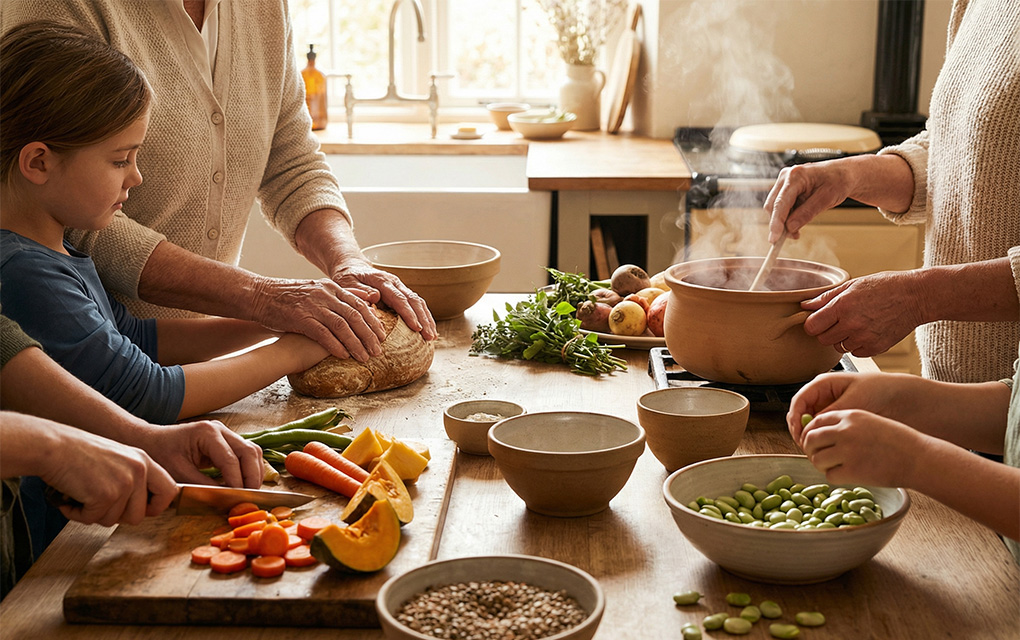

The modern kitchen has become a paradox: the room most associated with nourishment is often the one we rush through. Meals are assembled rather than cooked, eaten while standing, scrolling, or commuting. Yet beneath this speed lies a quiet hunger—not just for better food, but for the grounding rituals that once shaped daily life.
Around the world, people are returning to slower, more tactile ways of preparing food, rediscovering the emotional and physiological benefits of time spent in the kitchen.
This shift isn’t about romanticising the past. It’s about recognising that the body and mind respond to slowness in measurable ways. When we chop vegetables, knead dough, shell beans, or stir a pot that’s been simmering for hours, we activate neural pathways that calm the stress response, regulate breathing, and anchor attention. These actions are rhythmic, sensory, and embodied—qualities that modern life often strips away.
This reminds me of a conversation I listened to with Sir John Kirwan, a former NZ All Black and now an advocate for mental health and wellbeing, in which he includes cooking, particularly preparing a traditional Sunday lunch for his family, as part of his “enjoy” and “connect” pillars of mental health.

This is the fifth in our fortnightly Healthy Food Series. The series consists of 12 features exploring the science, culture and shared joy of natural eating … The previous article in this series covered ‘Mitochondrial Efficiency ‘ – Energising the body from within.
The physiology of slowing down
At its core, slow food preparation is a nervous‑system intervention. The repetitive, predictable motions of cooking—slicing, stirring, folding, rolling—activate the parasympathetic nervous system, the branch responsible for rest, digestion, and repair. This is the same system that deep breathing, meditation, and gentle movement activate. But unlike those practices, cooking offers a tangible outcome: a meal that nourishes you and the people you love.
Several mechanisms are at play:
- Rhythmic movement reduces cortisol. Repetitive hand motions have been shown to lower stress hormones, similar to knitting or gardening. The body interprets these actions as safe, familiar, and grounding.
- Sensory engagement anchors attention. The scent of garlic hitting a warm pan, the sound of a knife on a chopping board, the warmth of dough under your palms—these sensory cues pull the mind out of rumination and into the present moment.
- Predictable sequences create cognitive ease. Cooking follows patterns: wash, chop, sauté, simmer. These sequences offer structure and flow, reducing mental load and creating a sense of competence and agency.
- Manual tasks regulate breathing. When we focus on our hands, our breath naturally slows. This shift alone can reduce heart rate and improve digestion.
In a world where stress is often chronic and invisible, these small physiological shifts accumulate. A kitchen becomes a place where the body recalibrates.
Emotional nourishment
Beyond physiology, slow food rituals offer emotional nourishment that fast food culture cannot replicate.
1. A sense of accomplishment. Completing a dish—especially one that requires time—creates a quiet, satisfying sense of achievement. It’s not performative; it’s personal. You made something from raw ingredients, and that act alone builds confidence and self‑trust.
2. A return to creativity. Cooking is one of the few creative acts woven into daily life. It invites improvisation, intuition, and play. When we slow down, we notice flavours, textures, and colours more deeply, and cooking becomes an expressive act rather than a chore.
3. A buffer against digital overwhelm. The kitchen is one of the last spaces where hands are too busy for screens. This enforced pause from digital input gives the mind a rare chance to rest.
4. A ritual of care. Preparing food slowly is an act of generosity—toward yourself and others. It signals that nourishment is worth time, attention, and presence.
The value of shared preparation
While solo cooking is restorative, communal cooking adds another layer of wellbeing. Humans evolved to prepare food together. For most of history, meals were the product of many hands: shelling peas on a porch, rolling dumplings around a table, stirring a pot while someone else chopped herbs.
Shared preparation strengthens connection in ways that conversation alone cannot.
- Parallel play for adults. Working side‑by‑side creates a gentle, low‑pressure social environment. People talk more freely when their hands are busy.
- Co‑regulation of nervous systems. When people engage in the same rhythmic task, their breathing and heart rates naturally synchronise. This creates a sense of safety and belonging.
- Distributed labour reduces overwhelm. When tasks are shared, cooking becomes lighter, more joyful, and more sustainable.
- Intergenerational bonding. Children learn by watching and doing. Elders pass down techniques, stories, and values. These exchanges build identity and continuity.
In many cultures, the kitchen has always been the heart of the home precisely because it is where people gather to do something meaningful together.
Generational traditions
Every culture has slow food rituals that once structured daily life. These traditions weren’t designed for wellness—they simply reflected the pace of life before industrialisation. Yet their psychological and social benefits were profound.
- In Italy, families gathered to make pasta or preserve tomatoes, turning labour into celebration.
- In East Asia, dumpling‑making is a communal ritual that marks holidays, reunions, and transitions.
- In the Pacific, preparing taro, cassava, or kūmara often involves multiple generations working together.
- In the Middle East, rolling grape leaves or shaping falafel is a shared act of storytelling and memory.
- In Aotearoa, New Zealand, whānau cooking together—whether preparing kai moana, chopping vegetables for boil‑ups, or baking for gatherings—reinforces connection, identity, and care.
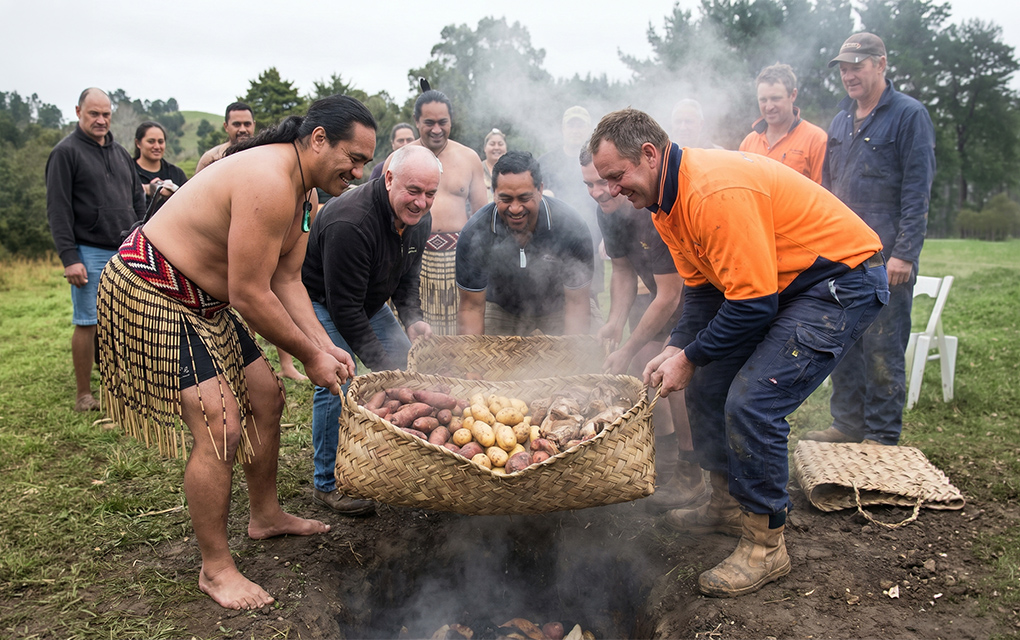
These traditions remind us that food is not just fuel; it is culture, memory, and relationship. When we revive slow food rituals, we reconnect with the wisdom embedded in these practices.
Return of the communal kitchen
Several cultural shifts are driving the resurgence of slow food and shared cooking:
1. A desire for grounding in a fast world. People are overwhelmed by speed, noise, and constant input. The kitchen offers a counterbalance.
2. A shift toward whole‑food eating. As more people embrace plant‑forward, minimally processed diets, cooking becomes a natural extension of that lifestyle.
3. A longing for community. Loneliness is rising globally. Cooking together is one of the most accessible ways to rebuild social connections.
4. A return to craft. There is growing appreciation for handmade, artisanal, and skill‑based activities. Cooking fits naturally into this movement.
5. A re‑evaluation of time. People are questioning the idea that speed equals efficiency. Slowness is becoming a marker of intention and well-being.
The health benefits
The benefits don’t stop at preparation. Eating together has measurable effects on health:
- People who share meals tend to eat more vegetables and fibre.
- Digestion improves when meals are eaten slowly and socially.
- Shared meals reduce feelings of isolation and improve mood.
- Children who eat with adults develop healthier eating patterns and emotional regulation.
A communal kitchen isn’t just a social space—it’s a health intervention.
Reclaiming time in the kitchen isn’t about adding pressure or perfectionism. It’s about reframing cooking as a form of self‑care and connection rather than a task to rush through.
Here are ways to make slow food rituals feel accessible:
- Start with one slow ritual a week. Maybe it’s chopping vegetables for a big pot of soup, baking bread on Sundays, or preparing a salad with seasonal produce.
- Invite someone to cook with you. A friend, a partner, a child, a neighbour. Shared preparation turns cooking into a social ritual.
- Create sensory cues. Music, natural light, fresh herbs, or a favourite apron can transform the kitchen into a calming space.
- Batch‑cook mindfully. Even practical cooking can be slow and grounding when done with intention.
- Honour family traditions—or create new ones. Revive a recipe from your childhood or invent a ritual that feels meaningful now.
Returning to the hearth
The return of the communal kitchen isn’t a trend; it’s a homecoming. In slowing down around food, we reconnect with something deeply human: the need to create, to share, to nourish, and to belong. The kitchen becomes a sanctuary where stress softens, relationships deepen, and the body remembers how to rest.
In a world that asks us to move faster, slow food rituals offer a quiet, powerful alternative. They remind us that nourishment is not just about what we eat—it’s about how we prepare it, who we share it with, and the presence we bring to the process.