


An Emory University study has uncovered a striking biological pathway that may help explain why diets high in fat and low in fibre are increasingly linked to neurological conditions. The research, published in PLOS Biology shows that live gut bacteria can travel directly to the brain—without entering the bloodstream—when the gut barrier is compromised by a Western‑style diet.
The findings seemingly add compelling weight to what lifestyle‑medicine advocates have long argued: what we eat shapes not only our metabolic health but also our cognitive resilience.
New mechanism
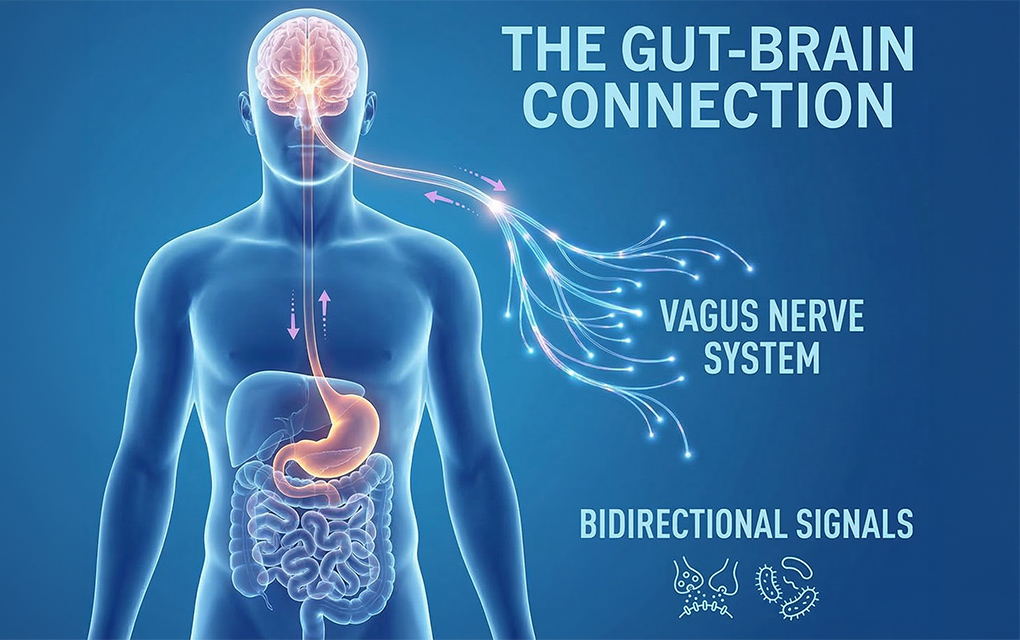
The gut has often been called the “second brain,” a description rooted in its dense network of more than 100 million neurons. But this study goes further, demonstrating a physical route by which gut microbes can reach the brain: the vagus nerve.
Researchers fed germ‑free mice a high‑fat, high‑carbohydrate diet—similar to the typical Western pattern—for just nine days. This diet is known to increase intestinal permeability, often referred to as “leaky gut.” As the gut barrier weakened, bacteria were able to move from the intestine into the vagus nerve and then into the brain.
Crucially, the bacteria were not found in the bloodstream or other organs. This suggests a direct gut‑to‑brain pathway that bypasses the systemic circulation entirely.
Barcoded bacterium
To confirm the route, scientists used a clever technique: they fed mice a barcoded strain of Enterobacter cloacae—a bacterium engineered with a unique DNA sequence. When the mice consumed the high‑fat diet, that exact barcoded strain later appeared in their vagus nerve and brain tissue.
The bacterial load was low—measured in the hundreds—far below levels associated with sepsis or meningitis. But the presence of any live bacteria in the brain is significant, especially given emerging links between microbial imbalance and neurodegenerative diseases.
The researchers also found similarly low levels of bacteria in mouse models of Alzheimer’s and Parkinson’s disease, suggesting that this mechanism may be relevant to human neurological decline.
Neurological risk
The study’s co‑principal investigators, microbiologists David Weiss and Arash Grakoui, emphasise that the findings could shift how we think about neurological disease. If harmful processes begin in the gut, then prevention and treatment strategies may need to start there, too.
For WFL readers, this reinforces several key ideas:
- Diet quality influences gut permeability. High‑fat, low‑fibre diets weaken the intestinal barrier, allowing microbes and inflammatory compounds to escape.
- Gut imbalance may precede neurological symptoms. If bacteria can reach the brain through the vagus nerve, early dietary patterns could set the stage for later cognitive decline.
- The process appears reversible. When mice were returned to a normal diet, gut permeability improved, and bacterial presence in the brain decreased.
This reversibility is particularly encouraging. It suggests that dietary change—even later in life—may help restore gut integrity and reduce neurological risk.
Why fibre-rich matters
While the study used a high‑fat diet to induce gut leakage, the broader implication is that diets rich in whole plant foods—high in fibre, polyphenols, and resistant starch—help maintain a strong gut barrier and a balanced microbiome.
A resilient gut lining:
- Reduces inflammation
- Prevents microbial translocation
- Supports healthy vagus‑nerve signalling
- Protects the brain from unwanted immune activation
This aligns with a growing body of research showing that Mediterranean‑style, plant‑forward diets are associated with lower rates of Alzheimer’s, Parkinson’s, and cognitive decline.
Future research
The Emory team stresses that more work is needed to understand how often this bacterial translocation occurs in humans and what levels of bacteria are harmful. But the study opens several promising avenues:
- Could early dietary interventions slow or prevent neurodegenerative disease?
- Are certain microbes more likely to travel to the brain?
- Can strengthening the gut barrier reduce neurological inflammation?
As Weiss notes, shifting the therapeutic target from the brain to the gut could “have an unbelievable impact” on how neurological conditions are treated in the future.
The whole food perspective
The research underscores a central theme in WFPB understanding: the gut is not an isolated system. It is a dynamic interface between diet, immunity, metabolism, and now—more clearly than ever—brain health.
A high‑fat, low‑fibre diet doesn’t just affect weight or cholesterol. It may open a biological doorway that allows microbes to reach the brain, potentially influencing mood, cognition, and long‑term neurological resilience.
The good news is that the doorway can close. And the key appears to be dietary patterns grounded in whole, unprocessed foods.